
A Greener Future…
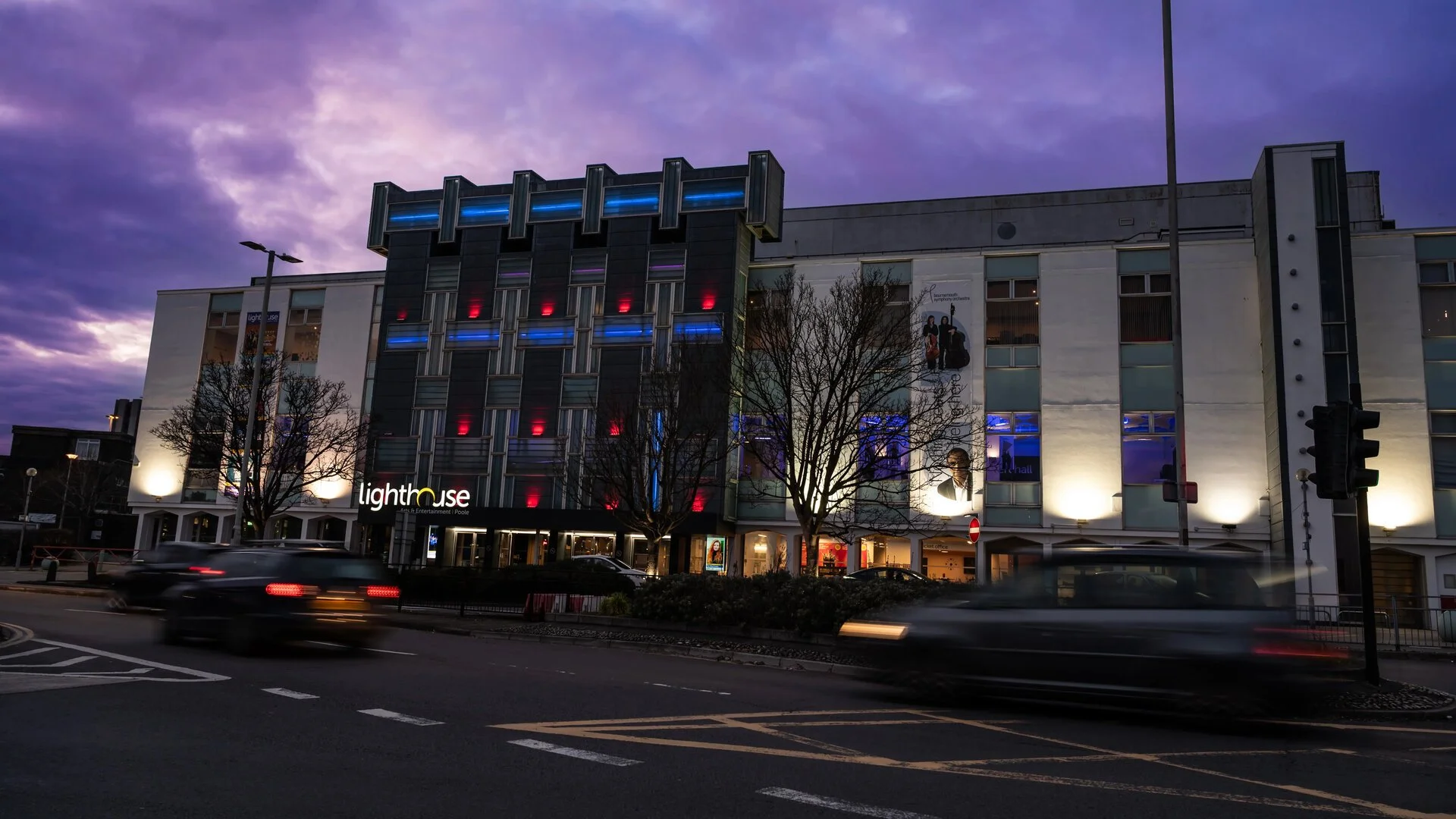
Photo credit: Jayne Jackson
As temperatures continues to rise, there can be no denying that we are seeing more varied weather conditions and soaring energy bills, and this has affected the regional theatre cost base and comfort of audiences in those venues. Many leading venues have made bold commitments to Net Carbon Zero over the coming decades and have adopted the recommendation of the Theatre Green Book but for many smaller venues, that ambition to do the same is limited by the financial resources to address the impact theatre making has.
In late 2025, 500 theatre makers representing 200+ organisations and 23 countries gathered at the National Theatre for the first international conference: Sustainable Theatre - Global Challenge. They were joined by Georg Häusler, Director of Culture, European Commission, sharing his thoughts on the vital role of culture in driving the climate transition. At a time when artistic expression and finances are under increased pressures across Europe, he emphasised the critical role of theatre in fostering open dialogue and continued conversation for achieving shared goals. Speakers reflected on the policy levers such as the Arts Council England’s partnership with Julie’s Bicycle, making carbon reporting mandatory in 2012 and theatremakers describing what it takes to embed different ways of working and how artistic ingenuity thrives on being given limitations. This event demonstrated the commitment of Industry leaders to address this challenge.
Theatre Green Book
The Theatre Green Book, published in 2021, found in its 2024 audience survey that 72% of audiences think cultural organisation have a responsibility to influence society to make radical change in response to the Climate emergency. 74% said that sustainability accreditation would make them view the organisation more positively.
It is divided into three volumes: Sustainable Productions, Sustainable Buildings and Sustainable Operations. In Productions, it sets out principles for Producing, Making and Disposal of Technical Staging. In Venues, it argues they should “Be lean, be clean , be green.” In Operations, it sets out principles for Front of House, Back Office, Managing the Building, Waste, and Travel and Transportation.
Taking positive action to reduce venues’ environmental impact is a moral obligation driven by a business rationale. It involves careful consideration in making programming choices that reflect positive environmental values and adopting technology and ways of working that minimise the venue impact. Many old and/or listed buildings will face more complicated, expensive, or restricted opportunities to improve environmental performance and reduce heat loss.
There are three distinct areas to address : The Audience footprint, The Production process for in house and received shows, and The Venue efficiency and carbon impact.
Audience Footprint
One way in which theatre can uniquely support moves to a Greener economy is through the stories it tells on stage. The Wilde Theatre in South Hill Park Arts Centre in Bracknell’s 2022 pantomime of Jack and The Beanstalk, written by Joyce Branagh, recast Jack as a girl out to save the town of Windy Bottom from the fearful Giant, included references to solar energy and recycling to educate and inform its family audiences.
Pigfoot Theatre told stories about the climate and ecological crisis, with the least carbon impact possible. Their work ‘practises what it preaches’ and protests within an industry which, in London alone, has a carbon footprint of 50,000 tonnes a year. Their bike-powered family comedy How To Save A Rock has toured UK. Hot in Here, an energy-generating dance party, toured across the UK in Autumn 2022.
But the audience travel arrangements are the biggest challenge. With catchment areas for regional venues perhaps forty-five minutes from the theatre, it is inevitable that theatres must attract audiences whose only practical way of attending is driving. They need those audiences to be financially sustainable, so the only solution is some form of offset arrangement.
The Poole Lighthouse promotes changes to practices by encouraging sustainable travel to the venue through:
Cycle to work scheme.
There is an EV charging point located outside Lighthouse on Kingland Road.
A Spoke Safe cycle hub opened in The Dolphin Centre, making cycling to Lighthouse more secure than ever.
Volvo Cars Poole were announced as the Official Energy Partner of Lighthouse. The partnership was designed to raise awareness of the sustainable practices in place at Lighthouse and financially support the replacement of the traditional tungsten lighting in our Theatre with energy efficient LED lighting.
Of course, once at the venue, we already see plenty of Green initiatives with recycling bins, paper straws, reusable cups, and e-tickets instead of paper ones.
These are powerful ways to engage and educate the audiences with the shared message, but it is critical too that the Producer and venues adopt Green practices in staging and presenting their works.
The Production process for in house and received shows
Producers must make some difficult calls between artistic ambition and Green efficiency. This may require some compromises as sets are reused but there are growing options for touring companies to improve green efficiency in transporting sets between venues.
How many times can you use a pantomime stage floor over the years before it is too damaged to be practical? How often do we see pantomime sets with visual gags or effects that clearly relate to a different title or production? How long do you store a set for a show in the hope that or might get remounted or hired? Shows have, in the past, thrown away props at the end of the tour as the storage costs feel prohibitive without a certainty of reuse. How can you achieve the Advanced Standard for Green Book of 100% materials recycled from a previous life in a season of plays?
Of course, as a Producing house, you can apply the Green Book to your own work, but do you reject a touring company because it can’t show compliance to the guidance?
UK Productions told us that as a major set and costume production organisation with its own workshops, they work hard to recycle and refurbish sets and costumes to give them longer life and reduce waste. For example, unwanted wood is converted to Biomass fuel, and sourcing energy supply from Octopus Energy reduces the carbon footprint.
Transport for touring productions is another significant element. Pantomime producers Imagine aim to transport all their sets and costumes using Biofuel. The introduction of Hydrotreated Vegetable Oil (HVO) into the fleet and working with the expertise at peak oils to supply 100% renewable diesel that is palm oil free, is a clear example of the company’s collaborative working ethos. The HVO that KB Event uses eliminates up to 90% of net CO2 and significantly reduces nitrogen oxide, particulate matter, and carbon monoxide (CO) emission.
Imagine also earned Green Book Advanced Standard status for their production of Sleeping Beauty at Stafford Gatehouse Theatre in 2025. All of the set was reused after being repaired and refreshed, 75% of the costumes were reused, and 80% of the props came from stock designed in last ten years. They also work to ensure technical suppliers comply with their ethos and environmental policy. Their wonderful storage facility and offices in Coventry certainly supports this process and is an Aladdin’s cave (quite literally too) of sets , costumes, and props.
The Venue efficiency and Carbon impact
The Green Book identifies many elements to address to be greener and which of these is practical and affordable will vary by building. Heat loss through roofs, walls, doors, and windows requires investment in insulation and may be impossible due to listed building requirements for older venues. Utilities costs are driven by the heating, cooling, lighting, hot water, and ventilation systems installed. Solutions like solar panels, heat pumps and turbines need investments and space, and the benefits of feeding into the National Grid have been significantly reduced in recent years. Water utilities can be reduced by using Green Roof solutions, using rainwater and grey water.
Fundamental change will require investment in infrastructure and access to funds to pay for these. Old buildings, even those built in the 1970’s, will suffer heat loss through the roof, windows, doors, and walls. Old inefficient equipment needs to be replaced to reduce gas and electricity use. New innovations like solar panels and wind power require planning permission and investment. The payback on some of these investments makes them a challenge against other pressing requirements for funds.
The Mill at Sonning has invested over the time to move towards carbon neutral operations with geothermal heating, symphonic turbine, and LED lighting front of house and on stage. The venue works hard to recycle sets in its workshop on its productions and comply with Green Book.
The Orchard Theatre in Dartford benefited from the Public Sector Decarbonation scheme which funded the removal of old gas plant and invested in heat source and PV solar energy. Many other local authority owned venues could benefit from this funding scheme to protect their cultural asset.
LED lighting, front of house and on stage, has been widely adopted with both its longer life cycle and lower energy costs to operate the financial case is stronger and the quality of light is acceptable. Such lighting is now more artistically acceptable and can be blended with traditional lighting with the cost of operation being one tenth of old technology and a payback on the investment over between three and eight years.
The Lighthouse Poole told us, “In the longer term, the drive to Carbon Neutral operations will need Government support even for relatively modern buildings like The Lighthouse Poole as investment payback from such initiatives as alternative power sources and wall insulation is too long to enable investment or attract commercial loans without Grants. A Government policy statement for the theatre sector toward net zero carbon footprints is urgently needed. This is essential to create financially sustainable venues without which there would be a huge detrimental effect on the local community and economy.”
The Theatres Trust‘s Theatre Improvement Scheme, in association with the Wolfson Foundation, offered capital funding for theatres. The theme for the fund for the current three-year partnership was Improving Environmental Sustainability. Theatre operators could apply for grants of up to £20,000 towards their building or equipment as part of the scheme. It hoped that these grants would support a range of projects that consider different ways theatre buildings can reduce their environmental impact. From sedum roofs to new windows, building management systems to more efficient water heaters, funding will be given to projects that demonstrate how a small intervention can have a significant impact. 11 theatres benefited from the December 2025 awards totalling £170,000 including the Lighthouse Poole and the Old Vic. The 2026 scheme is now open for applications with grants up to £20,000 with a deadline of 11 September.
The Arts Council of England Cultural Foundation Fund, now in its second round, is also open with £77million available in two strands. This fund was created for vital repairs and upgrades such as failing and inefficient energy systems and improved accessibility. ACE also points at another useful resource of Julie’s Bicycle website with free multimedia resources to understand the systemic causes of the climate crisis and how it intersects with issues of social, economic, and environmental injustice and a free library of over 250 resources including guides, case studies, and factsheets. Their leadership and development programmes include Building Net Zero Energy: For those who are just starting out or have begun to work on energy reduction but are keen to do more.
Leaders in the Sector
As we would hope, some of the larger venues are leading the way in these changes with commitments to Carbon Neutral operations.
The RSC joined the UN Race To Zero (RTZ) in 2021, committing to report annually on progress towards a 50% reduction in emissions by 2030 and adopting a comprehensive net zero target for 2040. They used 2018/19 as their base year and report:
Reduced overall carbon footprint by 3% in 2024.
Decreased energy consumption by 13% in 2024.
Working with environmentally sustainable suppliers.
Targeting zero waste to landfill.
The National Theatre committed to reducing their carbon impact and set targets to achieve carbon neutrality as an organisation by 2030 by working to the standards of the Theatre Green Book. These included:
Reusing and recycling with 50% of materials needing to have had a previous life, and 65% needing to be repurposed or recycled at the end.
In 2024, they opened the NT Green Store to encourage designer to reuse existing materials.
Between 2019 and 2025, they reduced their building energy use (kwh) by 12% and emissions (kgCo2) by 26%.
The Max Rayne Centre has a rainwater collection tank which supplies water to all toilets in that wing of the building and a ground source heat pump.
Achieve the target of 65% recycled waste by mid-2025.
They have banned air freight for all fruit and vegetable supplies.
The Display Energy Certificate process can help in measuring the progress in energy efficient initiatives and display of the Certificate can make audiences aware of the venue’s efforts and progress. NT report that the building has a B Certificate from G a decade ago.
The Mayflower Theatre in Southampton have developed an environmental strategy with the aim to reduce their carbon footprint with a target of net zero by 2030. In March 2025, they reported on their progress in making a greener future. The strategy includes:
Reduced energy consumption by 9.8% in past year.
Partnership with Veolia targeting a zero-to- landfill waste management.
Staff campaign to “SWITCH IT OFF, TURN IT DOWN, SORT IT OUT.”
Over last three years doubled recycling rates from 10 % to 21%.
Identify opportunities to increase energy savings by replacing tungsten lighting with LED lighting, removal of gas heating, and solar panels.
Next steps
These large venues set the standards others should aspire to. The process involves:
Education of staff and audiences.
Placing the Carbon reduction message at centre of all decisions.
Measurement of progress
Targeting easy wins and promoting the success
Planning capital projects to improve the environmental sustainability.
Collaborative work and shared knowledge between venues, producers, suppliers, and audiences.
Besties, we believe the scope of this challenge is huge, touching every aspect of society, but the prize is enormous. Theatre is well placed to engage audiences and change habits but to speed up the process, investment is required in equipment, changed practices and solutions that may in the short term have a higher cost.
Nick Wayne
Nick has been involved as a Trustee/Director in UK Producer and Venue Organisations for twenty-six years, seen over 1350 productions, visited over 160 of the UK Venues, seen overseas productions in USA, Canada, France, Hungary, Austria, Czech Republic, and Australia and invested in over 40 West End Productions. You can read his long form articles on Stage Whispers UK - Nick Wayne