
Youth Development Strategy…
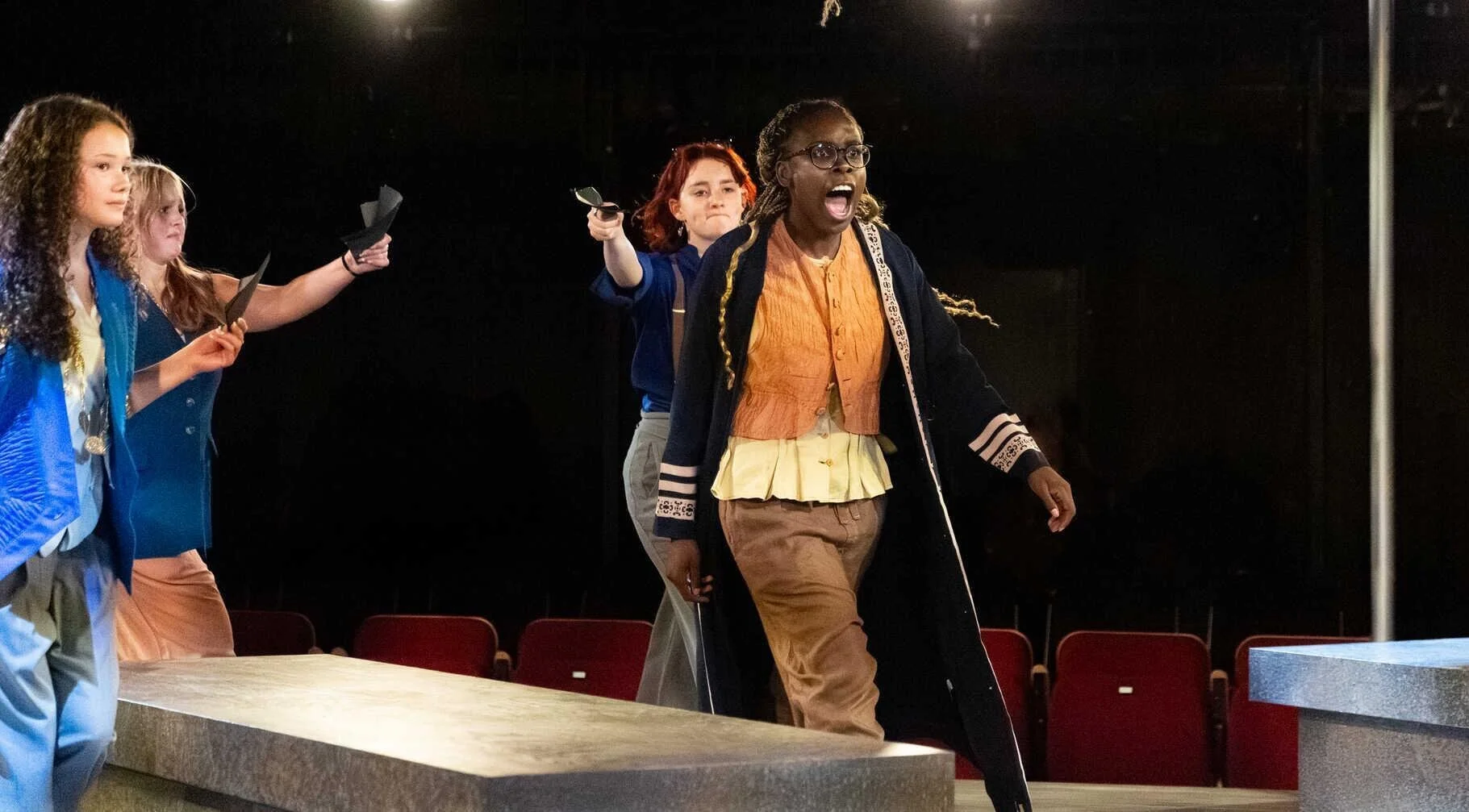
Photo credit: Sara Beaumont
Besties, the future of theatre depends on developing and engaging young people who will be the audiences, creatives, and performers of the future and too often when we look around the audience at shows, we see an older group of people. Whether this is driven by an economic barrier (ticket and travel cost), cultural barriers or simply a sense that “it’s not for me,” we have to support venues in breaking down these barriers and changing the perception as without developing a passion for the live arts, we are cutting off the future lifeblood of the sector.
We want to drive more funding to support the regional venues’ programmes of Youth and Community Engagement, which we believe are so important to developing, diversifying, and sustaining live theatre audiences, underpin the commercial sustainability of each theatre, and drives economic growth and social cohesion in local communities. Many of us developed a passion for theatre through our own parents’ love of professional and amateur theatre, and we want to share that enthusiasm and passion as we would like every child should have the opportunity to experience that joy and feel that live performance is for them as an audience member, workshop participants developing life skills or potentially as a creative practical career. This requires committed organisations to deliver and more importantly, funding to drive awareness and make it accessible and affordable.
The critical development issue is to attract young people from diverse backgrounds who perhaps feel that live theatre is not for them, for economic, social, or religious barriers and who, in participating in a workshop or attending a performance and seeing people with similar background on stage, can start to believe that it is something for them to enjoy. Creating and enjoying the sense of shared experience, regardless of ethnic background, can be a powerful uplifting and life changing moment. For young people taking part, it can provide life skills, build confidence, develop friendships and for some lead to a career in the sector.
A Virtuous Circle for Youth Engagement
The aim should be to create a virtuous circle reinforcing young people’s passion for theatre by:
a) Promoting the joy of live performance on traditional media,
b) Casting names for the stage that draw young people into the theatre and show “people like me” on stage,
c) Linking the student to the works through school drama department and after school workshops,
d) Developing basic skills though classes with Stagecoach or amateur dramatics,
e) Selling the benefits and making it easier to enter higher education or offering apprenticeships in theatre,
f) Using young performers to enhance productions, add scale and offer experience of working with professionals,
g) Discounting tickets for under twenty-fives to go to the theatre.
Through these steps, we can develop their passion for live theatre, build future audiences and performers, and help sustain and grow the sector which contributes to the overall economy. However, it needs funding to feed this virtuous circle and create viable affordable entry points. The Government, National Lottery and the Arts Council of England and Wales are critical to this.
Government Response to Baroness Hodge review of ACE
The introduction to the response stated, “Culture and creativity have been erased from too many classrooms and communities, the routes for working class artistes and performers have narrowed almost to the point of extinction.” The Government promise to put Arts back at the centre of the curriculum and to rebuild the foundations by creating a reformed and independent Arts Council. They promise to invest £132.5million in the ‘Every Child Can’ programme to increase disadvantaged young people’s access to enrichment opportunities in the arts, culture, sport, and wider youth services. They state that “music, performing and visual arts as one of the sectors with the most potential for growth and commit to backing the next generation of British talent.”
Interestingly, they state that there were 1,380 claims for Theatre Tax relief in 2023/24 totalling £261million, although we argue that this is simply a return of cash that the treasury has taken from the sector in Income tax, National Insurance, Council Tax and VAT on the same activity. More importantly, they promise to create a better environment for philanthropy by incentivising giving to the Arts and Cultural sector at a time when charitable giving is in decline. We will have to wait and see whether these fine words do generate more funds for the sector.
The Government agree with Hodge’s recommendations for a new ACE strategy that is ambitious and a focus on more equitable access to excellence for all and champions diversity. They state that “Access to high quality Arts education should be the entitlement of every child” and promise “to revitalise the arts education through reforms to the national curriculum, qualifications and accountability measures and enrichment.” They announce the establishment of the National Centre for the Arts and Music Education from September 2026 with the aim of ensuring every child has more equitable access to high quality arts education.
They promise to work to develop an evaluation and monitoring framework to ensure Arts Council can demonstrate the impact and value for money of public funding.
There are a lot of fine words in the Government response which accepts all of Baroness Hodge recommendations, but the sector must work to hold them and the Arts Council accountable for the delivery of these grand promises. The solutions are obvious; the execution and funding is much more complicated, and can we trust the Government and ACE to deliver? It is all about funding, how much and how is it invested (not given away) to drive change and results.
Government National Youth Strategy
In December 2025, the Government announced the National Youth Strategy with around additional £500 million of new funding to transform youth services. This includes:
1) Build or refurbish up to 250 youth facilities over the next four years, as well as providing equipment for activities to around 2500 youth organisations, through a new £350 million ‘Better Youth Spaces’ programme. It will provide safe and welcoming spaces, offering young people somewhere to go, something meaningful to do, and someone who cares about their wellbeing.
2) Launch a network of 50 Young Futures Hubs by March 2029 as part of a local transformation programme of £70 million, providing access to youth workers and other professionals, supporting their wellbeing and career development, and preventing them from harm. The first eight hubs to be operational in 2026 are in Birmingham, Leeds, Manchester, County Durham, Nottingham, Bristol, Tower Hamlets, and Brighton and Hove.
3) Support organisations in underserved areas to deliver high-quality youth work and activities through a ‘Richer Young Lives Fund’ worth over £60 million.
4) Boost young people’s wellbeing, personal development, and essential life skills through a new £22.5 million programme of support around the school day in up to 400 schools.
5) Recruit and train youth workers, volunteers, and other trusted adults with £15 million of investment.
6) Strengthen youth services through £5 million to improve local partnerships, better information sharing, and digital infrastructure, ensuring young people receive high-quality, safe, and effective support in their communities.
The Young Futures Hubs will be targeted in areas with elevated levels of anti-social behaviour and knife crime with aim to
a) Transform the lives of young people, cut crime, and protect communities
b) Divert them away from knife crime and anti-social behaviour
c) Provide them with services and advice to combat social isolation, mental health, and unemployment
d) Give access to safe, trusted adults
We believe that the Local Community Theatre Hubs can play a valuable role in this National Strategy and that theatre as an audience member, workshop participant or young performer can provide those experiences that can change lives, boost young people’s wellbeing, personal development, and provide essential life skills. We have seen this in action.
Priority Actions
We think the priorities are:
1) The Arts Curriculum in schools – the time and money to explore and develop talent and passion.
2) Regional Community Hubs – that build link between schools, young people, and the venues.
3) Philanthropy and Individual investment – in venues, productions, fresh writing, and young talent.
The National Lottery and ACE funding strategy and the Government Tax regime should focus its investment on these three priorities to build a robust funded network that delivers excellent in the arts and build the workforce and audiences.
We can learn from current places that use their available funds to deliver these objectives from the large RSC to the inspirational work of the National Youth Monologue Competition.
RSC Stratford upon Avon
The Royal Shakespeare Company, founded as a permanent company in 1959 by Sir Peter Hall, formally established in March 1961 with the announcement that Memorial Theatre in Stratford would be known as the Royal Shakespeare Theatre and registered as a charity in April 1963, is now governed by its charter of incorporation dated June 1979. Its charitable objective is “to keep alive the memory of Shakespeare by the presentation of his plays” and its current stated mission is to “seek to redefine how Shakespeare and great story telling connects us, creates opportunities and brings joy.” They proudly proclaimed in the March 2025 accounts that the “Creative learning and Engagement work reaches over 500,000 children and young people annually and creates projects with and for communities who have not historically engaged with the work”. They work with over one thousand schools each year including working with regional theatres in areas of structural disadvantage across one hundred towns and cities from Cornwall to Middlesbrough. They have a significant role in the promotion of the Arts in schools and connecting new audiences to these plays that are a core part of British Culture and can still speak to modern day issues and challenges. The Arts Council funding as a National Portfolio Organisation is central to this.
Their current campaign to raise funds states “Shakespeare wrote 884,647 words- you can share the magic of his words by texting just three letters :RSC”. They state that £5 brings a student face to face with an RSC actor and creator, £10, grants a young person their first unforgettable encounter with Shakespeare on stage, and £20 equips a teacher with groundbreaking RSC learning techniques for the class. Bold claims but a straightforward way of communicating the benefits of even the smallest donations.
Their production of Henry V earlier this year, starring the wonderful Alfred Enoch, features two teams of fifteen supernumeraries (18–20-year-olds from Belgrade Theatre, Warwick University, Stratford Youth Theatre and Stratford College) as villagers and soldiers. The programme is designed to give young people their first steps on the RSC stage and has been woven into the movement sequences of the play, especially the siege of Harfluer and Battle of Agincourt. To prepare, they took part in sessions with the director Tamara Harvey and movement director Annie-Lunnette Deakin-Foster to understand the text and develop acting and Shakespearean skills.
Recruited from local schools and colleges, the involvement builds on their experience which includes school drama shows and stagecoach classes, fosters their creative passion and helps guide them about future careers and development. What’s more, the gender and colour-blind casting of the main cast of nineteen means that for them, and the friends and family who come to see them on stage, they can see a diverse group on stage and hopefully leave thinking that theatre is for them.
Wiltshire Creative
A similar impact was sought in the production of Romeo and Juliet staged in and around the Salisbury Playhouse as part of this year’s Salisbury International Arts Festival where Stage 65, their youth development company, will provide support to the immersive production. The ambitious production sought to include an Adult Community Cast, appearances from local bands, in the pre-show entertainment, participation offstage by making music that featured in the soundtrack and a team of volunteer stewards (from age 14 upwards) to shepherd the audience around the site. Once again, the Arts Council funding as a National Portfolio Organisation is core to this.
Stage 65 places young people’s interests and ideas at the heart of the work and enables the members to explore themes and performance styles that genuinely matter to them. Every member has the chance to develop their voice, stretch their skills, and shine in unique performance opportunities crafted with them. They welcome anyone with an interest in the performing arts to our weekly sessions; no experience or audition needed. They support young people from all backgrounds aged 6-21 and offer support for individuals with additional needs. Financial assistance through bursaries is available.
Stage 65 members (Years 8–13 and ages 16-21) have been selected to participate in the production and attend taster workshops for movement and singing, led by creatives like choreographer Hatti Dawson. The Young Ambassadors Group have been focused on marketing and improving the experience for young audiences for this specific production and involved in the design of the poster.
National Youth Monologues at the Trafalgar Theatre
On 14 June, we were invited to attend the National Youth Monologue Awards. Finalists compete across four distinct categories - Contemporary, Classical, Screen, and Devised/Original - and in four age groups. The competition was run in conjunction with Trafalgar Entertainment, Methuen Drama, and the Federation of Drama Schools, and gives young people the opportunity to perform and watch the UK’s most exciting solo actors do their thing on a West End stage. It provides a platform for young performers aged 9 - 19 to have the experience of a solo performance on stage and to champion the next generation of young actors. Around 4,000 young people submitted 2-minute self-tapes of themselves speaking a monologue and from these, around 15% were selected for two regional finals held in the Lyceum Theatre in Crewe and the Stone Nest in London. A further 10% were awarded a highly commended certificate for their efforts. In its second year, the National Final was held on 14 June at the beautifully refurbished Trafalgar Theatre in London.
The organisers believe talent should have no barriers, so entry is free for any young person receiving Free School Meals. If selected for the Live National Final, they can also apply for a travel bursary to help cover the cost of getting to London for the event.
The competition was divided into age groups - Key Stage 2, Key Stage 3, and Key Stage 4 plus Sixth form - and in each age group, performers could present a piece from Classical Theatre, Contemporary Theatre, Screen, or an original devised piece of their choosing. The programme listed everyone who had been commended, shortlisted, or selected for the finals. The event was organised by Marcus Condron, who brilliantly compered the shows, and Martin Blakelock who coordinated the scoring. The judges look for performances that connect with the audience, create characters that are engaging, and bring something truthful and unique to the monologue and are delivered with clarity and commitment.
The classic pieces were all extracts from William Shakespeare’s plays, from familiar speeches from Henry V and A Midsummer’s Night Dream to less well-known plays like Two Noble Kinsman and King John. The contemporary works included extracts from The Curious Incident of the Dog in the Night-Time, The 39 Steps and The Play That Goes Wrong. Screen monologues came from Percy Jackson, Harry Potter, The Odd Couple, Sherlock, and Little Women. The original devised pieces were extraordinary heartfelt pieces including one about the Morecambe Bay cockle pickers tragedy, and several about teenage feelings about parents and the world. The standard throughout was impressive and overall effect was inspiring and joyful.
Besties, we urge you to consider how you can support your local venue to deliver more to the young people in its community. There is a powerful social engagement and cohesion case, an economic case and a health and well being case for all involved.
You can read more on examples of activity and these thoughts on:
Stage Whispers 35- Youth Development and Community Engagement should be a Priority.
Stage Whispers 44- Developing National Youth Strategy for Theatre
Stage Whispers 48- National Youth Development strategy for Theatre
Nick Wayne
Nick has been involved as a Trustee/Director in UK Producer and Venue Organisations for twenty-six years, seen over 1350 productions, visited over 160 of the UK Venues, seen overseas productions in USA, Canada, France, Hungary, Austria, Czech Republic, and Australia and invested in over 40 West End Productions. You can read his long form articles on Stage Whispers UK - Nick Wayne