
The Future of Theatre…
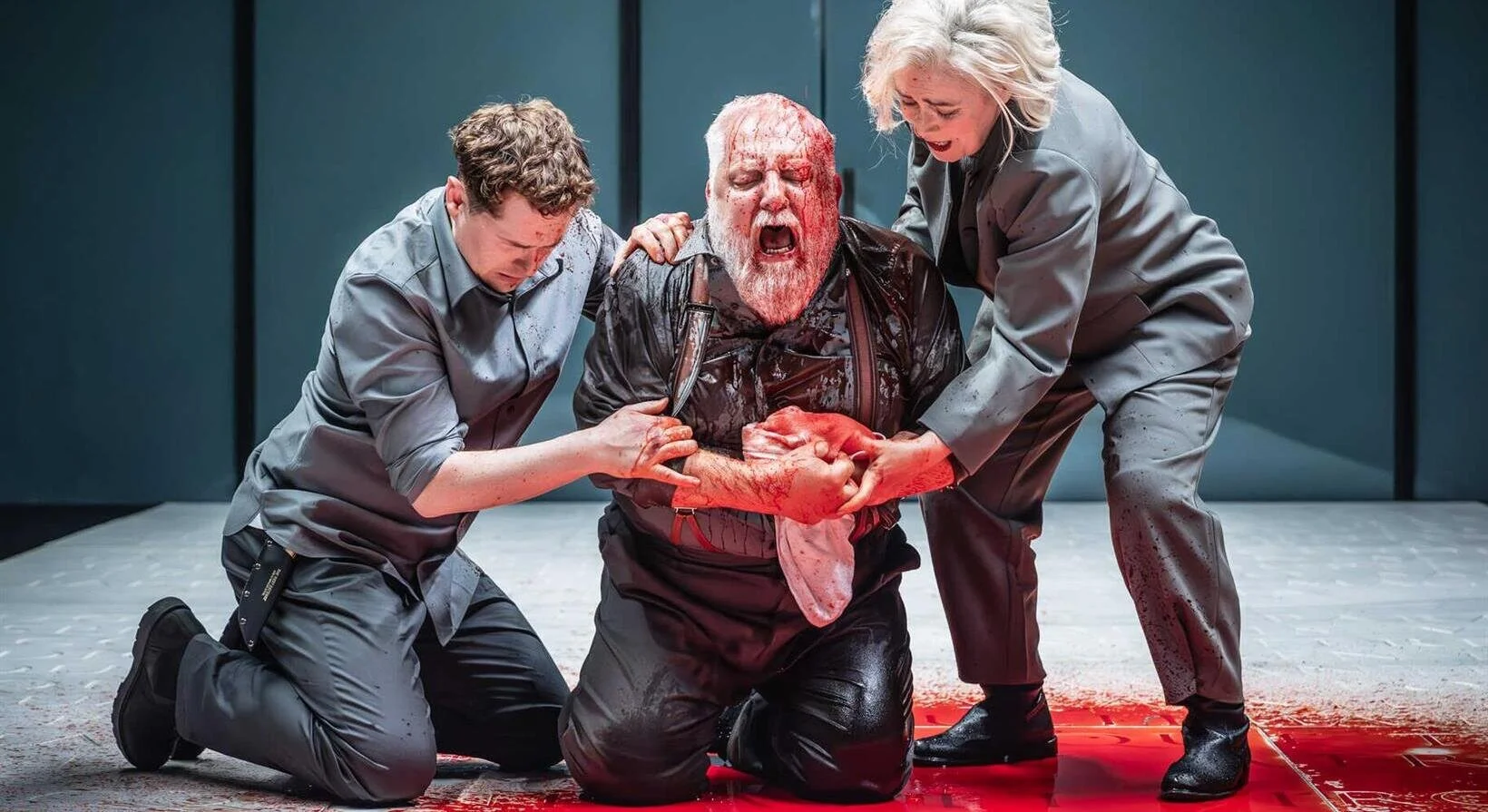
Photo credit: Marc Brenner
Besties, we, like you, love our live theatre visits and the joy of seeing a wonderful performance in the West End or at our local regional theatre. But we hear plenty of stories at the moment of the challenges and threats to the venues and producers who make this happen for us. So, we have launched this new section of our website as a focus on the issues, the solutions and why we think the sector needs the support of Government, Local Authorities, Trusts and Foundations, philanthropists, and most of all, us. But we can be positive, Theatre has had its crises before and survived, and we are confident it will prosper now with all our support.
A History of Change
There is only one place to start as we look back at what we can learn from Theatre’s history and that must be Shakespeare’s time when James Burbage opened The Theatre (meaning the seeing place) in 1576. One of his earliest works was Titus Andronicus (first staged around 1590), which we recently saw at Stratford upon Avon in an RSC production. It is one of the bloodiest and most melodramatic of his plays, and Samuel Johnson wrote in the 18th century that “barbarity can barely be conceived tolerable to any audience”.
Audience behaviour
Of course, at that time, when theatre audiences - especially those in the pit or yard called Groundlings - were a rowdy unruly crowd, heckling actors and consuming food and drink, the sites were reportedly prime spots for pickpockets and prostitutes. They would have regarded the clink of prosecco glasses, the glow of a phone and unwrapping of sweet wrappers as rather gentile distractions compared to the throwing of fruit; shouting and booing at performers. It was why these venues were regarded as dens of iniquity which, of course, led to the Cromwellian ban of stage plays from 1642 to 1660.
On the restoration of the monarchy in 1662, letters patent from Charles II shaped the London theatre scene granting Killigrew and Davenant the right to establish and manage London theatre, creating the Theatre Royal at Drury Lane and Covent Garden, a duopoly that lasted until 1843. The Lane, as it is colloquially known, is the fourth building under this patent and opened in 1812. It was gloriously refurbished by LW Theatres in a £60 million project reopening in August 2021. The Covent Garden Theatre did not finally open until 1732 and is now, of course, the third building on the site is known as the Royal Opera House. These two grand buildings remain at the pinnacle of UK theatres and there is a real thrill entering the foyers and auditorium because of the knowledge of what has gone before and the breathtaking quality of the spaces. In 1763, there were riots at both Drury Lane and Covent Garden against the abolition of half price late admissions to the very long, five act productions, and after pieces like pantomimes.
The Risk of Fire and Safety
When plays moved indoors, they were lit by tallow candles casting a yellow light on proceedings and needing to be trimmed between acts - the atmosphere changed. But the candles and heating stoves combined with oiled canvases and wooden structures made these venues at risk of fires. The original Drury Lane burned down in 1672, and its replacement was destroyed by fire in 1809 when the fire was said to have engulfed the whole building in fifteen minutes. The first iron safety curtain in the UK was introduced at Drury Lane in 1794. The stage house caught fire again in 1908, but the auditorium was saved! It was not until 1817 that gas lit theatres and later in 1877, limelights were used to illuminate the auditorium and stages. Though the introduction did not eliminate the risk, and in 1887, the Exeter Theatre Royal burned down killing 186 people when a gas jet ignited drapes.
The risk of censorship
Another major influence on the development of the UK theatre sector was the era of the Lord Chamberlain, the official licensor of plays from 1737 who prosecuted unlicensed venues for putting on text-based plays rather than musical entertainment and censored libelous or obscene content, heavily cutting sexually explicit themes and offensive language. The position was abolished in 1968 and Hair opened at the Shaftesbury Theatre on 27 September 1968, including a cast comprising Paul Nicholas, Elaine Paige, Tim Curry , Richard O’Brien, and Marsha Hunt. Now while there is more creative freedom on stage, there are greater sensitivities surrounding marketing and promoting productions with trigger warnings and political correctness at the centre of writing, casting, and direction.
Pandemics and World Events
In 1593/94, bubonic plague closed UK public theatres but the Spanish flu pandemic from 1918-19 did not lead to a blanket closure, although some closed due to falling attendances. In 2020, of course, we had Covid, which closed all venues from 16 March to 21 October when socially distanced indoor audiences were allowed, followed by second lockdown from 5 November, and third lockdown on 4 January 2021. Full capacity operations did not resume until November 2021. There is no doubt that this period has left a financial pressure on venues’ depleted reserves.
At the start of both World Wars in 1914 and 1939, there were some temporary theatre closures, but the bans were lifted to improve national morale, although during the height of the London Blitz from 1940-41, some were closed or destroyed. The Windmill Theatre famously said: “we never close.” The Mayflower in Southampton (then called the Empire) miraculously survived two separate bomb attacks during World War II.
Failing Building Structures
In 2023, Reinforced Autoclaved Aerated Concrete (RAAC), a common building material in 1950’s & 60’s public buildings, was highlighted as a risk to public safety, leading to the temporary closure of The Orchard in Dartford, The Harlequin in Redhill, Key Theatre in Peterborough and the Royal & Derngate in Northampton. The Motherwell Concert Hall and Theatre was declared unviable and will be demolished.
However, RACC is just the tip of the capital iceberg that threatens our UK Regional Theatre infrastructure as aging under invested buildings need investment for accessibility, environmental sustainability, and modernisation.
The 2025 report from the Society of London Theatre (SOLT) and UK Theatre warned that 40% of regional theatre buildings face closure within the next five years without urgent capital investment. The Arts Council of England announced the Creative Foundation Fund for the most urgent requirements through which 74 theatres would share £96 million of funding for urgent capital projects, although a large chunk will go to some very big institutions such as the RSC. There is still a very large capital need for venues across the UK which we believe exceeds £1billion.
Rising Costs of Operations and Touring
The SOLT/UK Theatre report - ‘Theatre in UK’, published in March 2026 - sets out the current economic pressures, capital backlog, and investment barriers with 36% of venues projecting deficits in 2025/26, with 91% expecting cost rises especially staff costs and energy costs. At the same time, 43% reported planned infrastructure projects and a more difficult climate to raise funds than previous year.
The Arts Council England, founded in 1946, reported in the State of Touring Report in April 2026 that the regional touring scene was in crisis with midscale and small productions/venues at particular risk. They reported a 24% drop in the number of touring performances from 2019 - 2024 and called for a radical rethink.
Looking forward to the Future of Theatre
It’s hardly surprising that a dramatic art form has so many crises; the organisers are the masters of creating dramatic effect to get our attention and history shows that the venues survive, but it does require our support and attention. The social economic and well-being benefits are starting to be recognised. The good news is that the venues still attracted 37 million attendances in 2025 at a median ticket price of £41, with 17.6 million of those in West End with an average occupancy of 84%. We do want our visits to be safe, accessible, affordable, and enjoyable and that does require investment by producers and venue operators which, in turn, needs public support.
Why we care about Live Theatre
There are three distinctive elements that make the Theatre experience memorable and enjoyable: The Anticipation, The Moment, and The Afterglow, and when all three combine to lift the spirits, they create truly memorable experiences and memories.
The Anticipation:
The sense of excitement, of stirred interest and hope of exceptional performances starts with the announcement of a production (or a match or band) and the decision to book. It might be a title, a star, a story, an author, a book, or a film title that is the hook to catch your interest. This will be driven by a memory or engagement with the story or star in another capacity. That expectation will rise as the performance date approaches and escalates with the journey to and arrival at the venue, peaking as you take your seat, and the house lights dim. Foyers are an important part of ‘The Anticipation’, but when it all flows smoothly, it sets up ‘The Moment’ wonderfully.
The Moment:
Whether it is 90 minutes straight through or three hours with an interval, the live experience is a magical time. In our view, even a poorly executed show can create memorable moments that make it special. I still recall the horror and concern for a very famous actress called Mary Kerridge who, with her husband John Counsell, ran and starred in the Theatre Royal Windsor Repertory Company, and literally forgot all of her lines in the second act of a play in the 1980s. All these years later, I still recall how I felt. You want a moment that entertains, that makes you admire the performance, wonder at the technical staging, but more importantly that stirs the emotion, connects you to the story or the characters and sets you thinking about the wider society. Then you have a truly magic moment.
The Afterglow:
This begins with the curtain call. We are surprised how often audiences rise to give a standing ovation these days, but when you feel impelled to do so by what you have seen, it is a glorious celebratory experience shared with cast and audience. The real joy of ‘The Afterglow’ is the chat in the pub or on the journey home about what we have seen, the debate about individual performances or the meaning of scenes. Then the crosschecking of your thoughts with reviews and online comments. These days, we write a review or a reflection on everything we see as a way of organising our thoughts and as a record to be kept with the programme of the event. Some are published, some are just there in case we, or someone else, seeks a reminder. ‘The Afterglow’ creates the memory that feeds into the anticipation of the next event.
*
We hope this first article explains why we are passionate about live theatre and its future. We will return to these themes in coming articles and would love to hear your thoughts on any aspect. We need to campaign with producers, venues and audiences to ensure that the sector can grow and thrive, to highlight successes and promote exemplars and most of all, to pass on our passion to the next generation of theatregoers.
You can read more on these thoughts in the following articles.
Stage Whispers 5- A passion for Theatre - Nick Wayne
Stage Whispers 7- History and Legacy - Nick Wayne
Nick Wayne
Nick has been involved as a Trustee/Director in UK Producer and Venue Organisations for twenty-six years, seen over 1350 productions, visited over 160 of the UK Venues, seen overseas productions in USA, Canada, France, Hungary, Austria, Czech Republic, and Australia and invested in over 40 West End Productions. You can read his long form articles on Stage Whispers UK - Nick Wayne