
Pantomime…
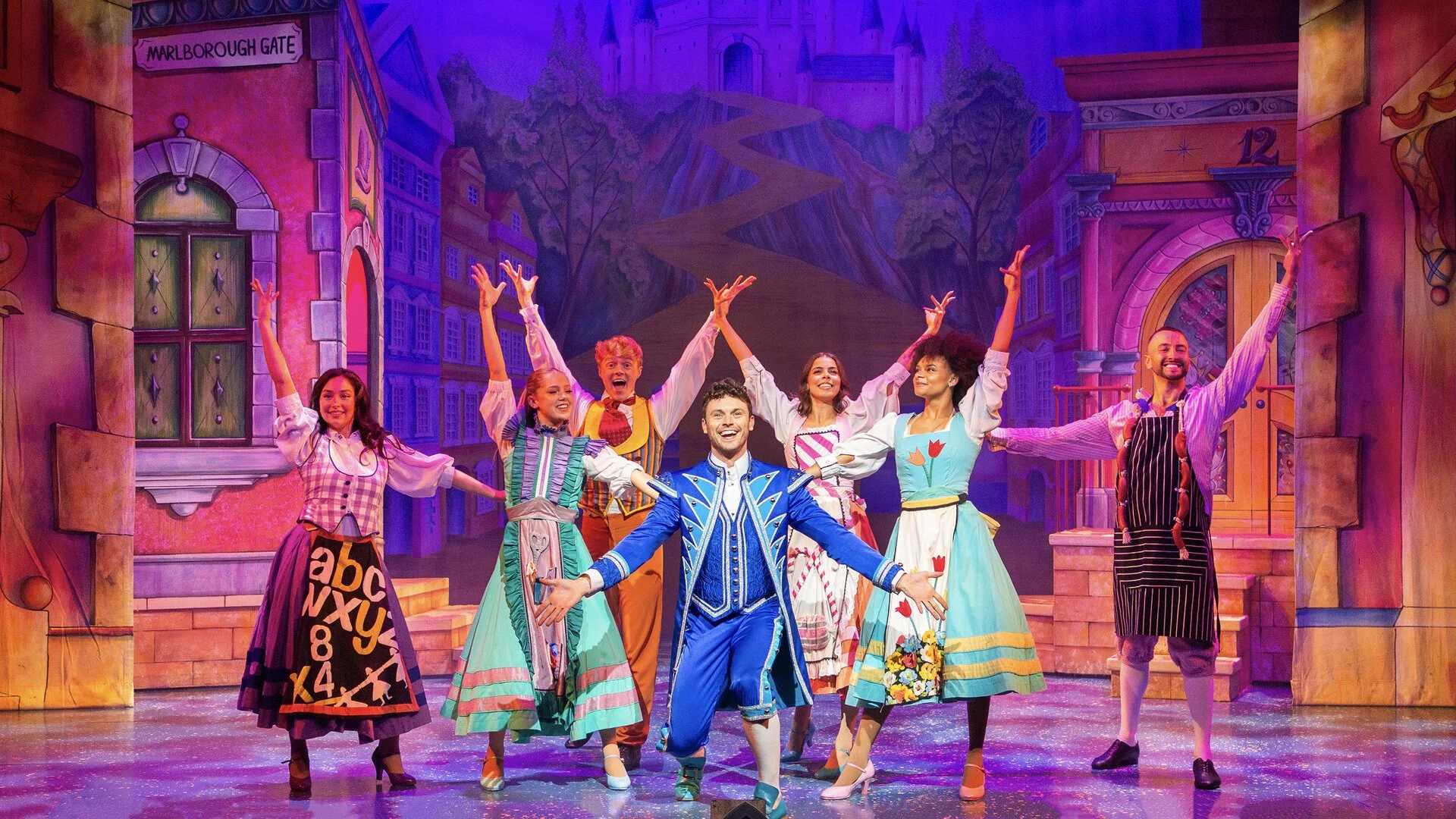
Cinderella 25/26 - Richmond Theatre (Photo credit: Ian Olsson)
Besties, we love pantomime, not just because it is a wonderfully unique British institution, or because it gives young children their first experience of live theatre, but mainly because that Christmas run is the mainstay of so many regional theatres’ financial plan, securing their sustainability and providing employment for a large number of cast and crew including stage debutants. Thankfully, the importance is now recognised by The UK Pantomime Association’s Annual Awards each April. This event celebrates the diversity and inclusivity of the producers’ efforts to refresh and evolve familiar titles.
History of Pantomime
While you can enjoy a pantomime without any prior knowledge of the history and heritage, we believe that what makes it so special as a genre are the traditions and legacy of the productions and artistes that have gone before in creating and growing the art form. It is generally credited as originating in the Commedia Dell’ Arte in Italy in 16th Century Italy. The Harlequinade was often a mimed add on to another show, extending the performances and established stock characters who form the basis of most pantomime characters today. Harlequin (Principal Boy), Columbine (Principal Girl), Pantaloon (Girl’s father like Baron HardUp), and Pierrot (the clown or comic, like Buttons). Over time, the clown became a more important character than the others.
Joseph Grimaldi is perhaps the most famous exponent of this early form, appearing as clown in 1800. The word pantomime first appeared in 1717 and in 1721, John Rich staged The Magician or Harlequin a director, creating the foundations of the Christmas traditions. Rich also introduced theatrical effects and the transformation scene, and we saw the Fairy Queen established to preside over the magic. He also introduced the ”slapstick” two wooden sticks that made a slapping noise, used in physical comedy.
Mother Goose as a title appeared in 1806 with Joseph Grimaldi. Cinderella with pumpkin and glass slipper first appeared in 1820 in Rossini’s opera, becoming a pantomime at Covent Garden soon after, although the Ugly Sisters did not appear until 1860 and Buttons was added. Aladdin’s first appearance was in 1788, though Abanazar was added in 1813 and Widow Twankey was created in 1861. Jack and Beanstalk was first performed in 1819 with Eliza Povey as Jack, and Dick Whittington appeared in 1814 with Grimaldi. From 1843, word play and puns were allowed on stage and added to the mimes and chases.
Augustus Harris (1852-1896) established the Drury Lane pantomime in the late 1800’s, leaving the Harlequinade behind and importing Music Hall acts into the shows like Marie Lloyd, Vesta Tilley, Dan Leno and Little Tich. Gender switching was developed in Victorian theatre with both Lloyd and Tilley playing principal boy roles and Dan Leno first appeared as a Dame in 1888 and went on to play Drury Lane for the next fifteen years. Animal characters, called “skins,” started to appear in the nineteenth century.
The London Palladium (which first staged panto in 1914) became the most prestigious panto venue after World War II, with Norman Evans and Terry Thomas in Humpty Dumpty in 1951, Julie Andrews and Max Bygraves in Cinderella in 1953, and Spike Milligan and Eric Sykes writing the script for the 1954 Mother Goose. The annual pantomime was staged until the 1987 Babes in the Wood with Cannon and Ball and Barbara Windsor, and was then reinstated in 2016 with Julian Clary. Sir Ian McKellen gave the genre enhanced credibility by his Mother Goose in 2022.
Fairy Tales as Sources for Pantomime
The earliest records of current pantomime titles appearing was in the 19th Century but many are based on the ancient folk tales and fairy tales that have travelled around the world over the centuries, and most famously encapsulated in the works of Charles Perrault (1628-1703), notably Histoires au contes du temps in France published in 1697, and the Brothers Grimm (Jacob, 1785-1863) and Wilhelm (1786-1859) in Germany in their book, Children’s and Household tales published in 1812.
So, what makes a great pantomime today?
The very best shows are a perfect combination of elements. A strong script with narrative and traditional comic business woven together. A selection of music which reflects old well-known songs and modern tunes for the younger audience, preferably with some lyric updates to add topicality and localisation. A brilliant comic lead or Dame with a strong audience rapport who drives the show with energy and charm. A strong ensemble cast that is integrated into the storytelling and business. Bright colourful costumes and staging that set the scene and add elements of magic and illusion. A running time of around two hours to provide value for money and we would say a perfect venue that creates the atmosphere for fun and enjoyment while acknowledging the history and tradition. When the producers get all of these elements right, there is no better form of entertainment, and we can truly appreciate the skill and art of the genre.
Why is pantomime so important?
We are indebted to the Uses of Enchantment, the meaning and importance of fairy tales book by Bruno Bettelheim, which examines the impact of fairy tales on children’s development and these, of course, are the basis of many pantomimes today. The book was suggested by Susie McKenna, the writer and director of many pantomimes over the years, in a seminar organised by the UK Pantomime Association on scriptwriting as the go to starting point for writing a pantomime today.
The book cleverly analyses how fairy tales develop children’s understanding of themselves and society by the themes they explore. Two themes pervade all the tales, that of a love story between two people, and good overcoming evil. But many are more effectively nuanced, dealing with overcoming differences in social class, physical appearance, familial rivalries, developing self-belief, and nurturing friendships. Children are taught by these stories so that they too can overcome inhibitions and barriers if they behave in the right way. We believe that these life lessons can be experienced in a well written pantomime and subconsciously understood by the younger members of the audience. There is therefore a triple benefit for families taking their children to such shows, an entertaining time out together, the development of a passion for live theatre, and an understanding of some life lessons delivered in a subtle and effective way.
The meaning of Fairy Tales
Bettelheim argues that old fairy tales help develop a child’s mind and personality to cope with both their internal and external challenges. They give awareness that not all human behaviours are good, which is an important understanding for young kids and confronts them with basic human predicaments. There is often a key message that crime does not pay and a suggestion that you can succeed if you try hard enough and then will live happily ever after. They are full of cultural heritage and religious motifs that can subconsciously be absorbed by the child and open the child’s minds to appreciate higher things in life. They play on the fear of being deserted or left alone but encourage the child to meet life’s challenges and develop confidence that they can succeed.
The benefit of retelling fairy tales, or seeing a pantomime title in consecutive years, is that over time from perhaps four years old until puberty, the repeated exposure provides fresh relevance as the child matures. The tales are better told than read, creating an interpersonal event shaped by those who participate. They stand repetition which drives subconscious understanding and through internal processes create visual images.
The Fairy tales’ settings, or pantomime locations, may be unrealistic environments from the real everyday world, but they engage the inner processes of a child. They can deal with complex feelings such as grief, despair, fear, rejection, inadequacy, and sexual identity. They can pose questions like “Who am I?” and “How would I respond in that situation?” They can delight and instruct at the same time. Children can reflect on the story and learn about themselves and bridge the gap between inner feelings and the real world. Though settings are unreal, the feelings developed are not untrue and the good feelings fairy tales give us are real.
Modern parallels to fairy tales
Hearing a fairy tale is a different experience to young children brought up today on computer “shoot ‘em up games”. There are similarities in some cases between the difference between myths and fairy tales, and computer games and pantomimes. Myths feature superhuman heroes, which can’t be emulated, in majestic settings often with tragic or pessimistic outcomes. Fairy tales deal with inner conflicts and development to a better humanity and are usually happy and optimistic. The old story’s structure mirrors the acts of a play: Act 1: Threat and danger; Act 2: Escape and recovery; Act 3: Consolidation and resolution in which justice prevails. The myths often offer no escape or consolidation.
Authority figures, including parents, are rarely the heroes’ saviours who must solve their own problems and in doing so, improve their relationships with those authority figures. They must find their own path, form their own relationships and alliances along the way, but then are reconciled with authority figures at the end. They help prepare the child for their own life. Consider the roles of the Empress to her daughter and Aladdin, the relationship of Dame Trot with Jack, the Baron with Cinderella, the Alderman with Dick Whittington, the father in Beauty and the Beast, or the Queen with Snow White.
The villains represent the distractions and temptations that must be overcome, and the skin characters often represent friendship and alliances based on unconditional love that support the heroes. The comic character too represents true friendship as the principal tries to understand their feelings of love and desire.
Mother Goose
Mother Goose was the English translation title of the Perrault book, as the purported author of the Fairy Tales and first appeared in pantomime in 1806 in Harlequin and Mother Goose or the Golden Egg at Covent Garden as a vehicle for Joseph Grimaldi who played Avaro. But the modern pantomime version started with Dan Leno at Theatre Royal Drury Lane in 1902, written by J Hickory Wood.
The pantomime tells the story of a woman who, tempted by the desire for beauty, learns valuable lessons about friendship and true happiness through her magical goose, Priscilla. The message to children is that beauty and wealth cannot bring you happiness. There is also messaging about the danger of falling for temptation as the villain has a bet with the fairy that there is no-one on earth who is happy with what they have got. He tempts Mother Goose with the one thing she doesn’t have: youth and beauty. He persuades her to give him Priscilla in exchange for a visit to the “Pool of Beauty.” When she emerges from the pool as, she thinks, a beautiful woman, her friends don’t like her. Too late, she realises that beauty is not everything, and that she must get Priscilla back.
Sleeping Beauty
Sleeping Beauty was an ancient folklore famously adapted by Charles Perrault and the Brothers Grimm where the cursed thorn became the spinning wheel spindle and the more macabre elements of the story were dropped. Joseph Grimaldi appeared in Harlequin and the ogress or the Sleeping Beauty in the Woods in 1822.
The authority figures of the King and Queen are unable to protect their daughter, and we see her physically mature until her eighteenth birthday but to reach adulthood and sexual maturity takes time. This story tells that parents can’t prevent their daughter’s sexual maturity but may postpone it (for 100 years!) by the separation of her sexual awakening from her lover. There is a message to children approaching puberty that there is no need to hurry sex. The period of passivity, like in Snow White, at the end of childhood allows quiet growth and preparation before sexual maturity. The symbolism of the circular stair to the hidden chamber behind a locked door can be interpreted as the final process to sexual maturity and loss of virginity. The long sleep reflects a childish dream of everlasting youth before being awakened to fully experience life.
Cinderella
Cinderella has a longer history stretching back into ancient Greek stories but was also brought into the modern world by Charles Perrault with the godmother, glass slipper and pumpkin introduced in that version. In the Brothers Grimm Fairy Tales, the two sisters mutilate their feet to fit the slipper. The story appeared in the 1820 Rossini opera La Cenerentola, becoming a pantomime at Covent Garden as Harlequin and Cinderella that year, although the Ugly Sisters did not appear as men dressed as women until 1860 at the Strand Theatre and Buttons was added at a Covent Garden production.
While obviously a story of sibling rivalry and their feelings about their parents and the desire to win their love and appreciation, there is much more subconscious messaging in the traditional story. Cinderella harbours feelings of dejectedness, worthlessness and being downtrodden but her innocence and virtuousness nourishes hope and a desire to be rescued. The message is that to earn recognition of your true merit and avoid crushed dreams you need to be true to yourself. We see her personality blossom to self-fulfilment. You can’t buy acceptance or deceive others like the stepsisters try to do. More importantly, the Prince accepts Cinderella as she is in her rags.
Aladdin
The story of Aladdin was, of course, one of the best-known stories from One Thousand and one nights, the middle eastern folk tales and included in Galland’s book in 1710. Aladdin’s first appearance was in 1788 at Covent Garden, though the name Abanazar was added in 1813 in Aladdin and his wonderful lamp at Covent Garden, and Widow Twankey (after an inferior brand of tea) was created in 1861.
This tale is about overcoming adversity through cleverness and courage, learning that true happiness comes from within and not from wealth or status, and that being true to oneself is essential for genuine love and fulfilment. The authority figure, the Empress, tries to prevent her daughter from following her heart and marrying below her class. There are also valuable messages for children about how you uses your powers and the defeat of evil by purity and love with the symbolic release of the genie from the lamp.
Snow White and Seven Dwarfs
Snow White and Seven Dwarfs was a Brothers Grimm fairy tale published in eighteenth century including the magic mirror, poisoned apple and glass coffin but was popularised by the Disney film of 1937 and only appeared as a pantomime title after that. Some suggest that it was not until 1974 at the New Theatre in Hull that it made its full pantomime debut.
This tale is based around parental jealousy and rivalry of the narcissistic Queen towards Snow White as he reaches puberty. Her “whiteness” suggests the innocence and purity, but she grows as a person caring for the dwarfs and her sexual desire emerges as she matures. The authority figures are The Wicked Queen and the Hunter tasked with killing Snow White. The latter is shown as weak and negligent. Snow White must gain her independence by working through the conflicts and resisting temptations. The apple is symbolic of that temptation, referencing Aphrodite and Eve, and its red colour suggesting passion and sexual maturity. In the story, Snow White first physically matures and then in the woods emotionally matures.
Jack and Beanstalk
Jack and Beanstalk derived from an English fairy tale that first appeared in 1734 and became the History of jack and the beanstalk in 1807. It was first performed in 1773 at Theatre Royal Drury Lane as Jack the Giant killer, and in 1819 under the title Jack and the Beanstalk or the Harlequin and the ogre with Eliza Povey as Jack, perhaps one of the first principal boys.
Bethlehem suggests that this story deals with parental conflict arising as a child is sexually awakened. Milky White, the cow, ceases to give milk, symbolically showing the child needs to learn to make do in the outside world away from their mother’s breast. The Beanstalk can be interpreted as a phallic symbol to be controlled and in cutting it down Jack becomes his own man. It is suggested that the child needs to identify their own goals, act independently and take the initiative to run risks to develop and succeed.
Beauty and the Beast
Beauty and the Beast was another ancient story that was written down in 1740 by Gabrielle-Suzanne de Villeneuve and was presented as a pantomime at Drury Lane in 1869, with a script by E L Blanchard. Dan Leno appeared in a version in 1890 with Vesta Tilley. Of course, it joined the classic Disney animations in 1991 and was adapted for the stage musical in 1994.
This is a story of gentleness and loving devotion. Beauty’s love of her father is transferred to the beast and as with other tales, reflects this moment of sexual maturity and entry into adulthood. The Red Rose can be interpreted as symbolic of her loss of virginity. For the adolescents in the audience, there is a message that sex may seem like a beast-like behaviour but in reality, should be part of satisfying love. Freud argued that sex can be seen as disgusting until directed to a suitable partner of a similar age. There is an obvious message to not judge “the book by the cover,” or a person by their looks rather than their personality but the story also shows Beauty’s growth as a person through finding the love of the Beast.
These seven titles have been part of pantomime tradition for two centuries and still provide modern audiences with familiar narratives each Christmas as they continue to evolve and be updated. You can read more on the historic pantomimes on the excellent website.
https://its-behind-you.com/development.html
However, the central themes that Bruno Bettelheim’s book highlights still remain at the heart of the stories, remain relevant today and we are sure are part of the reason for the longevity. Bethlehem’s book delivers a fascinating insight into why these stories has have stood the test of time for hundreds of years and why they have a valuable role in the development of young people. Their core relationships with parents needs to change as they develop new friendships and reach sexual maturity and seek a role in life. Some of the allegories may seem far-fetched but they do make you think about the stories in a different way.
We hope you too will reflect and appreciate this unique British art form more and we look forward to hearing your thoughts on your visits.
Stage Whispers 14 - Its Pantomime Time- Oh yes it is.
Stage Whispers 15- Why Pantomimes mean so much
Nick Wayne
Nick has been involved as a Trustee/Director in UK Producer and Venue Organisations for twenty-six years, seen over 1350 productions, visited over 160 of the UK Venues, seen overseas productions in USA, Canada, France, Hungary, Austria, Czech Republic, and Australia and invested in over 40 West End Productions. You can read his long form articles on Stage Whispers UK - Nick Wayne