
Review: TO KILL A MOCKINGBIRD, Birmingham Hippodrome - Tour
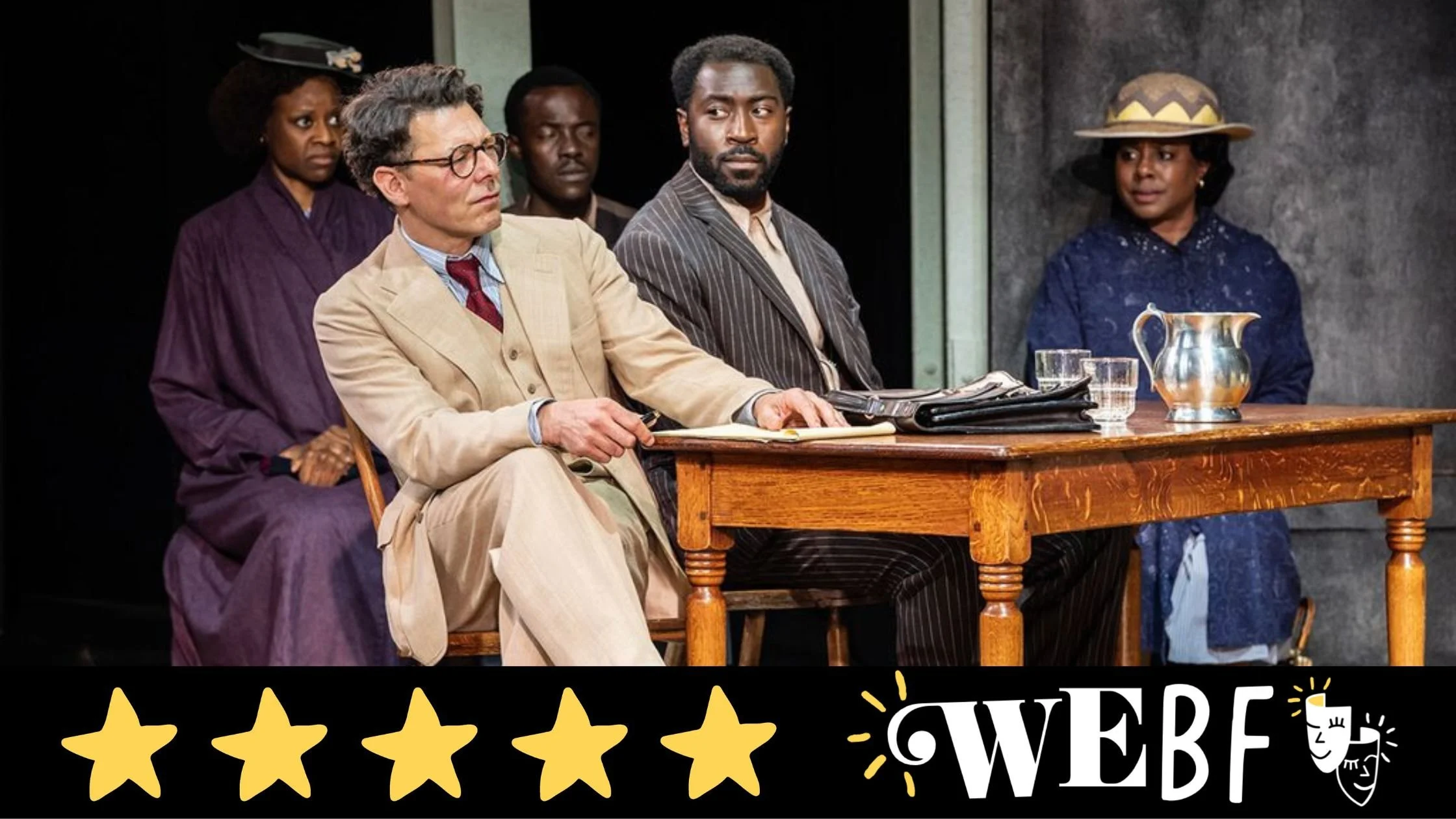
Photo credit: Johan Persson
Harper Lee’s To Kill a Mockingbird, first published in 1960 and awarded the Pulitzer Prize a year later, remains one of the most quietly devastating explorations of justice and morality in modern literature. Set in the mid-1930s in the fictional town of Maycomb, Alabama, the story is told through the eyes of Scout Finch, a sharp and curious six-year-old growing up alongside her brother Jem under the steady guidance of their father, Atticus, a lawyer of rare integrity. Through Scout’s perspective, the narrative unfolds with a disarming simplicity, even as it confronts the entrenched racism of the American South, most notably in Atticus’s defence of Tom Robinson, a Black man falsely accused of a crime he could never fairly contest.
Aaron Sorkin’s stage adaptation manages that rare feat of honouring the source material while allowing it to breathe in a new and urgent way. It feels less like a revival and more like a reawakening. With uncomfortable clarity, the production draws subtle but unmistakable parallels between the prejudices of the past and those of the present day. In a cultural moment shaped by debates around immigration and welfare in the UK media, the play lands with particular force, reminding us how easily truth is displaced when it fails to align with public perception. The result is a piece that feels as necessary now as it must have done on the page in 1960, and indeed in the era it depicts.
Under Bartlett Sher’s direction, the production moves with a welcome pace, carrying the weight of its themes lightly without ever diminishing them. There is a wit and fluidity to the staging that allows the text to land cleanly, trusting both the material and the audience. The silent gallery that frames the courtroom scenes becomes a powerful device. They are as immersed in the action as we are, a quiet mirror to the audience itself. We sit together in judgement, holding our breath, hands tense, wanting to intervene, to demand truth from those who refuse to see it.
At its heart, though, are the performances. Anna Munden’s Scout is a particular triumph, capturing both the mischief and the moral awakening of the character with remarkable precision. Alongside her, Gabriel Scott as Jem and Dylan Malyn as Dill bring a warmth and natural ease that grounds the production, their dynamic entirely believable and quietly affecting.
Richard Coyle’s Atticus is thoughtfully judged, eschewing grandstanding in favour of a measured, humane authority. His performance embodies a quiet courage, offering a portrait of moral conviction that feels both aspirational and deeply human. Opposite him, Aaron Shosanya’s Tom Robinson is quietly devastating. His innocence is never in question, yet the tension in the room is palpable as the verdict rests in the hands of twelve white farmers, a jury so far removed from any true sense of his peers that the outcome feels chillingly inevitable.
It is, in many ways, a difficult watch. The themes are unflinching and the emotional weight lingers. Yet there is something undeniably engaging about the production. It holds your attention without softening its message, and perhaps that balance is where its real strength lies.
With the majority of its tour now complete, To Kill a Mockingbird remains in Birmingham until 18 April before continuing its journey and arriving for a limited run at Wyndham’s Theatre in the West End. It is well worth seeking out.
***** Five stars
Reviewed by: Alanna Boden