
Review: THE LAST MAN, Southwark Playhouse Elephant
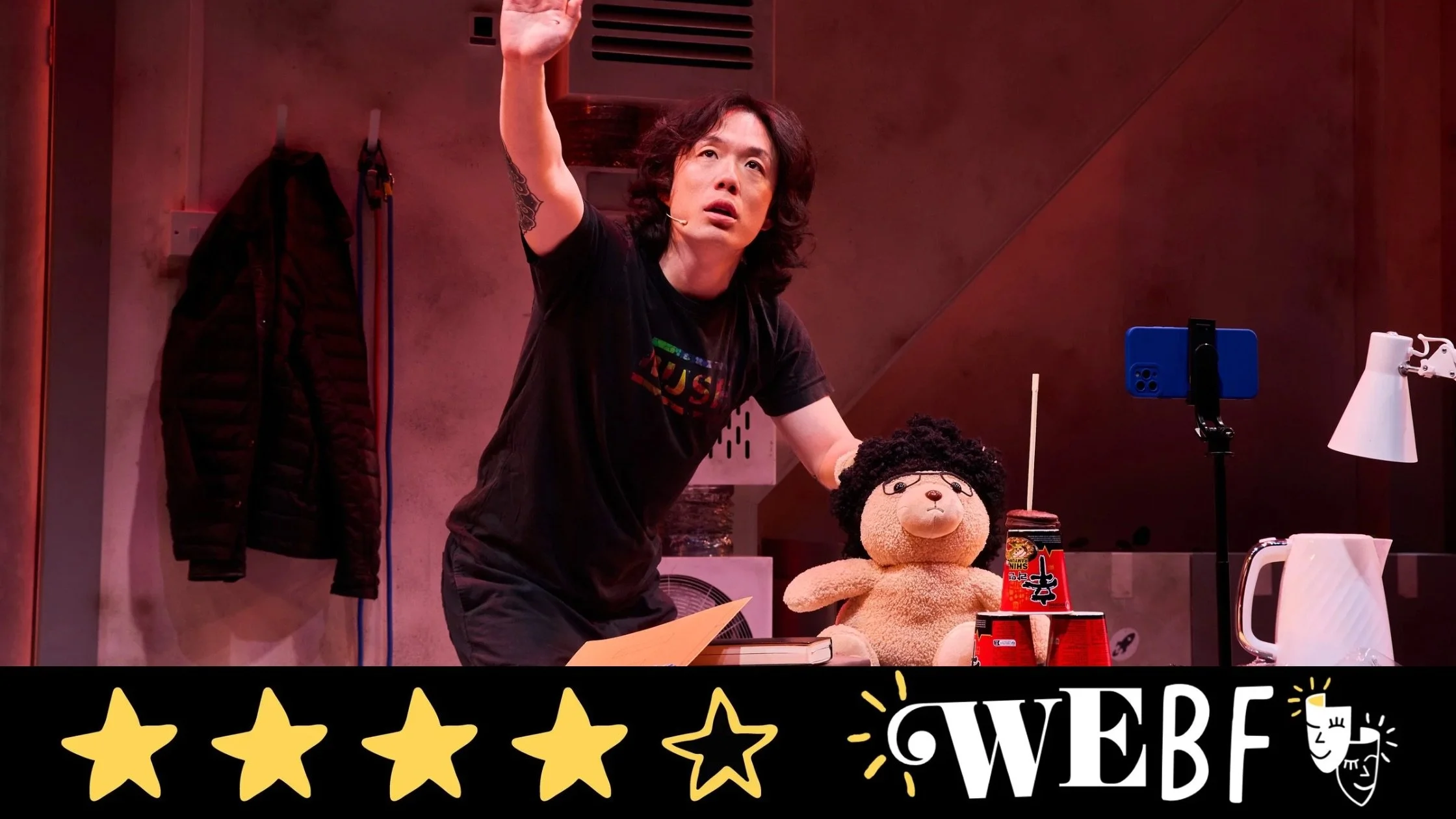
Photo credit: Rich Lakos
It’s worth saying just how big The Last Man already is in South Korea. Written by Jishik Kim with music by Seungyeon Kwon, the musical has built up a huge following there over several productions, and this run at Southwark Playhouse marks the premiere of the English language version. You can see why it’s found an audience as well. On paper it sounds like a zombie musical, and technically it is, but underneath all the infection and isolation and references to apocalypse films, it’s much more interested in loneliness, hope, and the strange things people cling to when there’s nobody else around.
Before things even properly begin, there’s already a sense that something bad is about to happen; the stage is dominated by this stark concrete bunker, lit with harsh white light, while screens flash warnings about a national emergency. It feels cold, clinical, and tense, like a siren could go off at any second.
And then it does.
That’s how the show throws you into things. A disembodied voice orders everyone indoors as a zombie virus spreads across the country, while The Survivor, played here by Lex Lee (who alternates the role with Nabi Brown), scurries along the balcony above the audience trying to make it to safety. Thankfully, he’s prepared. Over the last few months, he’s been secretly stockpiling supplies in a rented underground bunker apartment called B-103, and that’s where he plans to ride everything out with instant noodles, filtered water, a high-tech cooling system, and an impressive amount of optimism.
The setup is incredibly easy to follow, which helps because the show moves quickly. Backed by a loud, thumping rock score, the audience is immediately dropped into this nightmare world, but it never feels confusing because The Survivor himself constantly frames everything through zombie films and TV – The Walking Dead, Zombieland, Night of the Living Dead, 28 Days Later, and especially Train to Busan (an excellent Korean zombie movie) all get referenced throughout, which gives the audience an instant shorthand for the world we’re in. Zombies are familiar territory by now, and so is being trapped indoors while the world outside falls apart a bit, which means the audience sides with The Survivor almost immediately.
What helps that work is Lex Lee, who is so good in the role. His descent into isolation and madness happens slowly enough that you almost don’t notice it at first. He’s funny, charming, slightly awkward, incredibly proud of the life he’s managed to build underground, and every now and then you catch yourself thinking maybe he actually is going to be okay. At the same time, there’s always this feeling that something terrible is waiting around the corner. Vocally, he’s excellent too, handling both the bigger rock numbers and the quieter emotional songs with ease.
Then there’s Jon Bear.
Jon Bear is The Survivor’s childhood toy, essentially his best friend, and when he suddenly starts appearing around the bunker without explanation, the show becomes much stranger. There’s no logic to it, no reason given, he’s just… there. And instead of questioning it, both The Survivor and the audience seem relieved. It’s surprisingly effective. The loneliness in the bunker becomes so intense that even something uncanny starts to feel comforting, and by the end Jon Bear almost feels like another cast member entirely.
The music from Seungyeon Kwon does a lot atmosphere-wise as well; the score switches nicely between energetic rock songs and quieter emotional moments, and while some numbers stand out more than others, it all feels cohesive. There’s also some really lovely inclusion of Korean culture throughout the piece, particularly moments like the Korean version of “Happy Birthday” and references to words connected to emotions that don’t have easy English translations. For Korean audiences, those moments probably feel deeply familiar, and for everyone else, they become a really nice insight into something different.
Our only real issue with the show is the ending. There’s an extra twist in the final few minutes that doesn’t really feel necessary, especially because the emotional climax comes just beforehand, with The Survivor delivering this huge, hopeful, almost defiant anthem before heading towards the bunker door. That would probably have been the stronger ending – leaving things slightly open and uncertain would have fitted the rest of the show much better than spelling things out one last time.
Still, The Last Man ends up being much more human than its zombie premise first suggests. Yes, there’s infection and survival and references to horror films, but underneath all of that it’s really about isolation, routine, memory, and the desperate need to believe there’s someone else out there waiting for you, and after the last few years, that hits harder than it probably would have before.
**** Four stars
Reviewed by: Lisamarie Lamb
The Last Man plays at London’s Southwark Playhouse Elephant until 13 June, with further info here.