Review: EQUUS, Menier Chocolate Factory
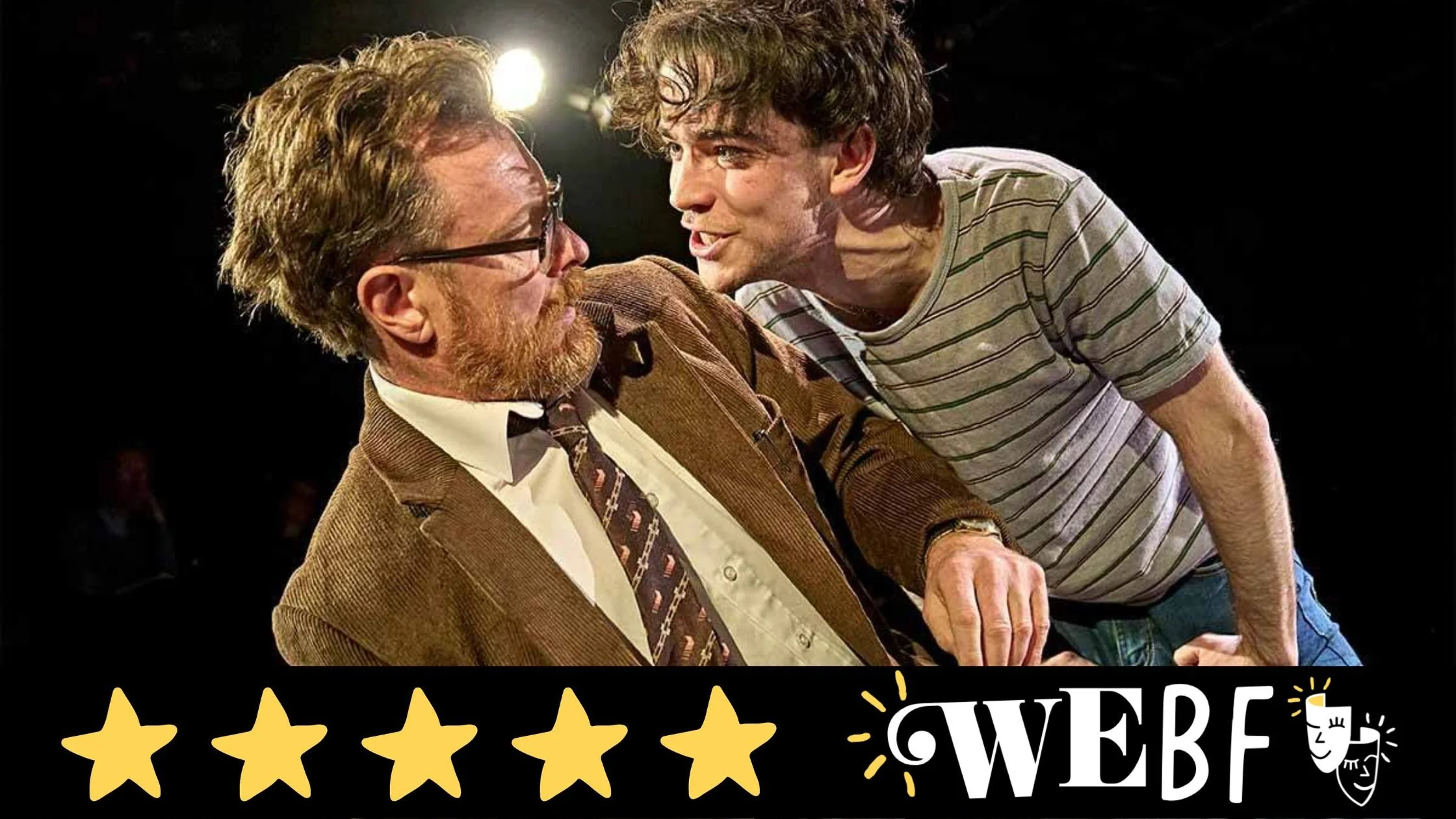
Photo credit: Manuel Harlan
Peter Shaffer’s seminal classic gallops back on stage at the Menier Chocolate Factory in Lindsay Posner’s searing revival, with enough horsepower to carry it straight through to the West End.
At seventeen, Alan Strang, seemingly out of nowhere, blinds six horses and instead of facing life imprisonment, is put into the hands of child psychiatrist Martin Dysart to help comprehend how he could have committed such an atrocity. However, through their sessions as Strang opens up and his obsession with the deity of Equus takes centre stage, Dysart starts to learn more from the boy, and about himself, than he’d bargained for.
Lindsay Posner creates a fluid and kinetic arena of discovery for this exceptional cast gathered by casting director Ginny Schiller. He allows space for them to breathe and explode in all the right places, whilst simultaneously reining in the moments that require it, and wringing out the pain and discomfort in just the right measure to keep you permanently engaged.
Not only are the audience a fly on the wall to Alan’s sessions with Dysart, but Dysart also directly addresses the audience keeping them constantly involved in the action. Setting the piece in thrust staging, Posner forces the audience to be constantly invested. He has also seated the principal cast amongst the audience for the duration of the show, which forces us all to relate to the power of an omnipresent force looking in, as well as raising the question of how often we, whether we mean to or not, observe changes in people we should have addressed sooner, but simply don’t out of fear or systemic societal repression. Whether intended or not, it places a huge question mark on the British cultural obsession with the “Keep calm and carry on” mantra.
Toby Stephens is utterly compelling as Dysart. He careens through the text with poise; he is hilarious and heartbreaking and navigates the emotional trajectory of man who becomes inspired by a boy who initially unnerves him expertly.
Noah Valentine gives a career-defining performance as Alan Strang. His physicality, his vulnerability, his ferocity, and his pain all swirl together to create the perfect storm of this boy who was left to be self-radicalised by his own religion and unknowingly abandoned by the people who should have been protecting him the most. His Alan is utterly magnetic, free-spirited and gutting. From his moments of volatility to placidity, you’re constantly drawn to him wherever he is on the stage.
The rest of the cast thrive in this show, especially Bella Aubin who gives a gorgeously natural and warm performance, the girl who just wants to be close with Alan but can never really understand him enough to know how, and Emma Cunniffe as Alan’s bewildered mother, who bears the guilt of what happened for not actively shielding Alan enough, her emotional availability is raw and real.
Movement director James Cousins and set and costume designer Paul Farnsworth veer away from the standard ‘horseheaded’ ensemble and instead adopt a more physical approach to display the equine nature of these horses. The ensemble of incredible dancers are quite clearly human, but in perfect synergy are quite clearly horses. What this does is very powerful, it makes the whole piece more accessible and allows the audience to see first-hand, and maybe understand, the sensuality Alan experiences with these animals.
Adam Cork has cultivated an intense soundscape and score for this production, and in perfect balance with the well-placed lighting design from Paul Pyant and expert intimacy co-ordination from Clare Foster, leaves your ribcage vibrating and your breathing irregulated in an edge-of-your-seat finale to Act One. This is also mirrored to great effect in another rivetingly frenetic moment in the second act.
The ill-informed will have you believe that Equus is a play about bestiality, but that couldn’t be further from the truth. Alan is never sexually attracted to the horses, he is sexually attracted to a higher power, a distinction few find hard to make, even Dysart at first until it consumes him and forces him to realise that he’s jealous of Alan’s ability to have blind faith in something bigger than them all. It is a play about lack of communication, religious indoctrination, transference, sexual repression and ignorant faith and the very severe outcome of those things when a child is not monitored correctly. However, it’s not just the parent’s fault, they’re as much of a victim as Alan is, as Jill or Dysart. Ultimately its just a serious of unfortunate events that no one can unravel in the end, not even Dysart feels he can rid Alan of the deity of Equus and lies to him because he doesn’t know what else to do.
Equus is a cautionary tale of the pitfalls of blind faith, and although the way in which Alan attempted to rid himself of it was unforgivable, it encourages us to question that sometimes when we put our faith so blindly into something, so deeply, willingly, in such an all-consuming manner, that maybe it’s the faith that needs to be blinded, not us.
***** Five stars
Reviewed by: Duncan Burt
Equus plays at London’s Menier Chocolate Factory until 4 July, with tickets available here.