
Review: DADA MASILO’S HAMLET, Sadler’s Wells
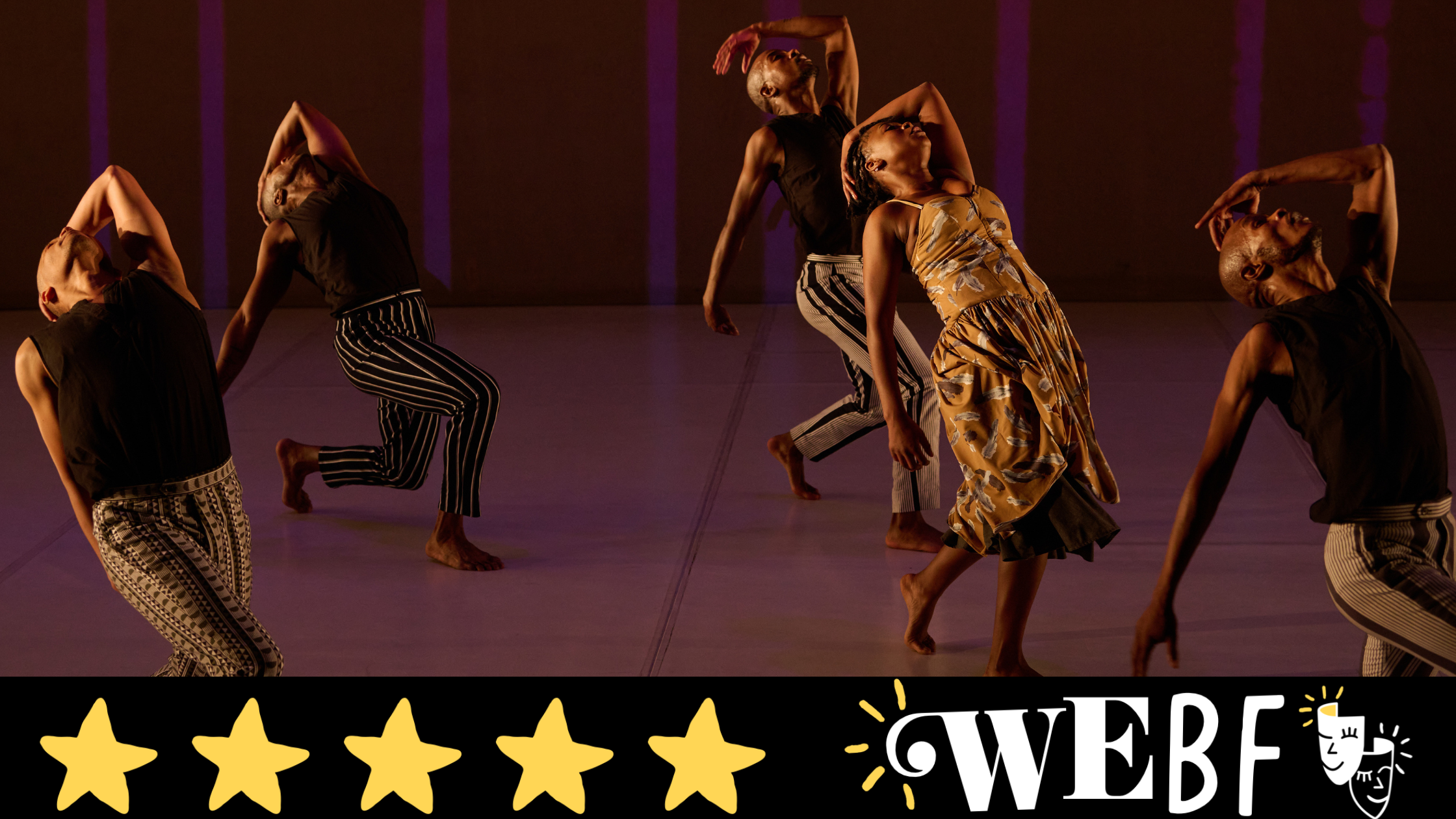
Lauge Sorensen
Dada Masilo’s HAMLET arrives at Sadler's Wells Theatre as the late choreographer’s final work and it feels fitting that it is presented with such honesty. In a world where audiences often expect huge theatrical experiences driven by elaborate set and lighting design, this production is almost completely stripped back. The stage is empty, the lighting by Suzette le Sueur is simple, used only to highlight movement and mood. There are no distractions. No smoke and mirrors. The bodies and voices in the space do all the work.
Masilo reimagines Shakespeare’s tragedy through the eyes of Ophelia, shifting the focus onto misogyny, manipulation and power. The story itself is familiar, but this perspective gives the work a different life. Rather than simply watching Ophelia unravel, the audience is made to sit with her pain and isolation.
Masilo hasn’t overlooked that Shakespeare’s work is all about the words, and wisely does not leave them behind. The evening begins with “To be or not to be” and several iconic soliloquies appear throughout the piece. Aphiwe Dike’s spoken text grounds the production beautifully within Shakespeare’s world while still allowing movement to lead the storytelling. The “Get thee to a nunnery” scene is genuinely difficult to watch at times, exactly as it should be. Lehlohonolo Madise demonstrates Ophelia’s struggle physically and emotionally, making the brutality of Hamlet’s treatment impossible to ignore.
What makes the production especially compelling is Masilo’s movement vocabulary and the way she blends dance styles and cultural influences so naturally. Classical ballet lines sit alongside grounded African dance movement, while theatrical gesture and physical theatre thread through the choreography seamlessly. Restaged by Llewellyn Mnguni, the movement language constantly shifts between control and release, tenderness and brutality, reflecting the emotional instability of the story itself. Solos create intimate connections with individual characters before expanding into powerful ensemble sections. The unison work provides some of the production’s strongest visual moments, while the evolving spatial design keeps the stripped-back staging visually engaging throughout.
Thuthuka Sibisi’s score and musical direction, alongside sound design that blends music and voice seamlessly, adds hugely to this atmosphere, grounding the work in something raw and human rather than in spectacle.
The costuming is another standout element. Designed by Dada Masilo and Suzette le Sueur, inspired by Yinka Shonibare and constructed by Tailor Me and We Two, the costumes move perfectly with the dancers’ bodies and support the storytelling subtly through status and character. At times the costumes become audible in motion, adding texture to turns and movement phrases in a way that feels incredibly satisfying to watch. Gertrude’s striking dress by Cosman becomes a visual focal point throughout.
The cast are exceptionally strong with no weak link. Tumelo Lekana’s Hamlet carries both aggression and vulnerability, while Thando Mgobhozi gives Claudius an unsettling authority. Llewellyn Mnguni’s Gertrude feels emotionally layered and physically commanding. Across the ensemble, the work feels fully committed to Masilo’s movement language throughout, all expertly tied together by Lehlohonolo Madise’s performance of Ophelia. She is sensational.
As a final work, HAMLET feels incredibly purposeful. The production trusts movement, text and the power of performance enough to let them stand alone without overcomplicating the work around them. Raw, brutal and beautifully performed, this is a powerful UK premiere and a reminder of the impact Dada Masilo continues to have on contemporary dance theatre.
***** Five Stars
Reviewed by Tara Whenray
To book tickets, click here