
Behind the scenes with guided tour of… RICHMOND THEATRE
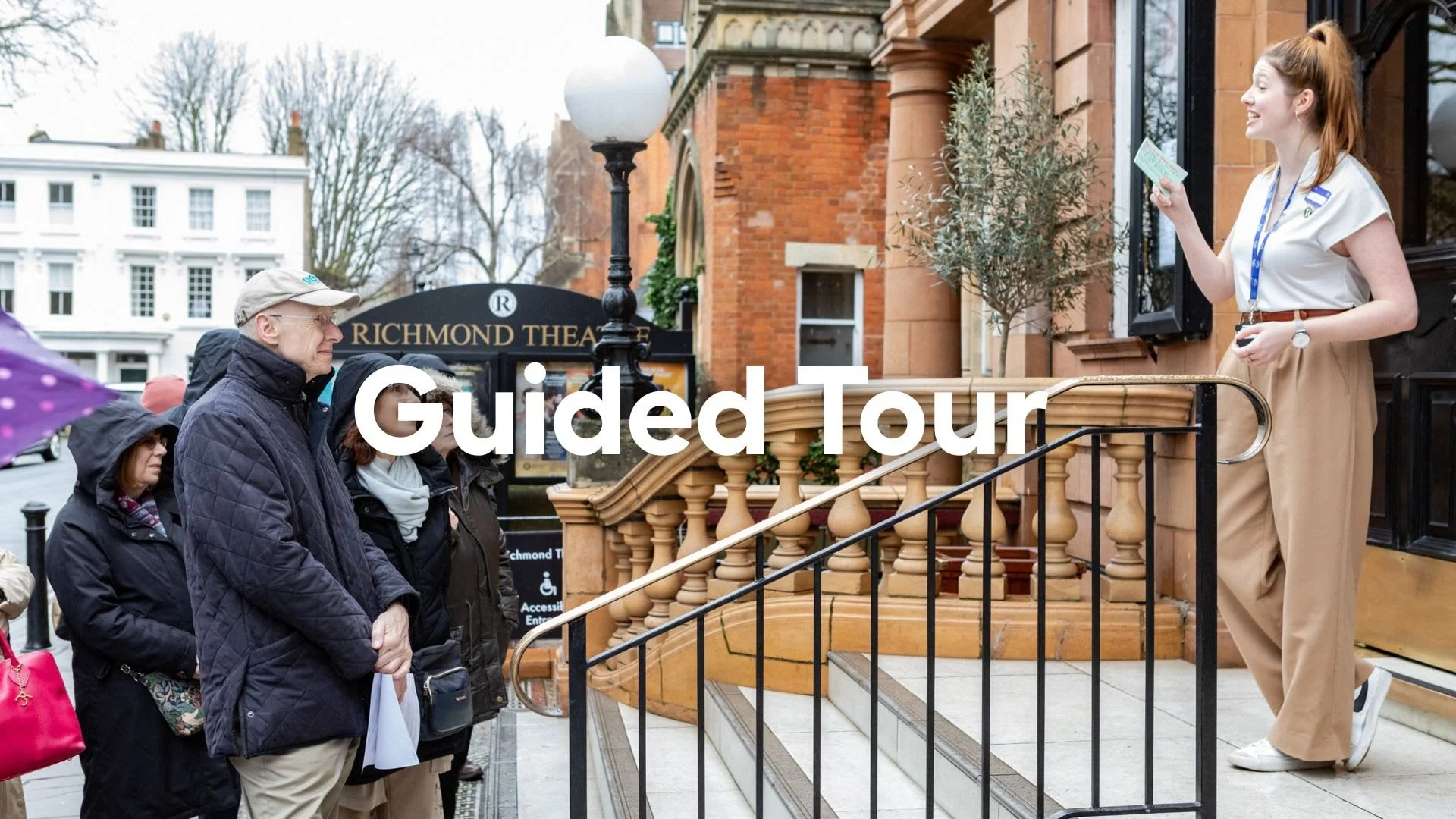
It is always a pleasure to return to the Richmond Theatre, overlooking Little Green in the heart of Richmond to admire its architecture, reflect on its history and perhaps see a show. So Besties, it was lovely to join a selected group of bloggers and vloggers on a private tour of the venue to mark the launch of this season’s public backstage tours, which commence from April to August this year, usually on a Thursday or Saturday.
Our tour guide, Ethan, led us through the theatre, explaining the features and history, and telling plenty of colourful anecdotes to entertain us along the way. If you love theatre, it is a very pleasant way to spend ninety minutes.
The tour starts on Little Green where we learn about the theatres that went before, from Elizabethan times until FC Mouflet commissioned the acclaimed architect Frank Matcham to design and build the current building in 1898. It took twelve months to build at a cost of £30,000 and opened on 18 September 1899 with a production of As You Like It and now is a Grade II listed building. It has an impressive facade in red brick and terracotta with distinctive twin towers with copulas that used to hold the theatre water tanks. The facade was moulded by Hathern Station Terra Cotta Brick Company and Doulton Companies. A plaque to the right of the main entrance records Matcham’s achievement. In 1989, Richmond Theatre closed for two years for refurbishment. The aim was to meet modern requirements, having been in constant use since it opened in 1899. During this time, all asbestos was removed, new offices, a workshop and dressing rooms were built, and a fourth floor was installed. The backstage equipment was upgraded, and dressing rooms were fitted with showers and toilets.
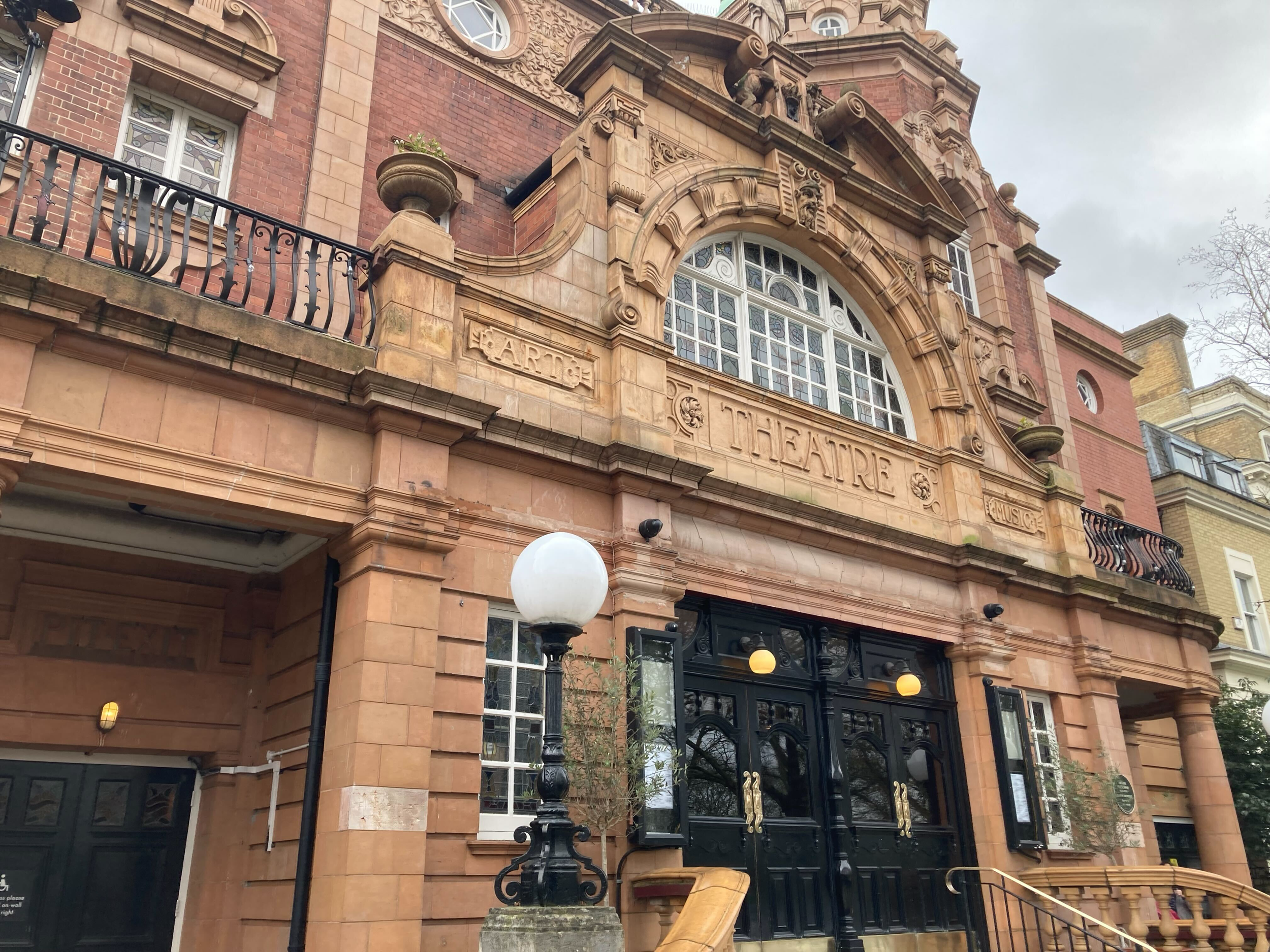
It opened as Theatre Royal and Opera House (1899-1903), it then became The Prince of Wales Theatre (1903-1905) before becoming Richmond Theatre in 1905 with a brief spell called The Richmond Hippodrome from 1908-1924. When it opened, it seated over 1220 people in six boxes, 84 stalls seats, 179 dress seats, 143 pit seats, 120 amphitheatre, 300 pit seats and 400 gallery seats. The modern-day capacity is 850 seats. On 9 June 1939, there was a tragic accident when Gardner Davis, a director and producer, fell to his death from the balustrade of the balcony at the front of theatre and his ghost is said to sometimes appear in his pinstriped suit.
In the foyer, we see a plaque celebrating actor Edmund Keen who died in Richmond in 1833, and one to Fredrick Piffard who ran the theatre from January 1947 until 1973 and presented over 1,000 plays, music hall, ballet, and twenty-five pantomimes. The foyer ceiling was painted by Lawrence Llewellyn-Bowen in the 1989 refurbishment, it shows two nymphs, supported by cherubs bearing the masks of Comedy and Tragedy, bring a memorial tablet of Frank Matcham.
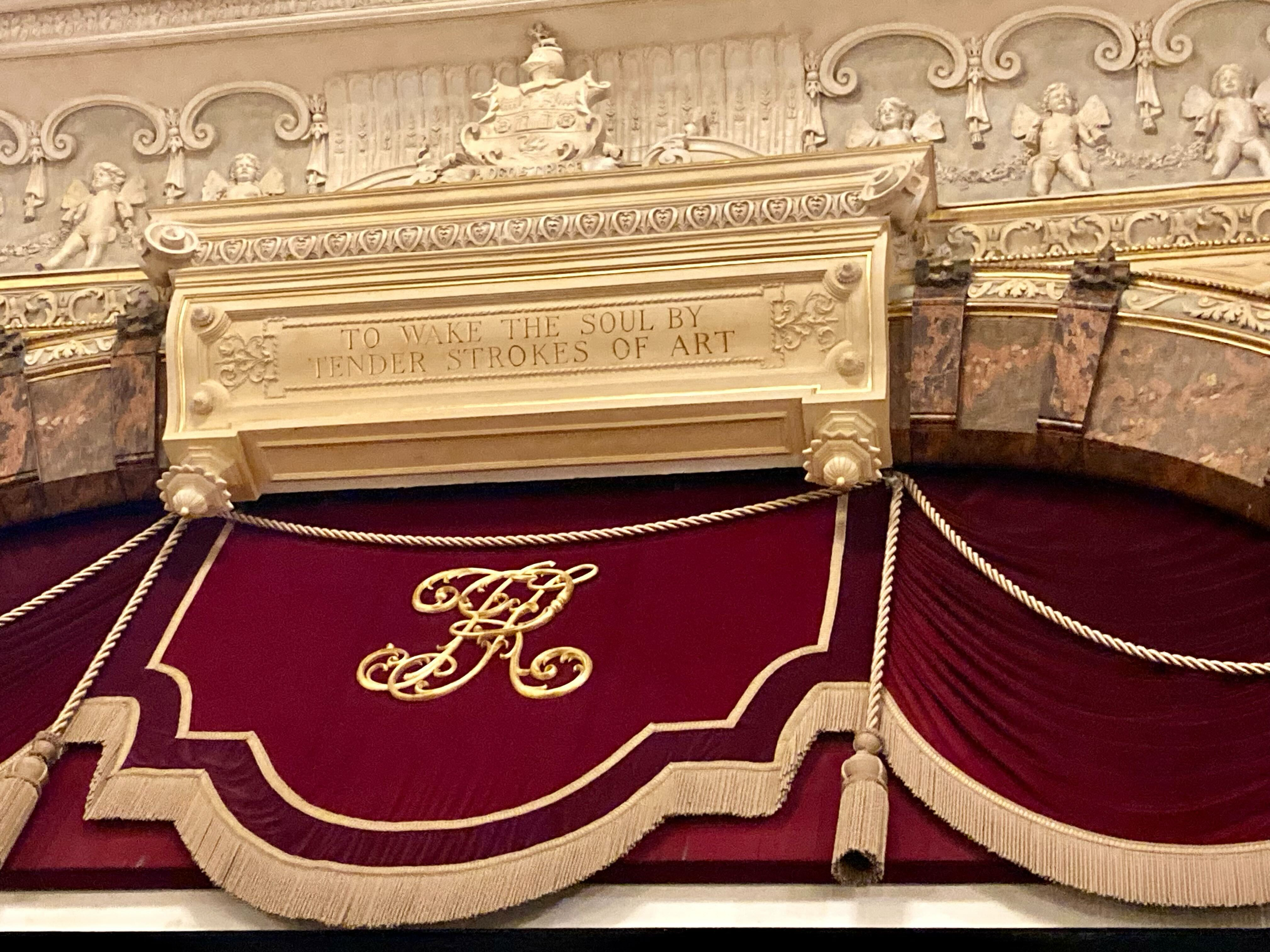
However, it is the atmosphere in the auditorium that really is special and makes the venue one of the best playhouses in the country still. Above the proscenium arch is a panel baring the inscription: “To wake the soul by tender strokes of art” from the prologue to ‘Addison’s Catto 1’ by Alexander Pope, the 18th Century poet and playwright. The plaster work in the auditorium was by H. BoekBinder. The ornate domed ceiling features four large panels, representing scenes from Hamlet, A Midsummer Night’s Dream, King Lear and Romeo and Juliet. What’s more, Matcham’s cantilever floors mean there are no pillars and therefore no restricted views. The raked auditorium also provides clear views of the stage.
It is a lovely place to watch a play, although we are not sure we would have been quite as relaxed in 1944 when the band played on as bombs fell across Richmond with one landing on the library next door.
Frank Matcham (1854-1920) was a specialist theatre architect who designed or totally transformed at least one hundred and twenty theatres. His designs sought to ensure that every seat had an unobstructed view of the stage. He designed three venues in Blackpool, the Tower Circus, and the Grand Theatre in 1894, and the Tower Ballroom in 1899. Other venues he designed include Hackney Empire (1901), Buxton Opera House (1903), London Coliseum (1904), Kings Glasgow (1904), London Palladium (1910), London Victoria Palace (1911), and Bristol Hippodrome (1912) . Each design felt like a “one off.”
Of course, a venue is only as good as the shows it can stage. In 1906, Sir Charlie Chaplin appeared in Casey’s Circus and probably performed at Richmond again in 1909 with Stan Laurel in Mumming Birds. The first George Bernard Shaw play to be performed at Richmond Theatre was Captain Brassbound’s Conversion on 3 December 1908, with Dame Ellen Terry and James Carew (Ellen Terry’s third husband). Other famous names who have performed at the venue include: Denholm Elliot, Lupino Lane, Dame Thora Hird, Sir Donald Wolfit , Dulcie Grey and her husband Michael Denison, Max Wall, Leonard Rossiter, Terence Stamp, Joan Greenwood, Dame Edith Evans, Sir Ralph Richardson, Dame Cicely Courtnidge, Sir John Mills, Omar Sharif, and Sir Anthony Quayle.
The first pantomime was Puss In Boots in 1899. The pantomime for 1982/3 was Cinderella and this proved to be the longest run in the history of Richmond Theatre, from 18 December 1982 - 26 February 1983. The costumes were designed and created by The Emmanuels. The scenery designed by Hugh Durrant, the producer was Lionel Blair (who also played Buttons). Susanna York was Prince Charming, Dame Anna Neagle, the fairy godmother, Rodney Bewes and Kenneth Connor played the Ugly Sisters, Peter Sallis was Baron Hardup, and Janet Mahoney was Dandini. Their latest pantomime in 2025 was also Cinderella, with Charlie Stemp and Helen George both up for UK Pantomime Awards at next month’s ceremony, along with the show’s director Gary Wilmot.
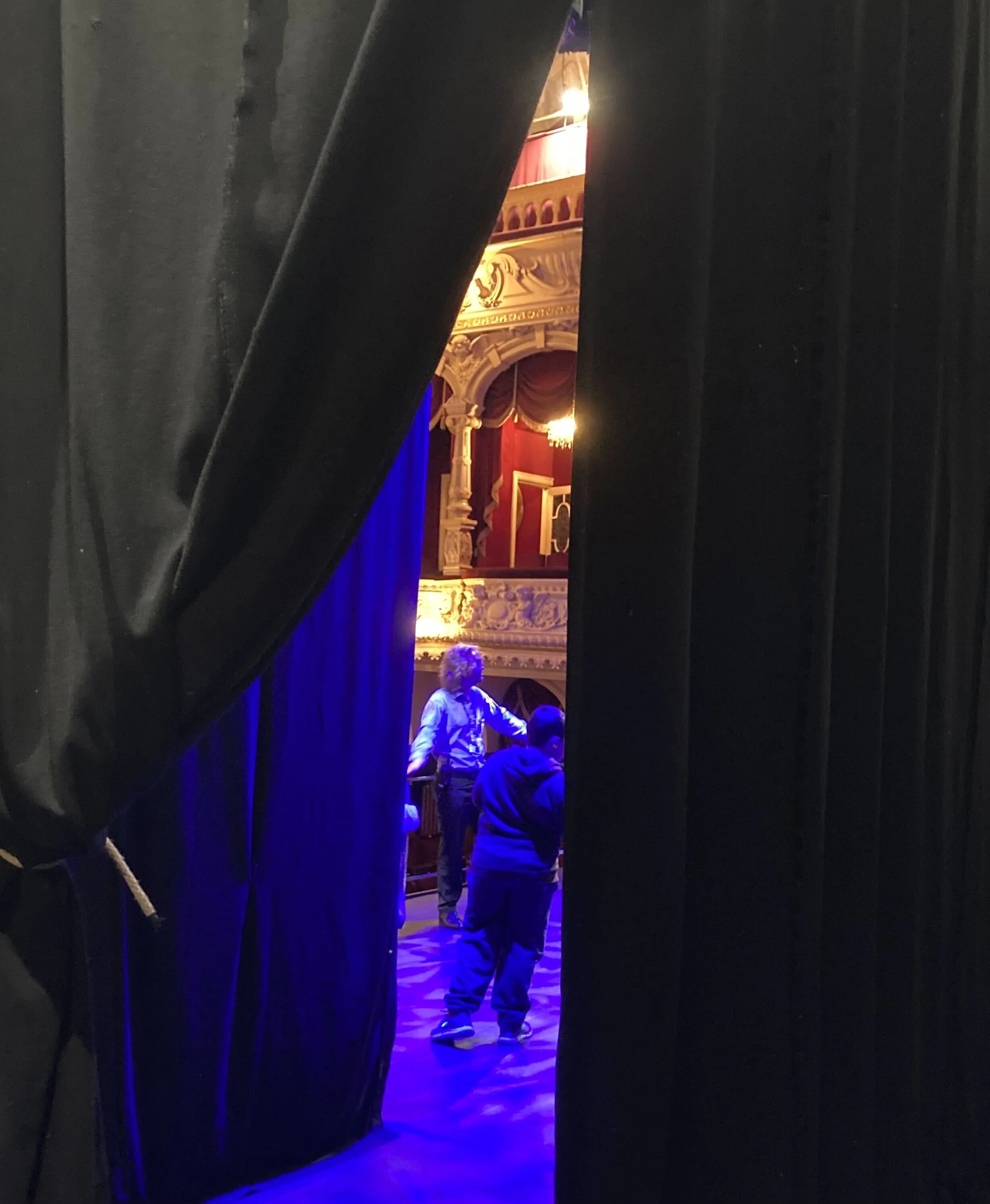
You may also recognise the theatre in various TV shows and films including Finding Neverland with Johnny Depp, Downtown Abbey, Bugsy Malone, and Muppets: Most Wanted on film, and Killing Eve and Jonathan Creek on TV.
We had a delightful visit to this special venue, and we urge you to visit too very soon.
Nick Wayne