Interview: Writer Jonathan Maitland on WILKO: LOVE AND DEATH AND ROCK ‘N’ ROLL
Besties, I have to put my hand up and confess I was a Dr Feelgood fan in the 1970S, so the story of their lead guitarist Wilko Johnson has a special nostalgic appeal to me. Wilko Johnson was an iconic guitarist and songwriter from 1971 - 1977 for the band Dr Feelgood, often acclaimed as the Godfathers of Punk. I saw the band with Wilko at Birmingham Odeon in September 1976 and later with his replacement on lead guitar, John Mayo at Dingwall in Camden Lock in June 1978. They created incredible energy and dynamism on stage, led by the vocals of the mercurial and scary Lee Brilleaux, with John Sparks on bass and “The Big Figure” behind the drum kit.
They had a number of big hits. ‘She Does It Right’ and ‘Roxette’ from their first album (1975), and ‘Down by the Jetty’, ‘Back in the Night’, ‘Going Back Home’, and a ‘Riot in Cell Block 9’ cover from their second album, Malpractice (1975), are included in the show. The band, with a completely new line-up, still tour now but it was the original line-up and the combination of Wilko and Brilleaux that created their iconic sound. The current Dr Feelgood line up have seen the show and their manager has suggested that they do a gig and show the play on the same evening. Now that would be interesting.
Wilko: Love and Death and Rock ‘n’ Roll is written by Jonathan Maitland who wrote the hilarious parody of the former PM in The Last Temptation of Boris Johnson, which was also directed by Dugaid Bruce-Lockhart. It is a tribute to the songwriter, Wilko, who died after an epic battle with pancreatic cancer after a prognosis of just 8-12 months and deciding to forgo chemotherapy as he did not want to “feel like sh*t” for the rest of his life. As the show continues its UK tour, arriving at Theatre Royal Windsor on 5 October, we spoke to the writer about the show and the man.
This year marks 50 years since Stupidity (October 1976) became the first live album to top the UK charts in its first week of release and the production celebrates that anniversary. Jonathan Maitland explained that he first read the play to Wilko at his home in Southend five years ago. “Wilko nodded gently throughout and only stopped me once: when I made a reference to him sniffing coke. He launched into an extremely funny explanation of why I had got it wrong - it was actually speed, not coke - and that explanation made it, verbatim, into the play”. The show blends live music with storytelling and Wilko's own words. “Wilko relayed information in an amusing and unique way, so when we needed to tell the audience autobiographical stuff - “the album went to number one and we were suddenly the biggest band in the world, for five minutes “- we let him say that directly to the audience. But in the case of arguments, we always opted to show that as drama, as it showed what kind of a person, he was: stubborn, funny, maverick and edgy”.
The band are an essential part of the story and the relationship between Wilko and Lee Brilleaux appeared tempestuous when they were on stage. Maitland explained: “It forms one of the two core themes of the play - along with Wilko’s relationship with his wife. It’s my view that the band was successful BECAUSE of the fractious relationship between the two. A bit like Jagger and Richard’s, Daltrey and Townsend and Liam and Noel, from the tension sprung the magic…. I researched it from many angles…I read a biography of the band, and of Lee, and of course, Wilko’s autobiography. I spoke to friends and associates of the band, their manager and also spoke to Lee’s widow.”
Indeed, as one of the characters in the play says to Wilko: “we were much more successful after you left.” It’s the story of the band AND Wilko, really: but he takes centre stage, because of the remarkable person he was, and the remarkable things that happened to him.
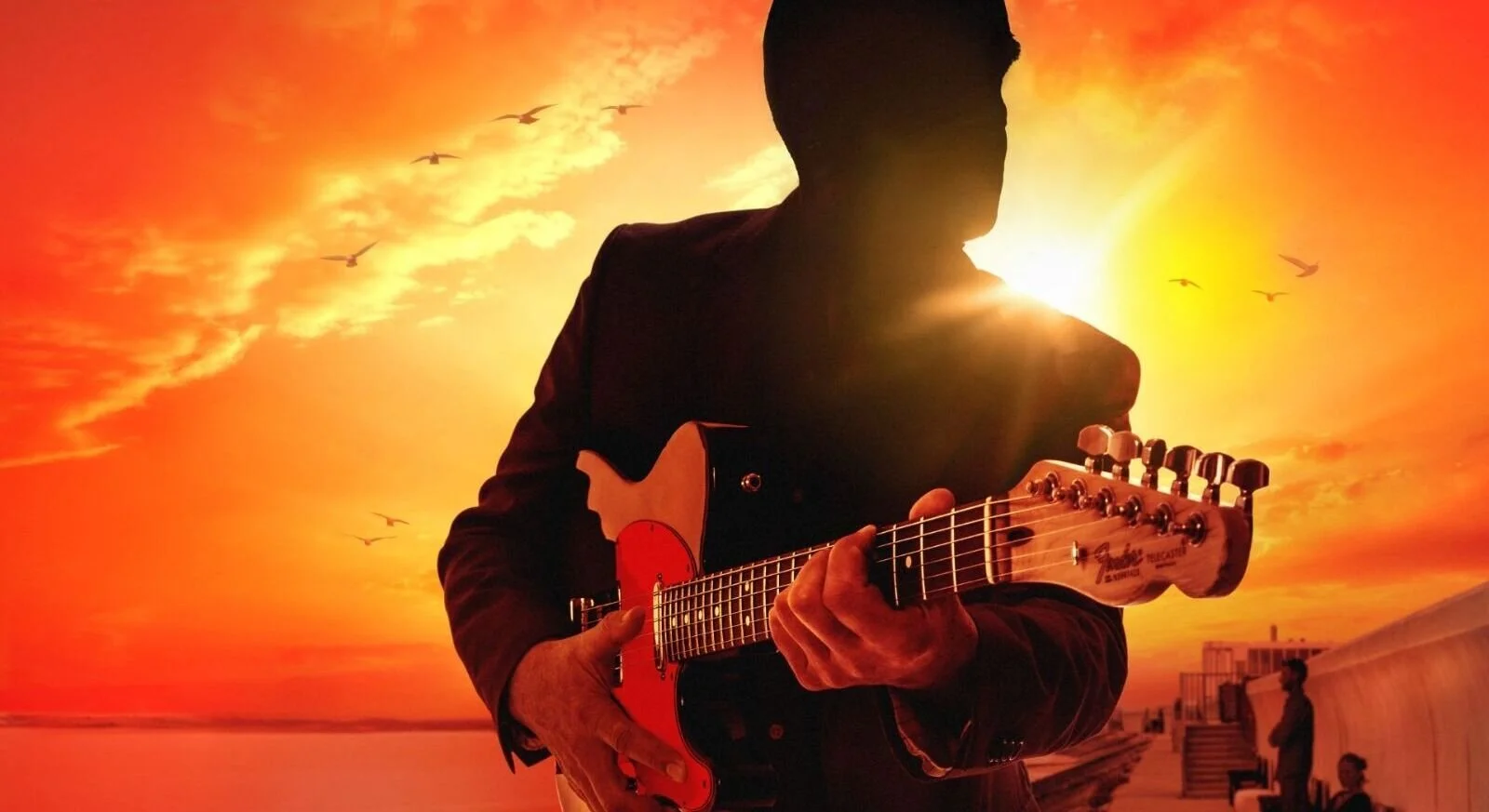
Johnson Willis, who plays Wilko on stage, explained how he approached creating Wilko's very particular playing style and stage presence, rather than just "acting" the part of a guitarist. “My first electric guitar was a Watkins Rapier, so was Wilko’s. I got a Telecaster in 1972. Wilko had a 62 Telecaster. I played in bands about the same time as him and with some great musicians whose lifestyle was equally as indulgent. Having said that Wilko’s playing style is unique and I’m still trying to work it out. But then he claimed to have never mastered the technique of his idol, Mick Green so we had that in common. I quickly discovered that in many ways we were already alike so if I could find myself then maybe I could find him”.
Wilko was famous for his intense, almost trance-like stare and machine-gun guitar movements on stage. Willis recalled viewing a lot of material online that illustrates his movement: “But really, it’s the music itself that dictates the physicality whilst playing. The down stroke speed of his strumming hand is in itself machine like. The striding across the stage and the head movements are pure showmanship. It’s not aggressive, it’s youthful play acting and a lot of fun.”
The show has evolved since the Leicester Square Theatre run and Maitland explained that they have explored “the relationship between Lee and Wilko a bit more and added more dialogue between them to thicken the plot as it were”. Thanks to YouTube, the shows appeals to old fans (like me) and young people. Maitland was delighted with the response to the show: “Wonderfully, people are bringing along their kids. The audience is predominantly middle-aged or older but encouragingly, we are getting a lot of young people who love the music.”
Besties, we will be catching the show next week at Theatre Royal Windsor and will report back. We have ‘Sneakin’ Suspicion’ that ‘Back On That Night, they will ‘Do It Right’ and there will be “A Riot Going On’, ‘Down by the Jetty’ to the Thames. We can’t wait!
For more info on the tour, please click here.
Nick Wayne