
Review: TWO NAMES, THAT MEET AND PART, Pleasance Theatre
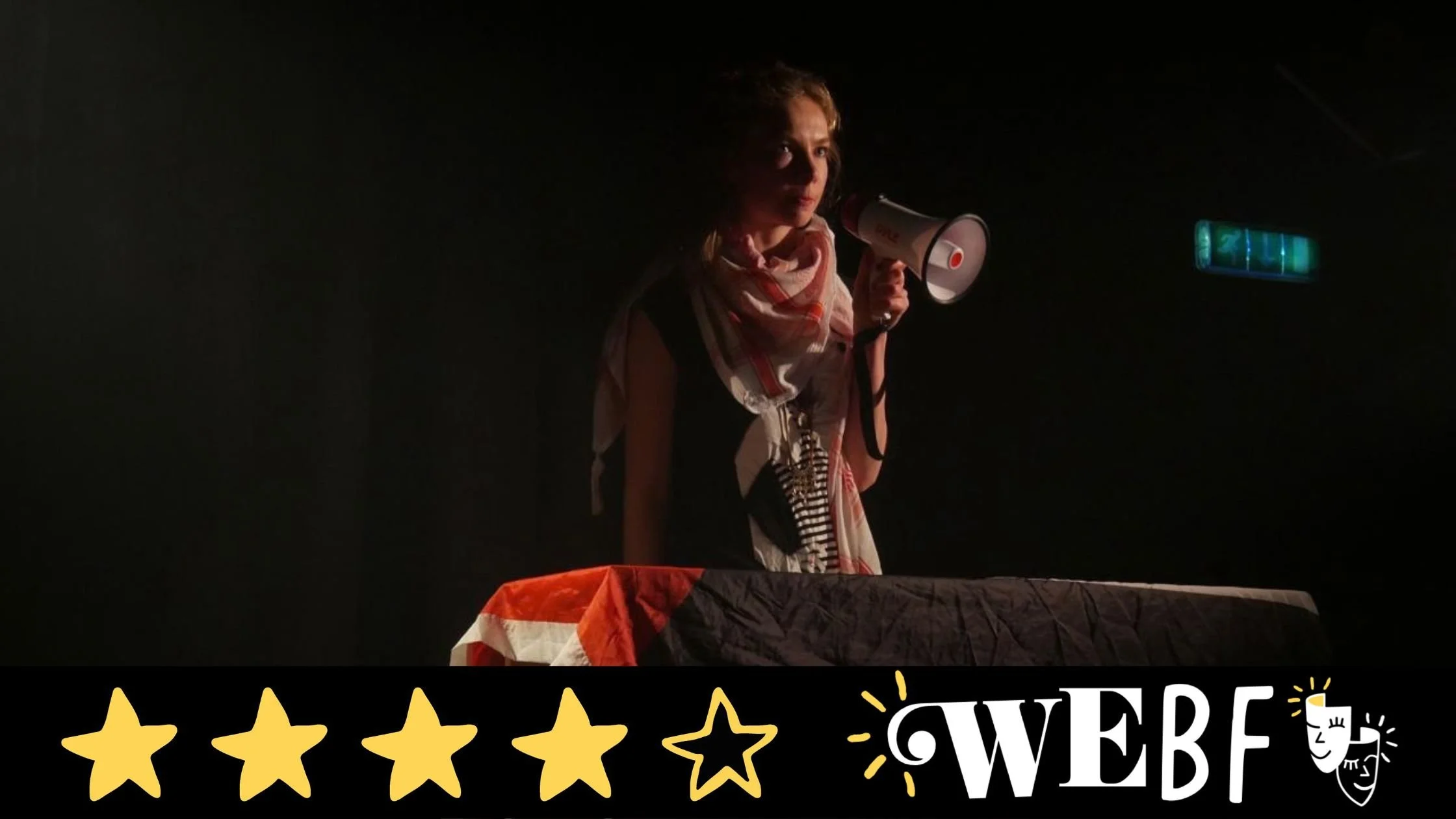
Photo credit: Supplied by the production
Two Names, That Meet and Part by Tara Kelly is part of PalArt Festival 2026, a season of theatre putting Palestinian stories in front of audiences at a time when preserving them is critical. Kelly’s hour-long offering is part meet-cute, part coming-of-age, part ghost story. We follow Palestinian student Youssef as he heads to New York to start a new life at university. He’s interested in all that America can offer, but finds himself inevitably drawn back into the conflict back home, as he faces pressure on both sides of the Atlantic to step up, or blend in.
The play is accessible, fleshed-out and in many places, funny. Its central character, played warmly and carefully by Jad Sayegh, is the crux of a very intimate issue: is it a Palestinian’s duty to be on the front line, sacrificing everything to try to slow the genocide occurring in their country, and is there a way that could ever coincide with young Palestinians trying to find a safer place to grow up and get an education? Do Westerners need to be responsible for taking a stand, or is that an extension of the “white saviour” trope, and a colonial misconception that Palestinians require rescuing? Big questions, without clear answers, but handled well by Kelly’s bold yet colloquial script, inviting the audience into Youssef’s year of highs and lows, as he tries to find “home” and reconcile with his own longing for peace.
Youssef is also haunted by visions of Rachel Corrie (jaunty and tragic, by Tilly Botsford), an American woman who died protesting in Gaza in 2003, and this is strung up opposite his desire for closeness with fellow student Rebecca (bright and intentional, by Gaia Mondadori), whose safety blanket of wealthy American parents pushes her to do more and more dangerous acts in the name of freeing Palestine. The cast strike an interesting visual difference in posture and stage presence, and merge and mingle wonderfully as a trio, interacting with the simple set to build holding cells and dorm rooms, until the audience is unsure who is haunting who. Harry MacDonald Preston’s lighting uses the restrictions of the Pleasance Studio to the play’s advantage, with tight warm spots to highlight moments of revelation or indecision for Youssef in ways that feel big despite a relatively small stage.
Issy Snape’s direction lends the play the precision it requires to do Kelly’s script justice, and their joint ability to blend macrocosm and microcosm leaves the audience feeling like they’ve had a good meal they may need to take a moment to digest. Despite the very heavy subject matter, the play has moments of brilliant lightness, which feels essential to focus on the humanity at the centre of this international crisis. Though the play is paced well, it could perhaps benefit from an extra 15-20 minutes to fully explore the bigger questions raised.
Weighty, but not weighed down.
**** Four stars
Reviewed by: Oli Burgin