
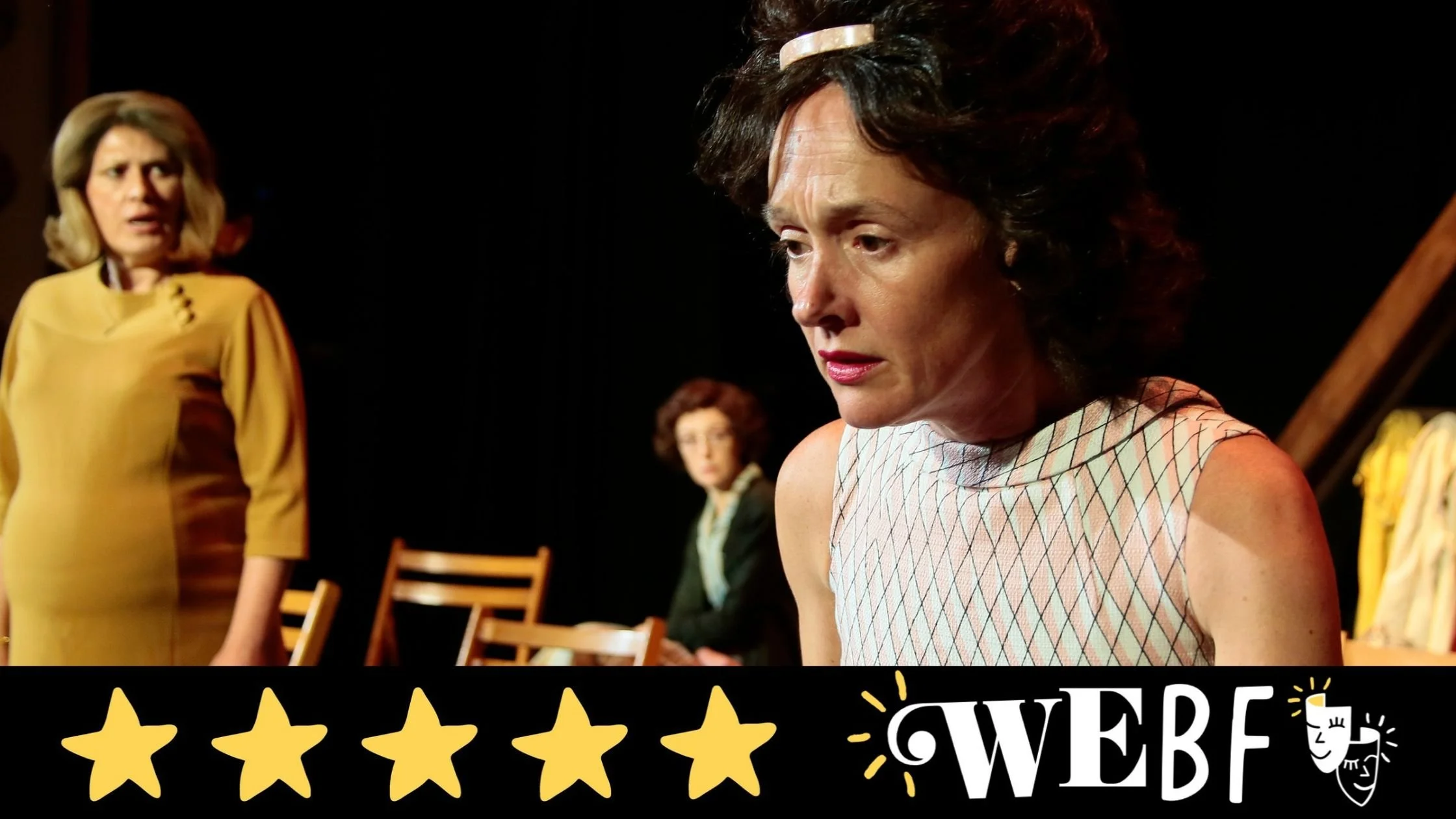
Photo credit: Maxine Evans
At its best, theatre can capture a shared mood and resonate with such complex and raw emotions across a select group that the effect is quite simply breathtaking. To achieve this to its fullest degree is like capturing lightning in a bottle, and that is exactly what The Revlon Girl achieves. This is an angry, raw, yet funny and thought-provoking gem of theatrical excellence. An intelligent, deeply moving exploration of the after-effects on a community following a generation-defining disaster.
Neil Anthony Docking's Olivier-nominated play is set in the aftermath of the Aberfan disaster, which devastated a small mining town in South Wales in 1966. It first premiered in 2016 as part of the tragedy's 50th anniversary commemorations and now returns to mark its 60th.
On 21 October 1966, 116 children and 28 adults were killed when over 100,000 tonnes of coal waste became dislodged from the neighbouring mountainside and crushed the local school and several houses. It has since been established that this was an avoidable disaster.
To find an entry point through which to explore such a traumatic event, Docking has drawn upon the true story of the local bereaved mothers who met above the Aberfan Hotel every Tuesday night in the months following the disaster. It became a sanctuary where they could talk openly, mourn together and occasionally find space to laugh again for the first time without the judgement of the wider community.
One night, into this safe space, they secretly invite an outsider: a representative from the Revlon beauty magnate to give them beauty tips. This third-party figure is, for much of the play, referred to only as 'Revlon', played with a nervous but warm dignity by Antonia Kinlay. She represents the establishment, with her formal workwear, modern make-up, expensive car and stylish clothes. She is from the outside world, which has seemingly moved on with its life while the residents of Aberfan feel trapped in a time warp of devastation.
Kinlay's role as a beautician morphs into that of counsellor, verbal punchbag and the eyes of the audience. Kinlay walks this fine line with grace and goodwill, desperately trying to find the right words to respectfully serve these brave women, who are in desperate need of a confidence boost.
The simple act of self-care feels, for these women, these mothers, like a luxury they can no longer contemplate. Yet these beauty products act as both the armour and life force they need if they are to confront their grief and begin rebuilding their shattered lives.
The four Welsh housewives represent different facets of grief and the wider reactions to the tragic event in which they all lost children. Mirain Haf Roberts as Rona is the most forthright, a swearing and straight-talking mother who shows the most hostility towards Revlon. Haf Roberts manages to balance a larger-than-life comedic presence with the raw, embittered anger many would have felt at the coldness of the response from the authorities towards the community. Her character highlights the lack of financial support offered to bereaved families and the fundamental role money has played in enabling the disaster.
Hedydd Dylan as Maralyn is a nervous bundle of paranoia, a woman who has lost her religious faith and reminds us that the warning signs of the landslide were ignored. Dylan gives a pure, heartfelt performance as a mother who cannot accept that her children will not return and has turned to mediums for false hope.
Llinos Daniel's Jean is trying to move forward and discuss suggestions for memorials, but she is reluctant to discuss her new pregnancy or confront the undeserved anger she feels towards her surviving daughter. Daniel gives a nuanced and formidable performance that strikes just the right emotional tones.
In an excellent ensemble, it feels almost unfair to single out one actress, but Charlotte Gray's performance as the stoic and ever-optimistic Sian is the most heartbreaking of all. She displays the dignity of a grieving mother who still feels compelled to put others at their ease. She, more than anyone else, wants to believe there is a way to move forward and feel beautiful again in the eyes of her husband. Yet she carries the weight of the community's fortitude on her shoulders, so when she finally, inevitably breaks, it becomes a moment of overwhelming emotional power.
Maxine Evans directs with naturalism and edge, allowing each woman the chance to take centre stage in an ensemble of powerhouse performances, supported by a simple but effective set. The single leaking drip of rainwater from the skylight is a piece of writing and directing genius, representing both the ignored build-up of water damage that contributed to the collapse of the spoil tip and the ongoing sense that the community is still being overlooked. Like a single, continually penetrating tear, this simple yet monumental image perfectly captures the mood of the piece.
The Revlon Girl is an important and perfectly judged work that examines a monumental tragedy with respect, grace, humour and emotional heft. This play deserves the widest possible audience. It reminds us that, as with so many of history's tragedies, we must never forget, and we must learn from them if we are to move forwards.
***** Five stars
Reviewed by: Phil Meikle
The Revlon Girl continues at London’s Park Theatre until 14th November, with further info here.
