
Review: THE RESISTIBLE RISE OF ARTURO UI, Swan Theatre - RSC
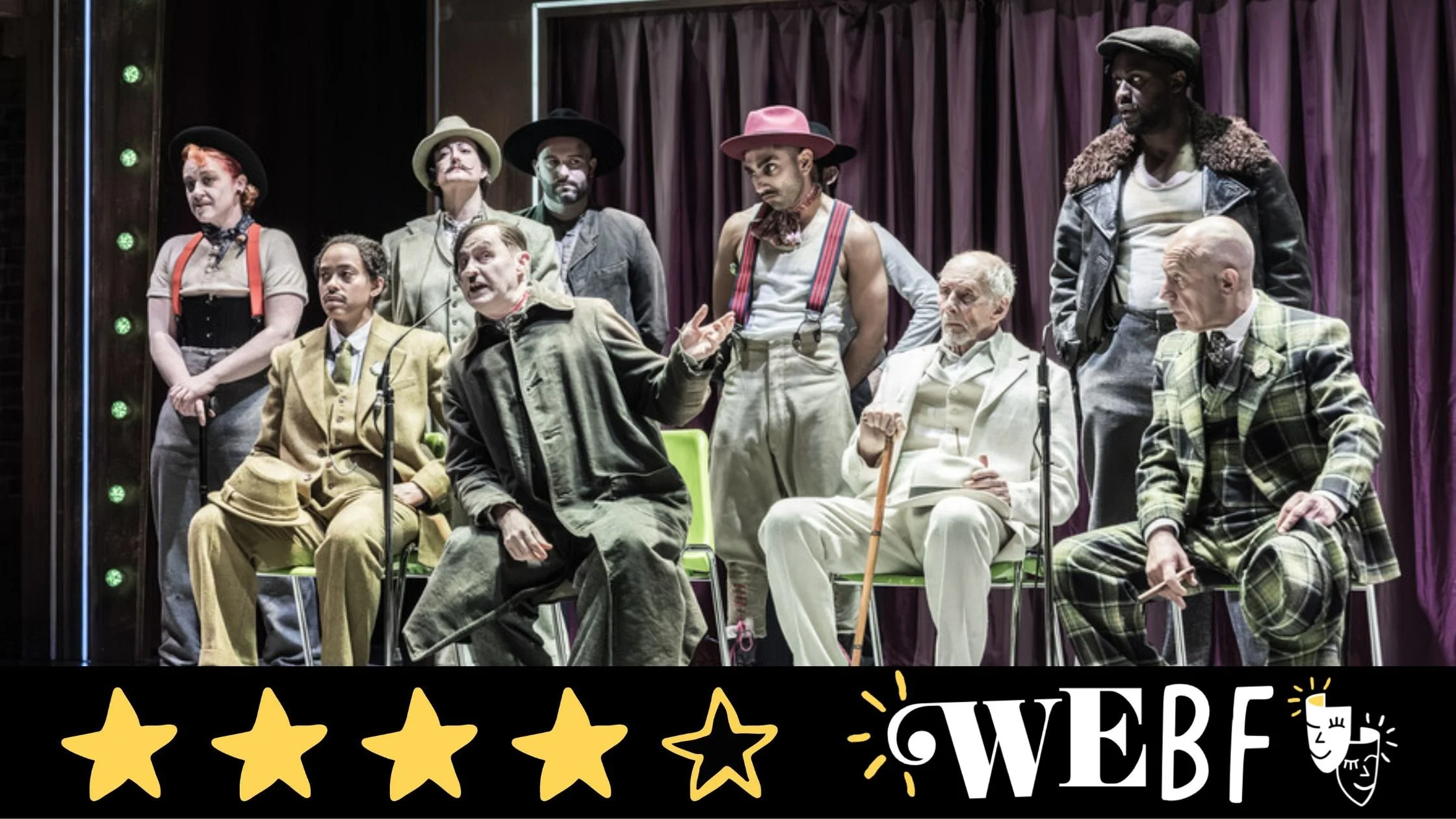
Photo credit: Marc Brenner
When Bertolt Brecht wrote The Resistible Rise of Arturo Ui in 1941, he was in exile, watching Europe fall to fascism. Out of that moment came a fierce satire of Adolf Hitler’s rise, drawn from what he had seen unfold. Yet the play did not reach the stage until 1958, two years after his death, a warning that arrived seemingly too late. In its 2026 staging, the Royal Shakespeare Company leans confidently into the play’s uneasy blend of comedy and menace, delivering a production that feels uncomfortably close to home.
Set against a stark, ever shifting backdrop that reflects a world on edge, Ui’s ascent unfolds with a chilling sense of familiarity. What begins as sharp, almost playful satire gradually tightens into something far more unsettling, as laughter begins to catch in the throat. From the outset, it is clear that this is not merely a historical allegory but a pointed reflection on how power continues to take hold today.
The play charts the rise of a small time Chicago gangster who seizes control of a struggling cauliflower market, exploiting fear, instability and the reluctance of others to intervene. Through intimidation, persuasion and carefully constructed alliances, Ui’s influence expands unchecked. Those who might resist instead hesitate or comply, allowing his dominance to grow. It is this sense of preventability that lies at the heart of the piece, underscoring the dangers of passivity and self interest.
Mark Gatiss is a knockout in his RSC debut as Arturo Ui, striking a compelling balance between oily charisma and underlying menace. His performance is controlled yet unpredictable, drawing the audience in even as it repels. The strength of the production, however, lies firmly in its ensemble. This is Brecht at its most demanding, with actors frequently shifting between roles and, at times, stepping outside them entirely. The cast rises to the challenge with impressive stamina and precision. The set is in constant motion and works closely with the choreography to create transitions that are largely seamless, with one or two genuinely surprising moments. The use of microphones to announce key developments proves effective and adds to the sense of detachment that suits the style. However, the decision not to mic the majority of the dialogue occasionally results in lost lines, particularly from performers whose projection does not quite carry.
The onstage band remains a constant presence throughout, a traditional Brecht choice that reminds the audience of the play’s constructed nature. The music is mostly rock, written by Placebo. It reinforces the idea that this is theatre designed not only to engage, but also to provoke.
The first half leans heavily into comedy, with inventive touches, most notably the use of vegetables as weapons, drawing genuine laughter from the audience. A stalk of sprouts is used as a machine gun, menacingly, and is all the more funny for it. The projection of parallel events in 1930s Berlin is a bold and effective choice, grounding the narrative in its historical context and reminding us of the reality behind the satire. This makes the shift in the second half all the more striking. When Ui produces a real gun and commits an act of cold, deliberate violence, the mood changes instantly. The woman just before this pleads with the audience to help her. Laughter gives way to silence, followed by audible gasps. Sean Linnen’s direction thrives on this contrast, catching the audience off guard and creating a lingering sense of unease. The closing epilogue, breaking character and delivered by Gatiss as himself, is a fitting final moment that brings the message sharply into focus, although it won’t be to everyone’s taste.
The Resistible Rise of Arturo Ui remains as relevant as ever. Its central warning, that history is shaped as much by inaction as action, resonates strongly. By drawing humour from fear and placing audience complicity at the centre of the experience, the production encourages us to question our own position within these patterns of power. Moments in which the audience is invited to respond or speak up only heighten this effect, making the act of watching feel uncomfortably participatory. In this particular performance, nobody said a word.
A bold, entertaining and unsettling addition to the RSC’s current season, and one that proves difficult to ignore.
**** Four stars
Reviewed by: Sophie Eaton