
Review: THE CURIOUS INCIDENT OF THE DOG IN THE NIGHT-TIME, Birmingham Rep - Tour
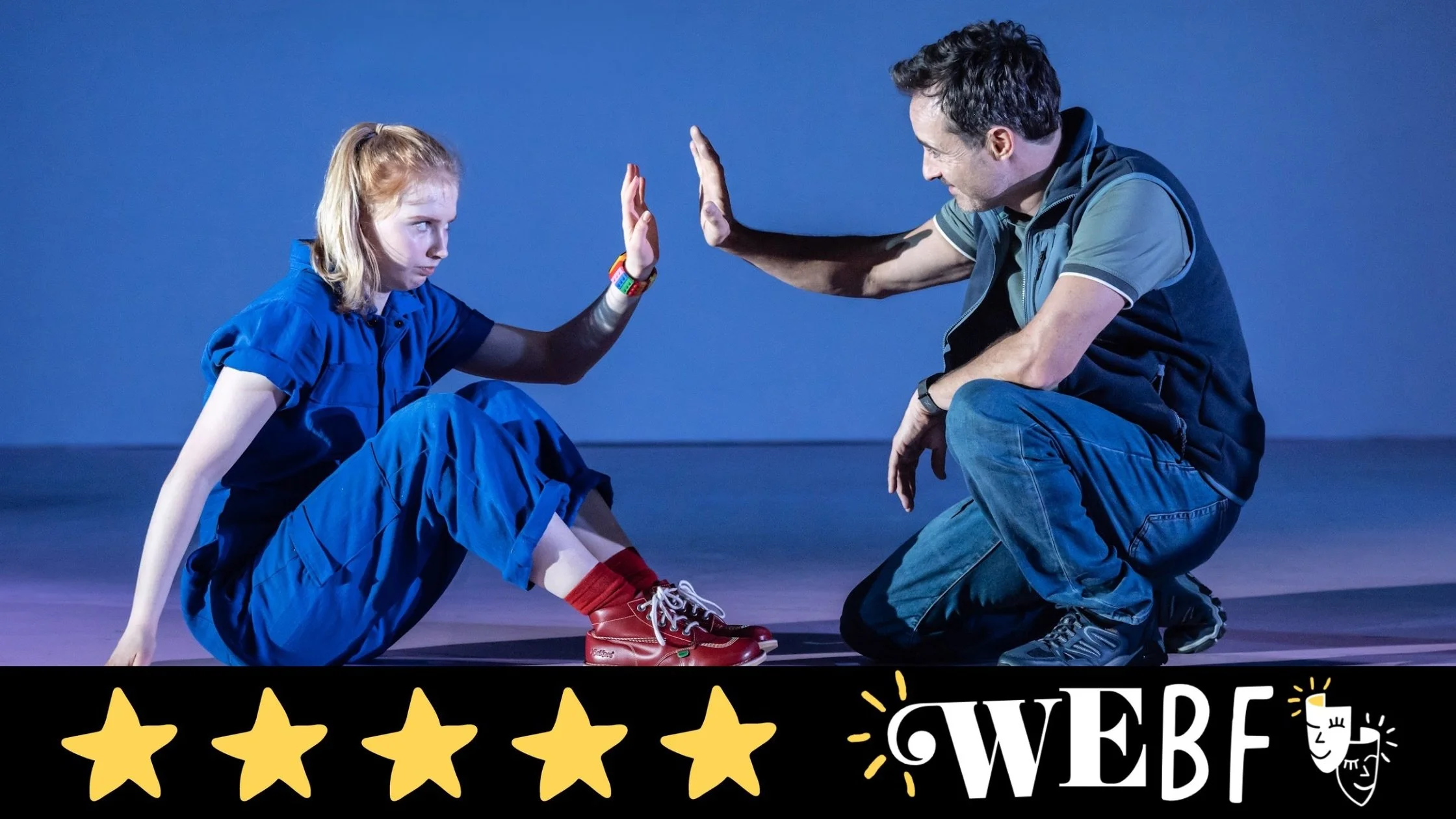
Photo credit: Johan Persson
Many things have changed since Mark Haddon’s mystery novel The Curious Incident of the Dog in the Night-Time was released in 2003. At the time, it was one of the first successful novels to place an autistic protagonist at the centre of its story. Christopher Boone helped bring autism and neurodiversity into conversations that, at the time, were not nearly as widely discussed as they are today. Fast-forward to 2026 and we live in a very different cultural landscape, where neurodivergence is discussed far more openly and more people are receiving diagnoses. At the same time, there is an ongoing conversation around diagnosis, representation and what it means to understand autism in a society that is becoming increasingly aware of neurodiversity.
The story is told from the perspective of Chris Boone, a 15-year-old autistic girl with a particular fascination with mathematics, logic and detective stories. When Chris discovers her neighbour’s dog, Wellington, dead in the garden, apparently stabbed with a garden fork, she decides to investigate the mystery herself.
If you have experienced the original production, be prepared for a very different take and direction. This production features neurodivergent actors playing Chris, and the decision to change Chris from a boy to a girl is a significant one. It gives the story a fresh perspective, particularly when considering the ways that autistic girls and women have historically been overlooked or diagnosed later in life. Rather than simply recreating the original, this production asks us to look at Chris through a slightly different lens.
This change is reflected in the performance itself. Chris’ outbursts feel more subdued, with her responses often becoming more internal than physical. There is a real attempt here to explore a different autistic experience rather than simply reproduce what audiences may already know from the previous production. The production team has also worked with Dr Sarah Jane Nuttall, a postdoctoral researcher specialising in autism in women, in its efforts to approach the character with authenticity and care.
The staging is equally different. The set is simple, with a large white wall becoming a playground for the cast to jump, crawl and climb across. The colours are neutral and pastel, changing colour with the lighting creating a much softer visual world than the stark black-and-white contrast of the original production. It feels more subdued and, perhaps fittingly, gives the production its own distinct feminine identity.
One of the most memorable moments comes when Chris arrives at Paddington Station and is bombarded with sensory overload. Yellow balls bounce around the stage, each one labelled with things you might expect to see in a London train station, from ‘itsu’ to ‘caution wet floor’. It is chaotic, funny and overwhelming all at once, allowing the audience to experience the world through Chris’ perspective.
Alex Keenan, who plays Chris, is phenomenal. She is cold yet loveable, clever but vulnerable and most importantly, unapologetically herself. Charlie Brooks, who plays Chris’ mum, strikes a skilful balance between a caring mother and a woman who has lost herself. Her performance brings another layer to the story, reminding us that this isn't simply Chris’ journey. The adults around her are struggling too, making choices that have consequences far beyond what they initially intend. There is also some wonderful puppetry. We meet Toby, Chris’ pet rat (who, as Chris is very keen to remind us, does not have bubonic plague) as well as a very happy French bulldog named Billy. These moments add plenty of warmth and humour to the production and stop the story from ever becoming too heavy.
Whilst Chris is an inspiring character, it is important to remember that she does not represent everyone with autism. If, more than a decade after its theatrical debut, The Curious Incident of the Dog in the Night-Time remains one of the most prominent stories with an autistic protagonist, then perhaps we need more stories.
This production, however, does not pretend that Chris is representative of everyone. Instead, its decision to cast neurodivergent actors and reimagine Chris as a girl gives this much loved story a fresh perspective. It feels like a production that understands that the world has changed since 2003, and that the way we tell stories about autism should change with it.
A truly wonderful story, told with great humour, heart and emotion. The popularity of this tour remains to be seen, but there were plenty of people in the audience last night, ready to listen to a story about seeing the world from a different perspective. Let’s hope it’s one of many more to come.
***** Five stars
Reviewed by: Sophie Eaton