
Review: THE BOY AT THE BACK OF THE CLASS, Bristol Old Vic
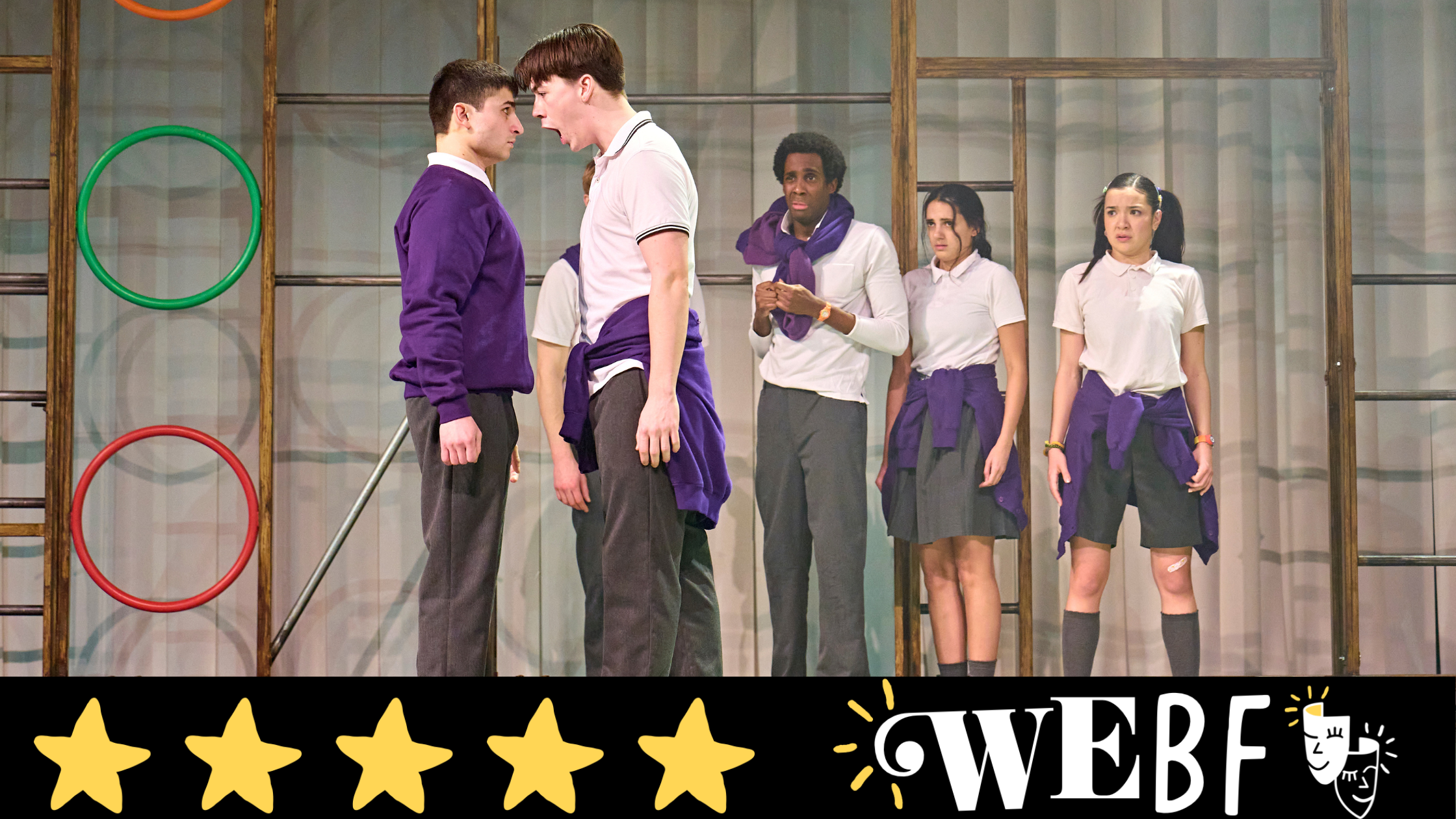
Photo credit: Bristol Old Vic
Originating from the debut novel written by Onjali Q. Raúf in 2018, a novel that in 2019 became the winner of a Blue Peter book award and a Waterstones children’s book prize, we caught up with the latest stage adaptation of The Boy at the Back of the Class which is currently on tour. Raúf’s inspiration came after meeting a baby refugee in 2016 during her charity work delivering emergency aid in Northern France.
The play premiered, previously touring the UK, starting in Kingston back in 2024 and today we found it in the Timeless Georgian auditorium of the Bristol Old Vic Theatre, a place that is both rooted in history and fully alive in the present.
Now both a smash hit novel and an Olivier Award nominated family show, this latest adaptation adapted by Nick Ahad and directed by Monique Touko, carried reasonably high stakes and positive anticipation. Much of the creative production team remain the same for this tour, but a blend of new cast members are featured, alongside Abdul-Malik Janneh and Petra Joan-Athene returning to their previously delivered roles of Michael and Josie. The current tour has also seen the professional stage debut of Max Jordan as Brendan the Bully which was played with convincing character and emotional investment as the story unfolded. Serkan Avlik steps into the role of Ahmet, the central subject of the piece.
Ahmet, a refugee from Syria, is the focus of the stories emotional journey and Avlik’s characterisation of him was clearly rooted in researched direction combined with his own knowledge surrounding psychological theory and mental health work. Heavily using body language and methods of non verbal communication authentically delivered throughout the majority of the first act, building to a poignant moment when he steps aside breaking the fourth wall using freeze frame techniques to address the audience directly.
Sasha Desouza-Willock serving as the protagonist later named as Alexa, fluidly switches between narration and direct address, rooted from feeling different herself due to having lost her father, this exemplifies her compassion and powers her goals to accept and support her new friend fiercely. The antagonist of the piece being systems, prejudice and immigration barriers.
The audience's engagement with the characters does rely slightly on the investment of them being nine to ten years old, which can be difficult to pull off when casting adults in these roles, but this was achieved in the most part. As the story began to unfold the characterisation and direction engaged the audience enough to overlook some of the actors being visibly slightly older. This is important as the piece relates heavily to the concept of children holding hope for the future, they imagine differently, dream bigger, adapt quickly, question norms and carry forward values which sometimes as adults we may fail to achieve. Aside from the roles of the children many of the actors multi -role for the smaller but key parts.
The set design is simple but effective, an instantly recognisable school gym frame, that can be tweaked to represent significant scene changes but often remains as is with the addition of a sign or prop or is opened out or unfolded to represent differently.
What we have here is timely appropriate piece of theatre that brings to the forefront real issues in today’s world. It tackles sensitive issues surrounding inclusion and immigration in a way that is accessible, narrated and delivered from a child’s perspective, in first person, with curiosity, empathy and compassion. It allows theatre to provide a safe platform for the sorts of questions and interpretations for some topics the youth of today may hear from adults or see in the media, that they may not understand, to be addressed and accessed. It not only enables but also encourages questions to inform understanding on topics such as the refugee crisis, crossing the water, closing the gates. But at its core it is also a celebration of the power of friendship, kindness and small gestures that make huge differences alongside acceptance on multiple levels.
Adults alike can resonate with these topics, the juxtaposition in society, equality, having trust in the people in charge of the country, it opens a dialogue that many can resonate with and gives hope for a better way of living, which feels particularly poignant in today’s world.
A play that truly evokes both tears and laughter, in an identifiable but respectful way, on subjects that can be of a sensitive nature, to an audience of both young and old, is hugely commendable.
Enlightening, compassionate, promotes Change.
***** Five Stars
Reviewed by Clare Baker
For more information, click here