
Review: SWEET MAMBO, Sadler’s Wells
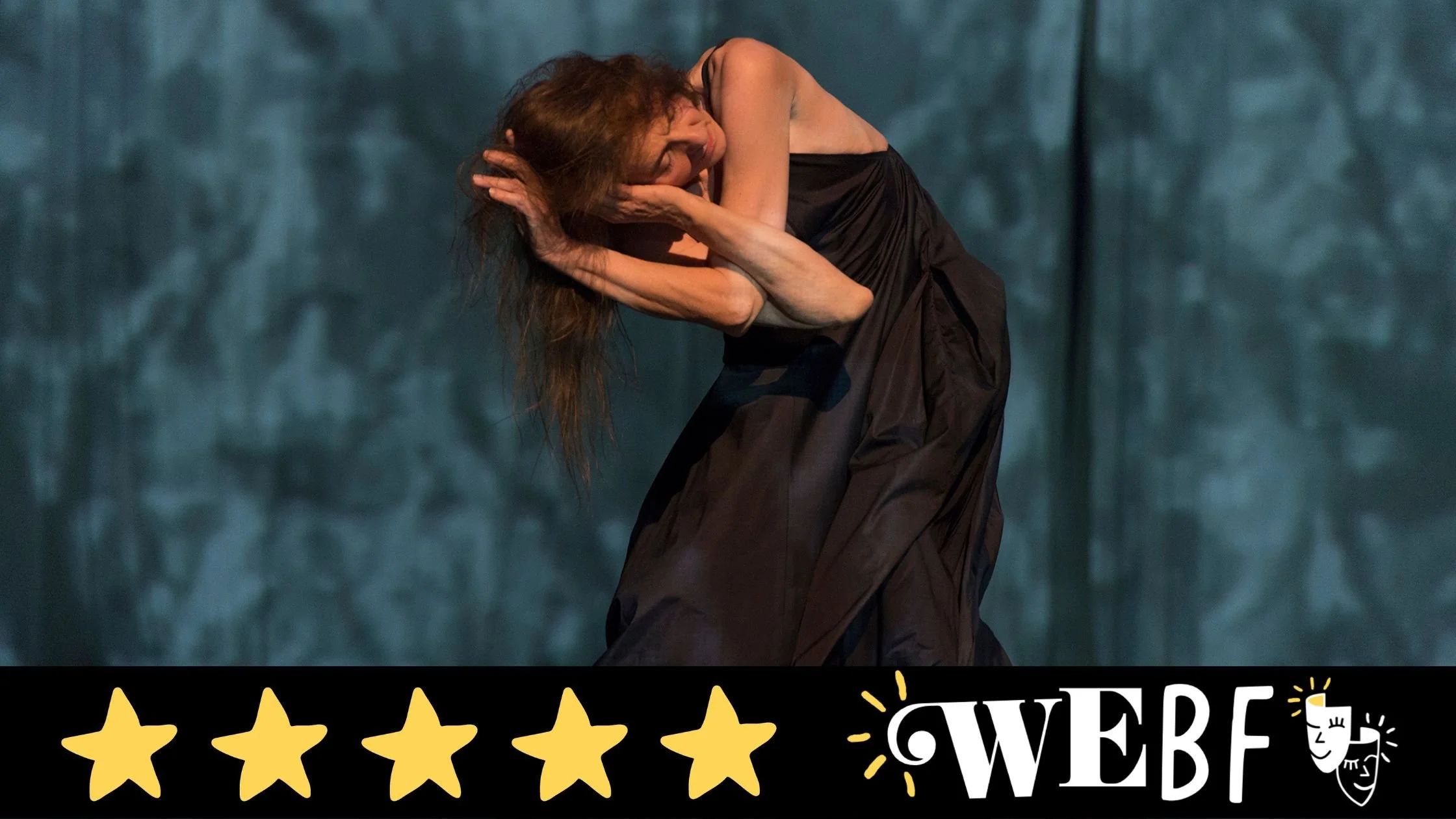
Photo credit: Karl-Heinz Krauskopf
Sweet Mambo arrives at Sadler’s Wells as part of an ongoing and welcome tradition: Tanztheater Wuppertal returning to a theatre that has long embraced its master, Pina Bausch’s legacy. Audiences, both new and devoted, gather with particular reverence, on Valentine’s Day no less, basking in choreography that remains among the most influential in dance theatre.
First staged in 2008 and now receiving its long-awaited London premiere, this penultimate work from Bausch carries an added weight. Many of the dancers performing were part of the original creation: Audry Berezin, Daphnis Kokkinos, Nazareth Panadero, Helena Pikon, Julie Shanahan, Julie Anne Stanzak, and Aida Vainieri. Their age, experience and embodied memory bring wisdom to the stage, a lived understanding of the complex yet deceptively simple moments of raw expression that define Bausch’s work. Alongside them, newer members of the company help the piece feel renewed and held firmly in the present.
From the outset, the stage breathes with a quiet unease. Naomi Brito opens with silent assurance, smiling brightly as she holds a singing bowl. A newer presence set in gentle juxtaposition against original company member Andrey Berezin, who softly disrupts the moment. Beauty and disquiet continue as billowing fabric swell under an unseen wind. Men stand with their backs to the audience, peering in dark suits towards something we cannot see through them. The space oscillates between feeling empty and full. It’s simple and elegant, edged with darkness.
Set and video design by longtime collaborator Peter Pabst, including fragments of old film, creates an environment in constant dialogue with the choreography, while Marion Cito’s gowns slink and ripple as though they too are choreographed. Hair, fabric, music like a physical presence; everything dances. Everything speaks and these repetitions of slinky, flowing dresses, hair worn loose and familiar gestures connect us across Bausch’s repertoire.
In this work, women remain firmly in focus. Often dressed in shades of pink, they radiate vulnerability yet remain powerful. Around them, men hover, push and pull sometimes gently, sometimes with the suggestion of coercion. On Valentine’s Day, the dynamic feels particularly pointed. The sexes are not equal here, yet the female voice, in pleasure and pain, is distilled more loudly.
Throughout the evening, dancers speak their names followed by the instruction: “Don’t forget it.” What is in a name? Identity pulses through the work, ambiguous yet insistent.
There is life in every movement. Bausch’s gestural language, built on repetition, accumulates meaning until the smallest action becomes vast. A smile hints at joy yet carries the weight of something unspoken; laughter fractures; a scream seems to echo from somewhere internal rather than theatrical. Nothing is hidden, yet there is a secret.
Julie Shanahan runs, but forced to stopped by others, yet her physicality refusing smallness.
Nazareth Panadero and Aida Vainieri carry the past viscerally into the present: bodies that remember without needing to declare it. Panadero, astonishingly in her seventies, is absurdly funny one moment and raw the next. Age here does not signal limitation; it deepens articulation.
Bausch revolutionised dance by refusing separation between theatre and movement, and Sweet Mambo makes that philosophy unmistakable. Direction and choreography remain indelibly hers, while the restaging under Alan Lucien Øyen, with rehearsal direction from Azusa Seyama-Prioville and Robert Sturm, preserves the work with care as something living.
Sweet Mambo feels present, as Bausch’s work does not age, it breathes. It never loses sight of the fragile, contradictory, endlessly complex nature of being human.
***** Five stars
Reviewed by: Stephanie Osztreicher
Sweet Mambo plays at London’s Sadlers Wells until 21 February, with further info here.
