
Review: SUMMERFOLK, National Theatre
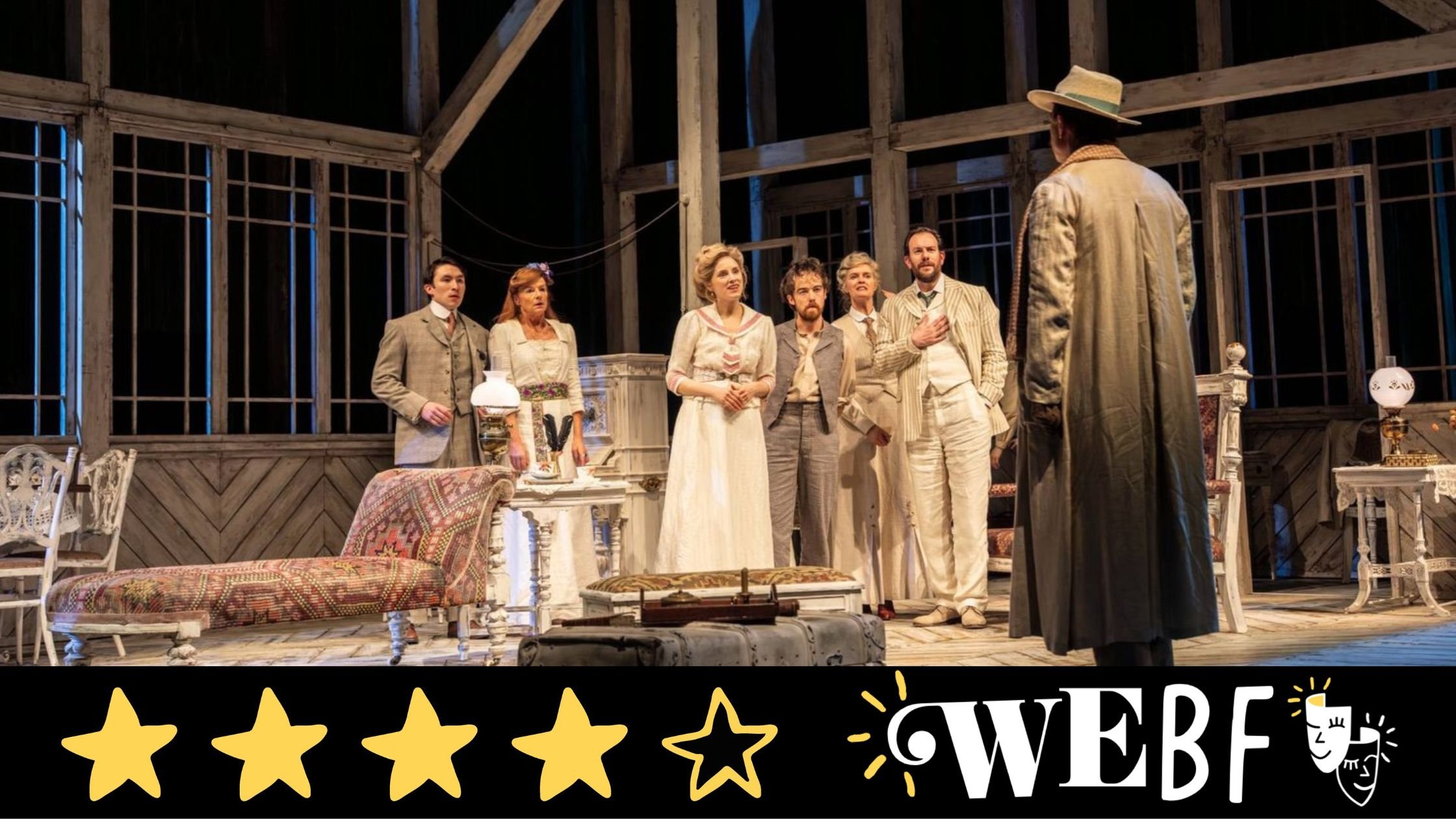
Photo credit: Johan Persson
It is summer 1905 and a collection of Russia's elite are holidaying at their dachas. It sounds idyllic but in the world of Maxim Gorky's classic play, nihilism rules over sunbathing and sipping champagne.
Summerfolk chronicles a season which is typically embodied by fun and relaxation but instead, it is soured by thoughts about the meaning of life and desire for what one lacks. No one appears to be happy and when we do get glimpses of joy, it is largely at the expense of others misfortune. Pleasure and privilege give way to despair as Gorky uses the ridiculousness of their dissatisfaction to promote the socialist agenda, written as the Bolshevik’s cause began to gain momentum. For this production at the National Theatre, Nina and Moses Raine have adapted the incredibly relevant material for a modern audience. They have added humour and intensity to counter the bleak outlook of the characters and dialled up the surprising elements of love that emerge from a group of people whose passion is complaining.
Directed by Robert Hastie, Summerfolk is a visual delight as the large cast fill the vast stage of the Olivier Theatre. There is often background activity, so we feel we are truly getting a glimpse into the summer of not just the upper class and a sense that someone is listening in. When your life is this vacuous, gossip becomes a currency, a fixation that can be difficult to see beyond. The National Theatre can always be relied upon to have a fabulous set and Summerfolk is no exception. Peter McKintosh has designed gorgeous, elegant costumes and a beautifully simple but evocative set. Timber columns transform from the exoskeleton of a dacha to a lakeside wood for the picnic in the second act, complete with water for the bourgeoise to dip their toes.
The cast are outstanding and it seems only right to honour the self-indulgence of their characters and highlight as many as possible. The women are wonderfully realised in this production, contrary to what one might expect from a play written in the early 20th Century, it is they who have the most intelligent thoughts while their husbands are content to embrace lethargy and gossip. This is embodied by our central couple Vavara and Sergei, played by Sophie Rundle and Paul Ready. Vavara longs for more from life and her company and as she oscillates between apathy and hatred for her brash and bullish husband, you feel that her sadness is more genuine than her companions. Sergei’s vapid sister Kaleria (Doon Mackichan) speaks in poems, Vavara’s friend Olga (Gwyneth Keyworth) whines about the pains of motherhood and sharp-tongued Yulia (Adelle Leonce) pursues an affair. The slightly bizarre romance between Maria Lvovna and Vlass is a welcome break from a sea of loveless marriage. Alex Lawther uses humour as a remedy for drifting and his physicality and comedic timing are fabulous and Justine Mitchell’s portrayal of Maria is refreshingly earnest against a backdrop of triviality. Sonya (Tamika Bennett) brings a youthful vibrancy and a tender maturity to her relationship with her mother, Maria.
Gorky asserts that these “summer folk” have not all come from money, which adds a layer of complexity to their woes and highlights how quickly one can lose sight of their beginnings and become plagued with a sense of entitlement. Rich uncle Semyon Dvoyetochiye (Peter Forbes) has more money than he knows what to do with but spending it on a social cause is out of the question. With an almost three-hour run time, the final scene of Summerfolk does feel protracted and anticlimactic, but this is fitting for characters who are searching for something that does not exist. Nethertheless, the National Theatre has once again staged a captivating revival of a classic that is starkly relevant in a time where class divides never cease to exist and fascinate.
**** Four stars
Reviewed by: Sophie Luck
Summerfolk plays at London’s National Theatre until 29 April, with further info here.
