
It can be hard to resist briefly indulging a conspiracy theory when its teller is so passionate about their subject matter, particularly when it concerns some of the most famous and frequently revisited events surrounding the Kennedy brothers’ assassinations and the suicide of Marilyn Monroe. However, without any hard evidence to go on, revisiting these hypothetical theories can feel a tad indulgent without reasonable justification.
Writer Torben Betts certainly demonstrates his passion and research in bringing the story of real-life TV personality and journalist Dorothy Kilgallen to the stage. He is clearly fascinated by the tragic story of her efforts to re-examine these famous deaths and the possibility that there might be more to these tragedies than was ever revealed. However, given that Kilgallen’s most extensive theories were lost following her untimely and perhaps suspicious death, Speculations becomes little more than another conspiracy theory trope. The examination of the relationships and deaths of five real-life, high-profile figures does offer a slightly new perspective, but the reliance on imagined conversations does little to flesh out the portrayals.
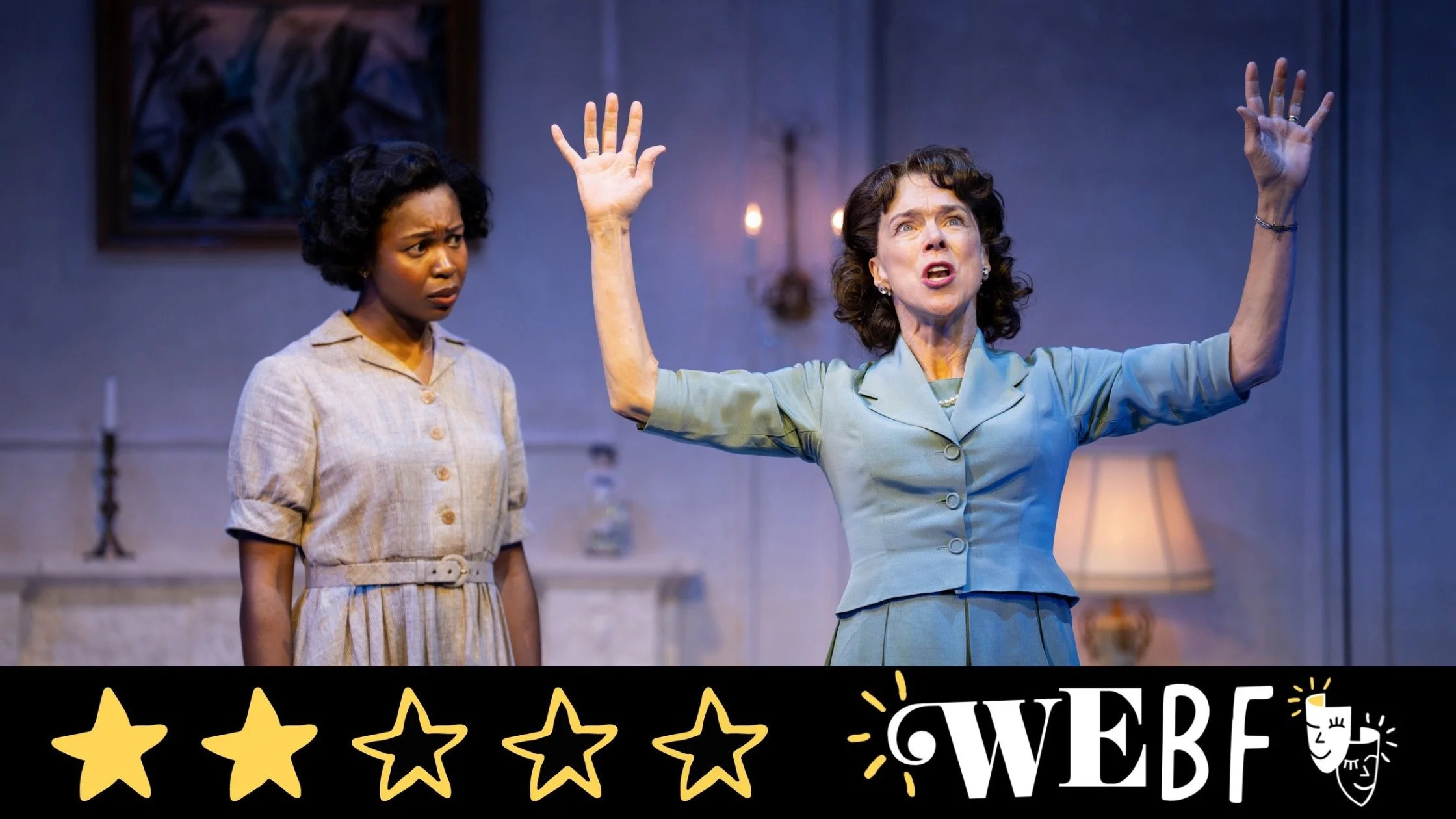
The story is split across three different pairings, spanning three different nights in three different years. Anchoring the central conceit in 1965 is Janie Dee as Dorothy, who shares her theories with the audience through her exchanges with Flo Jackson, her African-American babysitter and the only fictional character, played by Gloria Obianyo. Flo dreams of becoming a journalist herself and is a passionate advocate of the hope embodied by Bobby Kennedy and his activism in the civil rights movement. All three pairings examine a different power dynamic, and Obianyo has the advantage of not having to portray a real-life counterpart, instead creating a fictional character who challenges Dorothy’s theories. Obianyo is a calm and more objective presence, confidently holding her own alongside Dee, whose years of stage experience are evident in an assured and nuanced performance, despite being saddled with the well-worn role of an investigator who is getting in too deep.
Dorothy’s large and opulent sitting room-cum-office provides the central space, but Lee Newby’s excellent music-box-like set revolves allow two other sets to rotate in and out of focus. However, they are used excessively, at times too frequently risking giving the cast whiplash. The dialogue ushering in each scene change feels like a pastiche of 1940s private detective noir, while the accompanying music and song snippets are jarring.
The other two timelines intercut with Dorothy and Flo’s story and serve to demonstrate Dorothy’s version of the imagined rendezvous of the famous players involved. Director Trevor Nunn shows his strongest hand in the feisty and passionate scenes between Marilyn Monroe and Robert (Bobby) F. Kennedy in Marilyn’s apartment. Like Flo, Marilyn is desperate for a change in her life and to be taken more seriously as a working professional, or, failing that, to simply run away with Bobby. While Natalie Dunne is clearly a talented performer, she is unable to scale the Everest-like heights required to portray Monroe. Marilyn’s diaries of her secret meetings with Bobby are the central source of intrigue and what make her such a dangerous proposition for the Kennedy dynasty. While Jolyon Coy as Kennedy is forthright and intense, he is burdened with rattling off historical events and figures without any real political examination. While their relationship is undoubtedly tragic, it verges on the performative. Later when a masked figure enters the apartment to represent the apparent over-bearing threat to Marilyn’s life, his presence is undermined when you realise his main function is to clear props from the central stage to allow for the next scene change.
The third and final two-hander is between Lee Harvey Oswald, played by Joseph Potter, and Carlos Marcello, played by Ferdy Roberts, who recruits Oswald as JFK’s eventual assassin. Potter portrays Oswald as a quiet, pathetic figure who is controlled and manipulated by Marcello. Roberts, in turn, must walk the fine line between parody and a real-life mob boss in tense bar-room scenes that are a little too static.
While these conspiracy theories will undoubtedly continue to be revisited for years to come, Speculations doesn’t add anything new to the story beyond the dramatisation of Dorothy Kilgallen, whose own theories ultimately don’t stand up to scrutiny.
** Two stars
Reviewed by: Phil Meikle
Photo credit: Helen Maybanks
Speculations continues at the Marylebone Theatre until 17 January, with tickets available here.