
Review: KONTAKTHOF: ECHOES OF ‘78, Sadler’s Wells
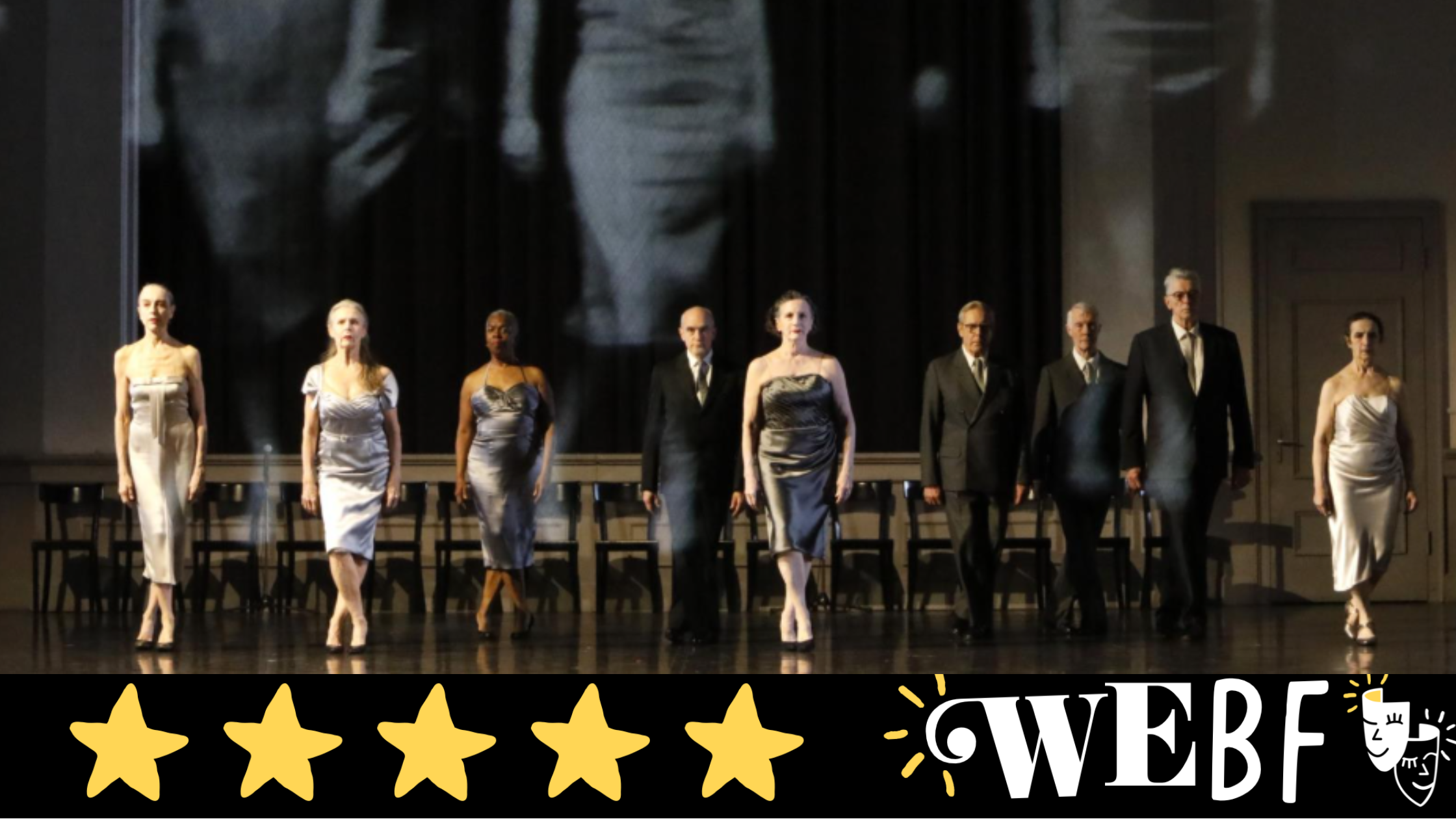
Ursula Kaufmann
Kontakthof: Echoes of ’78 consciously exists as a legacy restaging while becoming a work tangibly present. Originally created in 1978, it remains a cherished piece of the Tanztheater Wuppertal Pina Bausch repertoire. An exploration of the desire to be seen, of intimacy, power, and human connection. Now, under the hand of Meryl Tankard, herself an original cast member, and with other original dancers returning, Lutz Förster, Josaphine Ann Endicott, John Giffin, Ed Kortlandt, Beatrice Libonati, Arthur Rosenfeld, Anne Martin, Elizabeth Clarke (not there on the night) the work shifts its focus.
Nearly five decades on, this version places past and present in direct conversation, asking what it means not just to perform a work again, but to return to it with a lifetime in the body.
Set in a non-descript dance hall where men and women encounter each other and themselves. The aesthetic is unmistakably Bausch: suits and cocktail dresses, repetitive gesture, continuous crossing of space, and emotional expulsion through the body. This familiarity, now carry the weight of memory.
Movements are not simply performed; they are revisited, re-experienced, and lived again.
Archival footage from 1978 is projected into the space with original sound. In the first half on a sheer screen downstage of the performers, and after the interval on a screen upstage behind them. This allows the dancers to quite literally share the stage with their younger selves, and with those, sadly, no longer here. Ghostly echoes of the past linger throughout.
There is something striking in the space itself, a sense of vacancy. Having seen the work before in its full physical force, with dancers able to propel themselves across the stage with relentless energy, this version holds a different kind of weight. The bodies now, ranging into their seventies and eighties, carry limitations. But the projections do not. Their past selves still leap, still move with that earlier abandon. What we witness is a re-encounter, dancers meeting themselves across time. Not many are given that opportunity.
There is a sense that Bausch is still present within these dances too. One of her greatest gifts to dancers was allowing them to bring themselves fully to each movement and to own it; Tankard ensures this remains. The bodies on stage remember. Even if they are no longer as limber, no longer able to do all they once did, the intention behind the movement – what drives it is still there. There is something deeply moving in that.
The work continues to explore human connection, but here those interactions feel altered, softer in some places, heavier in others. Less about performance, more about presence.
Ageing is often treated as taboo, something to resist or disguise. This work does not shy away from it. It acknowledges that ageing can be difficult, confronting, and at times uncomfortable, but also beautiful. It holds all of that without sentimentality. As part of the Sadlers Wells’ Elixir Festival 2026 which is a series of performances, films, and talks that challenge perceptions around dance and ageing, this is a perfect addition.
The sound is grainy at times and occasionally understated, and could be considered under-produced, yet it works in the piece’s favour. Like memory: slightly distorted, not entirely clear, but present.
This work sits somewhere between dance and performance art – less about entertainment and more about experience, as we recognise something of ourselves within what unfolds on stage.
***** Five stars
Reviewed by Stephanie Osztreicher
For more information, click here