
Review: INDIAN INK, Hampstead Theatre
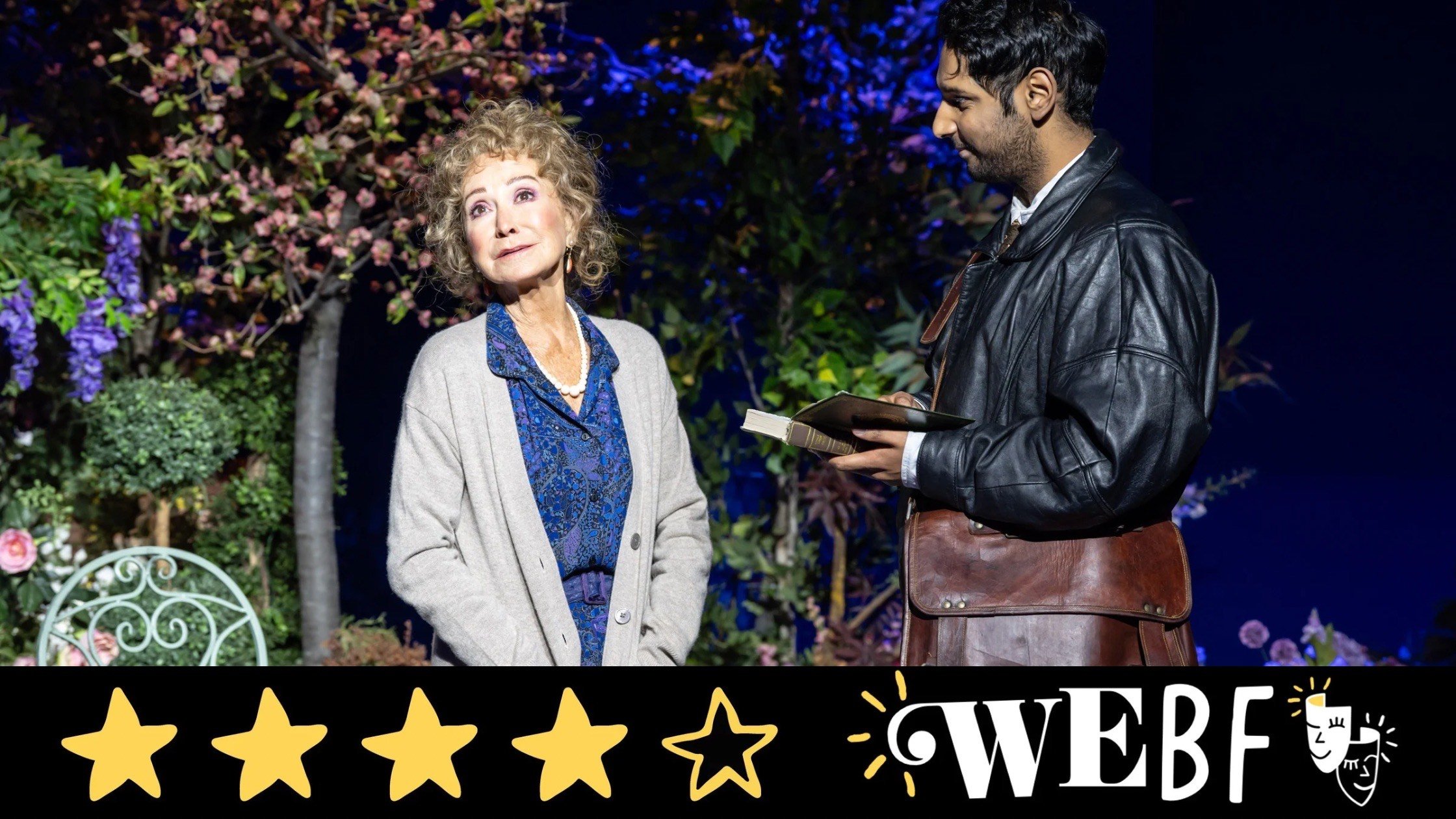
Photo credit: Johan Persson
Indian Ink is a bittersweet addition to the canon of Stoppard plays being restaged at Hampstead Theatre of late and, notably, the final one in this recent sequence. It arrives mere weeks after the great playwright’s passing and, as a result, carries an unmistakable air of melancholy, nostalgia and joyful grief. A play concerned with legacy, interpretation and misinterpretation, it feels especially resonant now: reflective without sentimentality, intellectual but human. Directed by Jonathan Kent, the production brings a thoughtful clarity to Stoppard’s layered text.
First staged in 1995, Indian Ink moves between two timeframes. In 1930s India, under British colonial rule and amid growing nationalist unrest, Flora Crewe (Ruby Ashbourne Serkis), a poet revered only after her death, travels to India for her health while suffering from TB. She is free-spirited, intellectually formidable and socially uninhibited. Nirad Das (Gavin Singh Chera), a young Indian artist negotiating his place within a shifting political and cultural landscape, begins to paint her during her stay, in an attempt to capture the poet’s ‘rasa’ (the Sanskrit concept of emotional essence in art). Fifty years later, in 1980s England, Flora’s sister, Mrs Swan (Felicity Kendal), is visited by an American academic (Donald Sage Mackay) determined to piece together Flora’s life and reputation. When Nirad’s son, Anish (Aaron Gill), appears with a painting, a nude, the past uncovers new truths and forgotten ones. Stoppard allows history to surface in fragments: conversations, poems, paintings, half-remembered encounters.
One rich aspect of Indian Ink is its engagement with the female perspective: a play acutely aware of the male gaze, yet never governed by it. The gaze exists, certainly, but it lives largely “…in the footnotes”: in academia, biography and the men who attempt to frame, define and own a woman’s life after she is gone. Flora remains resistant to that framing. She is observed, written about, painted, but never reduced. The play captures a moment in time heralded by a formidable woman, formidable through self-conviction and honesty. There is a warmth to her provocation, a generosity that seems to come from someone living with the knowledge of limited time.
Indian Ink is also a story about meetings between people, cultures, art forms and eras. Art emerges as the common language underpinning it all. Through poetry, painting and letters, Stoppard articulates the value of creativity as a bridge between profound cultural difference. The play foregrounds art’s capacity to connect.
Flora, at ease with her sexuality, is played as provocative yet welcoming and warm all at once by Serkis, while Chera plays Nirad with honesty and vulnerability. The pair challenge each other to be their authentic selves, and the scenes in which Flora sits for Nirad are affirming and tender. Nirad sees Flora clearly, perhaps more clearly than those who later claim to know her, yet he too grapples with power: artistic, cultural, personal. The moments between them are intimate, with no physical touch necessary, and profoundly moving.
These Edwardian scenes are held between scenes of 1980s England, where grief and nostalgia surface through Flora’s now aged sister Mrs Swan. This is perfectly played by Kendal, who first portrayed Flora Crewe in the original staging, with this casting also adding another layer of nostalgia and a direct connection to the play’s writer. The echoes between past and present underscore the enduring resonance of Flora’s presence and the ways in which memory and interpretation intertwine.
Kent’s staging embraces this juxtaposition with elegance, resisting overstatement and trusting the play’s structure and language to do their work. Time periods are placed beside one another, sometimes gently entangled, sometimes simply coexisting but always visible, always in each other’s shadow. Leslie Travers’ evocative set and vivid colours allow images to linger, reinforcing the play’s meditation on memory, art, and the subtle interplay between past and present.
As the final Stoppard revival in Hampstead Theatre’s recent run, Indian Ink provides a fitting conclusion. Its meditation on posterity, the shaping of narrative, and the traces we leave behind is imbued with added poignancy, and the play’s interplay of intimacy, art, and memory lingers gently. A celebration of human connection and the enduring reach of art.
**** Four stars
Reviewed by: Stephanie Osztreicher
Indian Ink plays at London’s Hampstead Theatre until 31 January, with further info here.