
Review: HOW SOON IS NOW?, Lowry Salford - Tour
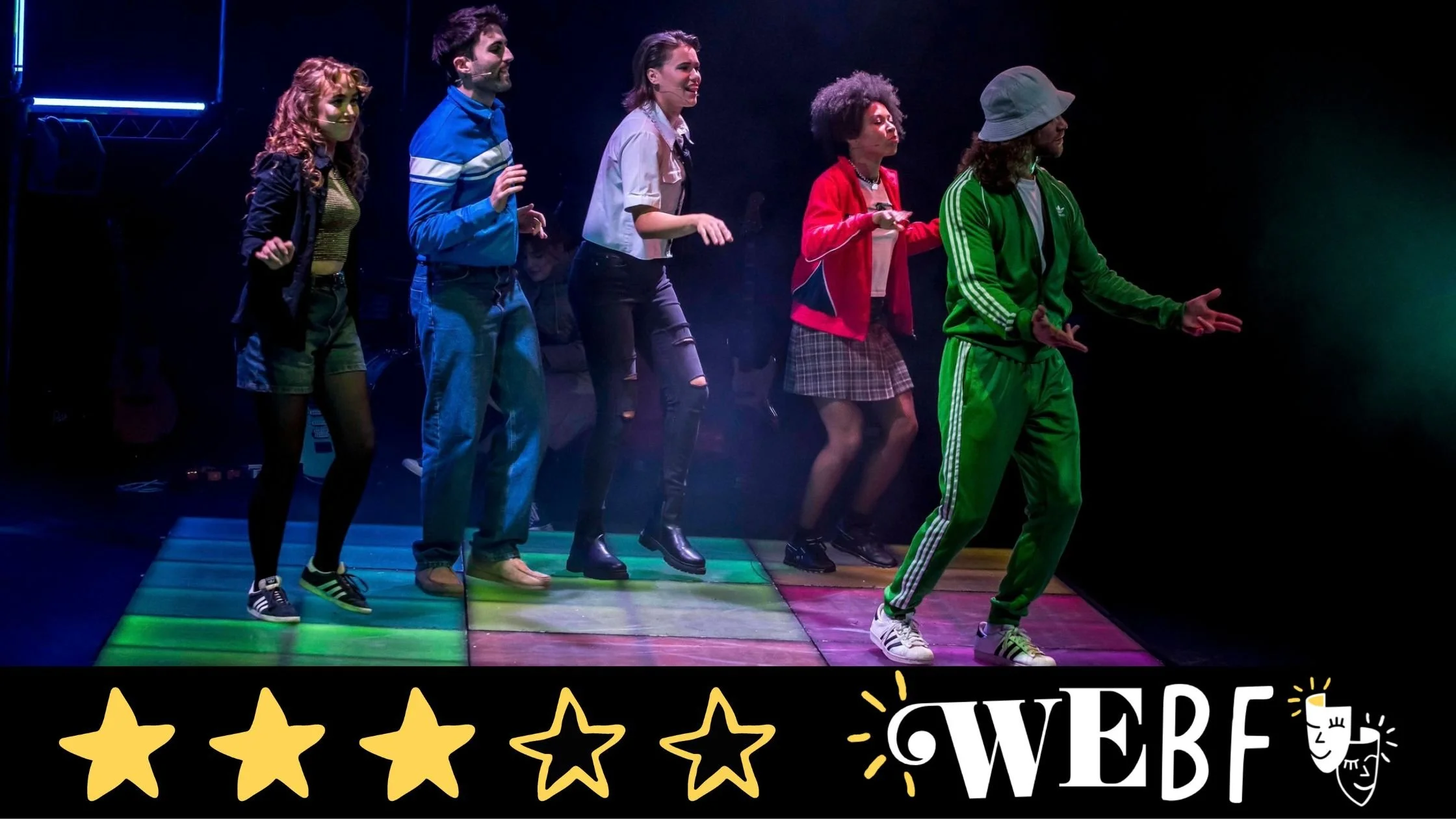
Photo credit: Supplied by the production
Manchester-based theatre company Box of Tricks are celebrating their 20th anniversary with their most ambitious project yet, How Soon Is Now? Opening at The Lowry before heading out on a UK tour, the new musical, with an indie music soundtrack, has been ten years in the making and marks a major milestone for the company.
The play, written by Siân Owen and directed by Adam Quayle, brings two female-led stories together, unfolding side by side as we’re taken on a nostalgic journey through the clubs and nightlife of the 1990s. The show is led by Spin Jim (Darragh Cowlry), who breaks the fourth wall throughout and becomes our guide and narrator as the night unfolds. Set on New Year’s Eve 1997, we meet best friends Angie (Kaitlyn Akinpelumi) and Polly (Laura Robinson) as they head out for a night at the club they proudly claim as “our” club, Deja Vus’. Alongside them are Jean (Bethan McLean) and her boyfriend Carl (Theo Woolford), who have made the journey from rural South Wales, with Carl promising Jean a memorable night out in Manchester. As the two stories begin to intertwine, we get a glimpse into two very different experiences of a night out on the town.
The set, designed by Hannah Sibai, makes full use of the stage at the Quays Theatre, with a variety of different settings brought together in one space. The dance floor takes centre stage, while a bathroom, bus stop, bar and outdoor area are also incorporated into the design. Three of the performers also act as our band (Darragh Cowlry, Theo Woolford and LJ Willow) for the indie classics throughout the performance, highlighting just how talented these actor-musicians are.
However, the set doesn’t completely capture the atmosphere of New Year’s Eve. At times, it could easily be mistaken for a setting at any point during the year. When the action moves outside, there is also a lack of reference to the weather conditions, which is surprising considering the play is set on a December night. In contrast, the lighting by KJ does a great job of creating the nightclub atmosphere. LED strip lighting is used sparingly around different parts of the set, but their placement is effective and adds to the energy and atmosphere of the scenes.
The piece opens with The Smiths’ classic ‘There Is a Light That Never Goes Out’, as we follow the friends on their journey to the club, while Jean wanders around the stage seemingly lost in her own world. This piece of music is particularly poignant within the overarching themes of the show. The opening has a strong sense of atmosphere, although the harmonies aren’t always as tight as they could be. Darragh Cowlry is a bundle of energy as Spin Jim, throwing himself into every moment on stage and bringing plenty of life to the role as he breaks the fourth wall and guides us through the night. As Act One progresses, Jean’s character remains somewhat unclear. We’re left wondering what her place is within the story and why Carl is treating her to a night out in Manchester. These unanswered questions make it difficult to fully connect with her at this stage.
One of the more thought-provoking moments comes from DJ Spin, who delivers a lengthy and poetic monologue during the opening about DJs’ being ‘time travellers’ transporting us back to pivotal moments in our lives. His reflections on music and memory are particularly interesting and add another layer to the story. It’s not the most gripping opening, and it takes a little while to get going. This feels like a slow burn, gradually introducing us to its characters and themes rather than immediately pulling us into the action.
The indie songs used don’t always feel like they fit with what is happening in the story, which is a shame considering how big Britpop was in the 90s. Some of the songs interrupt the dialogue and make the scenes feel slightly disjointed. Using shorter sections of the songs rather than playing them in full each time could have made them feel more purposeful and given them a bigger impact. How Soon Is Now? feels more like a play with music rather than an out-and-out musical.
The piece centres around the idea of hope, particularly with New Labour coming into government, and this is reflected in the relationship that develops between Jean and Polly. When Jean eventually finds herself alone in the club and becomes understandably overwhelmed, she bumps into Polly, who offers her support and a sense of comfort. Laura Robinson is a standout in the role, delivering the comedy lines with great timing while also showcasing a beautiful singing voice. She brings warmth and humour to Polly, making her an instantly likeable character.
Angie, however, goes through one of the biggest changes between the two acts. In Act One, she is a free-spirited, energetic presence on the dance floor, but by Act Two she has become an anxiety-ridden shell of the character we first meet. After dealing with PTSD from working in A&E over Christmas, the contrast between Angie in each act is stark and effectively shows how much her experiences have affected her. Kaitlyn Akinpelumi handles this shift well, bringing a noticeable change in energy between the two acts.
Jean’s relationship is clearly abusive from the start, with her boyfriend being controlling and coercive, although there doesn’t seem to be an obvious reason for his behaviour. Bethan McLean is somewhat bound by the writing in Act One, with Jean’s character remaining confusing, but she really comes into her own in Act Two as we see more of what she is going through as she speaks out and stands up for a co-worker. However, she is quickly belittled by her boyfriend again, before he ends the scene by pouring a drink over her. Unfortunately, this moment doesn’t have the impact it should have. The drink slowly drips out of the bottle rather than being thrown over her, which took away some of the intensity from what should have been a particularly shocking moment.
How Soon Is Now? is an ambitious celebration of 90s nightlife and friendship. There are some strong performances and plenty of nostalgia for anyone who remembers the Britpop era, with the actor-musicians bringing real energy to the production. Laura Robinson’s Polly is a particular highlight, with Darragh Cowlry’s infectious energy keeping the production moving. However, some of the more serious moments lack the impact they deserve. There’s plenty here to enjoy, particularly if you have a soft spot for 90s nightlife and Britpop, but for us, the production doesn’t quite turn that nostalgia into something truly memorable.
*** Three stars
Reviewed by: Jordan Potts