Review: GIULIO CESARE, The Grange Festival
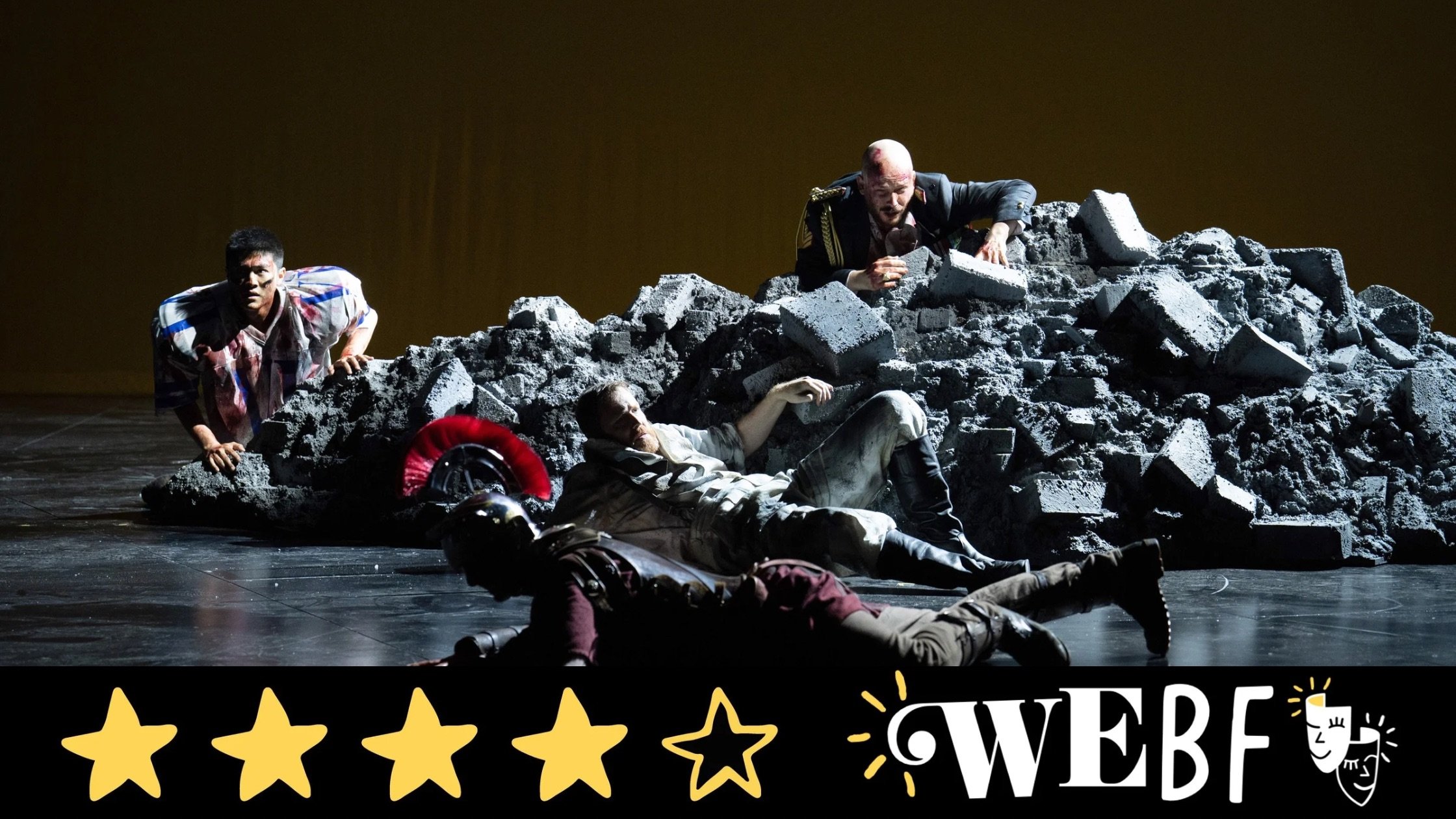
Photo credit: Richard Hubert Smith
The Grange Festival is one of those annual events that you have to experience to appreciate. In an old, virtually derelict house first built in1665 on an idyllic hillside near Alresford in Hampshire, a 570 seat opera house was built in a converted 19th century orangery in 2000. For two months a year, it stages the Grange Festival, the rest of the year it is too cold to stage such activity in the beautiful and extremely comfortable auditorium, although corporate events and weddings do take place on the estate.
This year’s programme includes Puccini’s La Boheme, Mozart’s La Clemenza di Tito, Tchaikovsky’s Eugene Onegin, and Handel’s Giulio Cesare, the latter of which we saw on its opening of just four performances this month. You arrive early and find your reserved table in a marquee on the terraces around the theatre for a drink or if you want an hors d’oeuvre before the show starts at 4pm. The ninety-minute interval allows you to return to the table for a picnic (you can pre-order or bring your own) and a glass of wine or champagne. It allows you to see how the other half lives in their dinner jackets and fine gowns and the dining is as much of the experience as the opera itself.
Giulio Cesare is a baroque opera in three acts composed by the naturalised British German born composer George Frideric Handel in 1724, with a libretto by Nicola Francesco Haym and sung in Italian with English surtitles. It is loosely based on events around 48BC with Cesare’s arrival in Alexandria being greeted in the presence of Pompey’s wife, Cornelia and son Sesto by the delivery of the Roman, Pompey’s severed head as a gift from the Egyptian, Tolomeo. It is delivered to them by Achilla, the Egyptian army leader. Tolomeo plots to assassinate Cesare but Cleopatra has ambitions to rule Egypt and joins with Cornelia and Sesto to revenge her brother. Cesare’s centurion Curio hopes to marry Cornelia while Cleopatra’s servant Nireno joins the plotting. We already know that Cleopatra will prevail and Egypt will be liberated with her made Queen.
It sounds a straightforward historical narrative of revenge and lust for power, but director David Alden and designer Jon Morrell take us on a curious, slightly bizarre reinterpretation of a timeless tale with a mixture of period costumes and a dreamlike quality to the interactions. You have to go with the flow, and enjoy their unusual choices so that you are constantly challenged and intrigued by their interpretations. Cleopatra reminded us of Amanda Barrie in Carry on Cleo; Nireno is dressed throughout as an Egyptian mummy; Sesto starts in schoolboy grey shorts and dons an American Football kit; Cornelia has the feel of a fifties movie star; Cesare is dressed as if from the 1951 film The Man in the White Suit; Tolomeo is in flowing black robes; and only Curio looks like a Roman soldier. Are these deliberate references, it is hard to fathom the director and designers’ intention?
The set too is full of interest, which changes constantly on a revolve from grey exterior walls to the red hieroglyphic filled walls of an Egyptian tomb to the green camouflage in a snake herpetarium. Only in the final scene do we see a Roman Chariot arrive. The most amusing scene is set around a long table as they attempt to assassinate Cesare in an amusing version of musical chairs that leaves three servants dead. The five movement actors, dressed from head to toe in black art material, add to the spectacle, animating snakes and gliding on and off stage with props. It is a constantly changing picture which often defies logic but keeps you engaged and amused.
Of course, most people go for the music, and Handel’s score is a delight and beautifully played by the Early Opera Company under the leadership of Catherine Martin, with a prominent theorbo (a long-necked string instrument) in the pit and wonderful violin and horn solos highlighted in the action. The arias are emotional character statements, often repeating the words in long solos and the recitatives are shorter sung dialogue that move the story forward. The aficionados in the audience no doubt appreciated the nuances of the performances more than this first-time visitor but you have to admire the artistes’ technique while perhaps wishing that some of the arias could have been a little shorter given their limited narrative content.
The show is dominated by the soprano voice of Sarah Brady as Cleopatra and the contralto voice of Jess Dandy as Cornelia, both with great stage presence and establishing the emotional heart of their characters. More surprising was to hear the range of counter tenors, Tim Mead as Cesare and debutant Zheng Jiang as Sesto, sing in the alto castrato tradition of Baroque Opera. It added to the surrealist feel of the whole production.
As a first-time visitor to the Grange Festival and having never seen a Baroque Opera before, this was an enjoyable unique experience that we can recommend to those who want to try something new and different. The whole experience, even on slightly over clouded day, was excellent with a great team of volunteers ensuring we got the most from the visit.
**** Four stars
Reviewed by: Nick Wayne