
Photo credit: Helen Murray
Watching the lives of young girls being taken from them is incomprehensible, no matter where they are from. Yet it remains a reality that so many have faced throughout history and continue to face today.
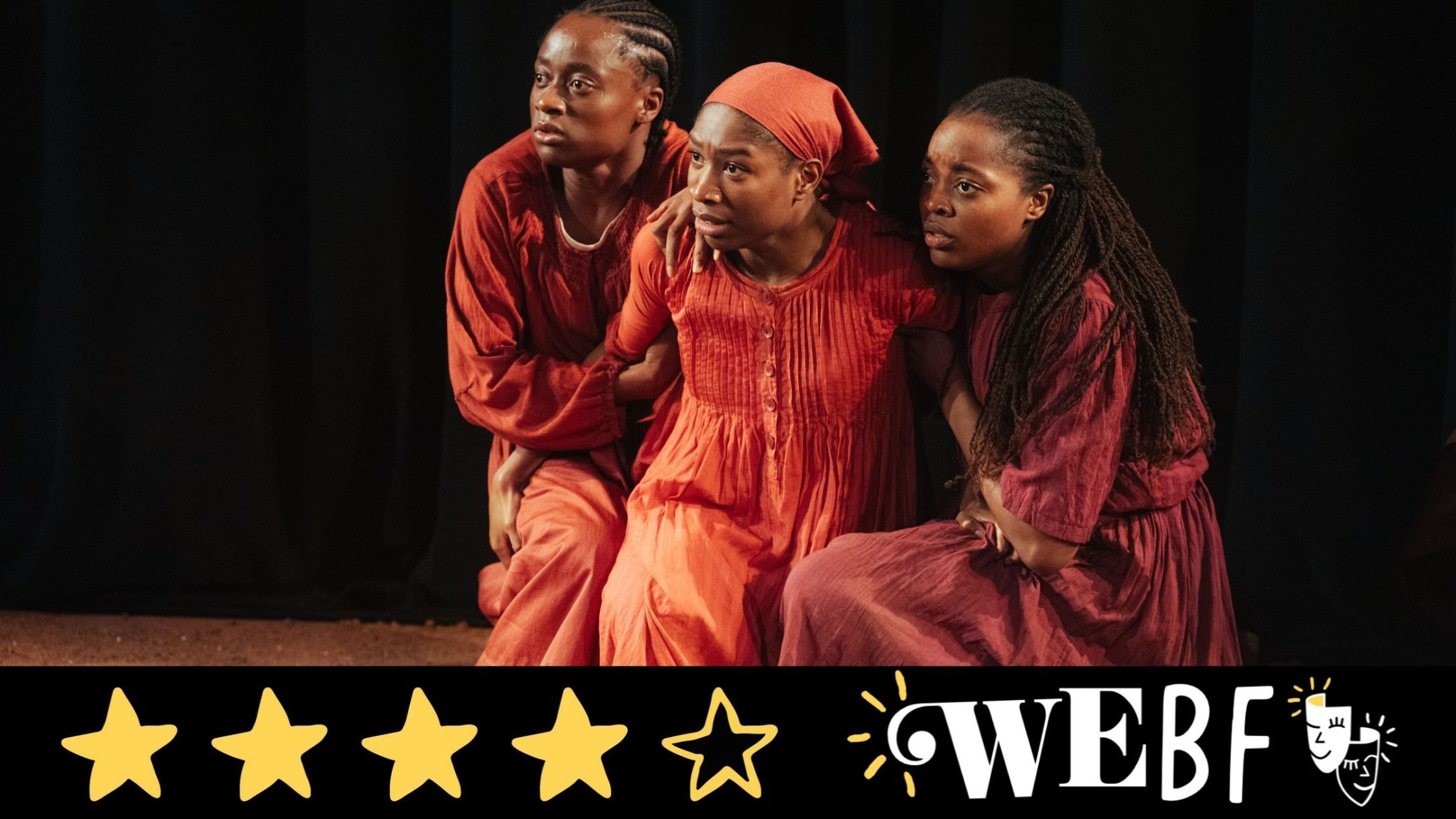
Written by Theresa Ikoko in response to Boko Haram’s kidnapping of 276 schoolgirls from Chibok in 2014, Girls, directed by Ewa Dina, follows three friends in Nigeria. Tisana (Hannah Akhalu), Haleema (Tara Tijani) and Ruhab (Sewa Zamba) are teenagers embracing the ordinary things young girls do: gossiping, joking and discovering the world they are growing up in. When they are kidnapped by militant insurgents, their lives are stripped of the futures they had imagined, leaving them to navigate an uncertain reality together. Their friendship, tested by fear and religious differences, becomes a means of survival.
Ikoko’s writing captures the complexity of the three friends’ trauma through fast-paced banter, moments of lightness and difficult lessons forced upon them. The play’s power lies in the joy that exists alongside the horror. They tease one another, laugh and love each other; they have dreams, families and beliefs. Their desire for friendship, love and a future is recognisable beyond cultural differences, making the violence inflicted upon them all the more devastating.
The performances from all three actors are deeply embodied. Each inhabits the spirit of her character while bringing a distinct personality to the friendship. Tisana carries a loyalty, integrity and capacity for love that are difficult to shake. Haleema’s wit and boldness give her a sharpness, while Ruhab’s instinct and maturity shape the way she responds to their circumstances. Together, they form an intensely close bond yet remain individuals. The conflict lies not only in what happens to them, but in how each responds to it.
Ewa Dina’s direction makes effective use of the three-person cast, with dkfash’s movement supporting the storytelling without overwhelming the performances. Sound by Munotida Chinyanga and lighting by Elliot Griggs creates an evocative atmosphere, while the literal dirt underfoot and clever use of the set by Raphaé Memon give the world of the play a strong textual presence. Scattered newspapers evoke the media narratives through which such atrocities reach the outside world, and the distance that can grow between reading about an event and confronting the human experiences behind it. There is a confrontation here for the audience. News of violence can become another headline to absorb before attention moves elsewhere. But how does witnessing a story translate into action? How does a person move beyond feeling powerless, and what does it mean to refuse the role of bystander?
A more difficult question emerges from the play’s representation of the girls’ experiences. The Chibok kidnappings had profound and individual consequences for the girls taken and the families left behind. When bringing such trauma to the stage, what experience is being represented, and what message does that representation communicate? The play explores the horrific manipulation of faith, the pressure to conform and forced marriage. These are deeply personal experiences, raising the question of whether some might be communicated more powerfully through metaphor than through literal depiction.
This is a much larger, philosophical question about how theatre represents the atrocities of human behaviour, rather than a dismissal of what this production achieves.
Overall, the performances are compelling, and the play's capacity to hold onto the girls’ humanity amid their suffering is considerable. Girls is a powerful reminder of how much work remains to be done before girls and women can be safe in this world. Their friendship cannot undo what has happened, but it reminds us of everything that violence threatens to take away.
**** Four stars
Reviewed by: Stephanie Osztreicher
Girls plays at London’s Young Vic Theatre until 21 Nov, with further info here.
