
Review: FIREBIRD, Southwark Playhouse Borough
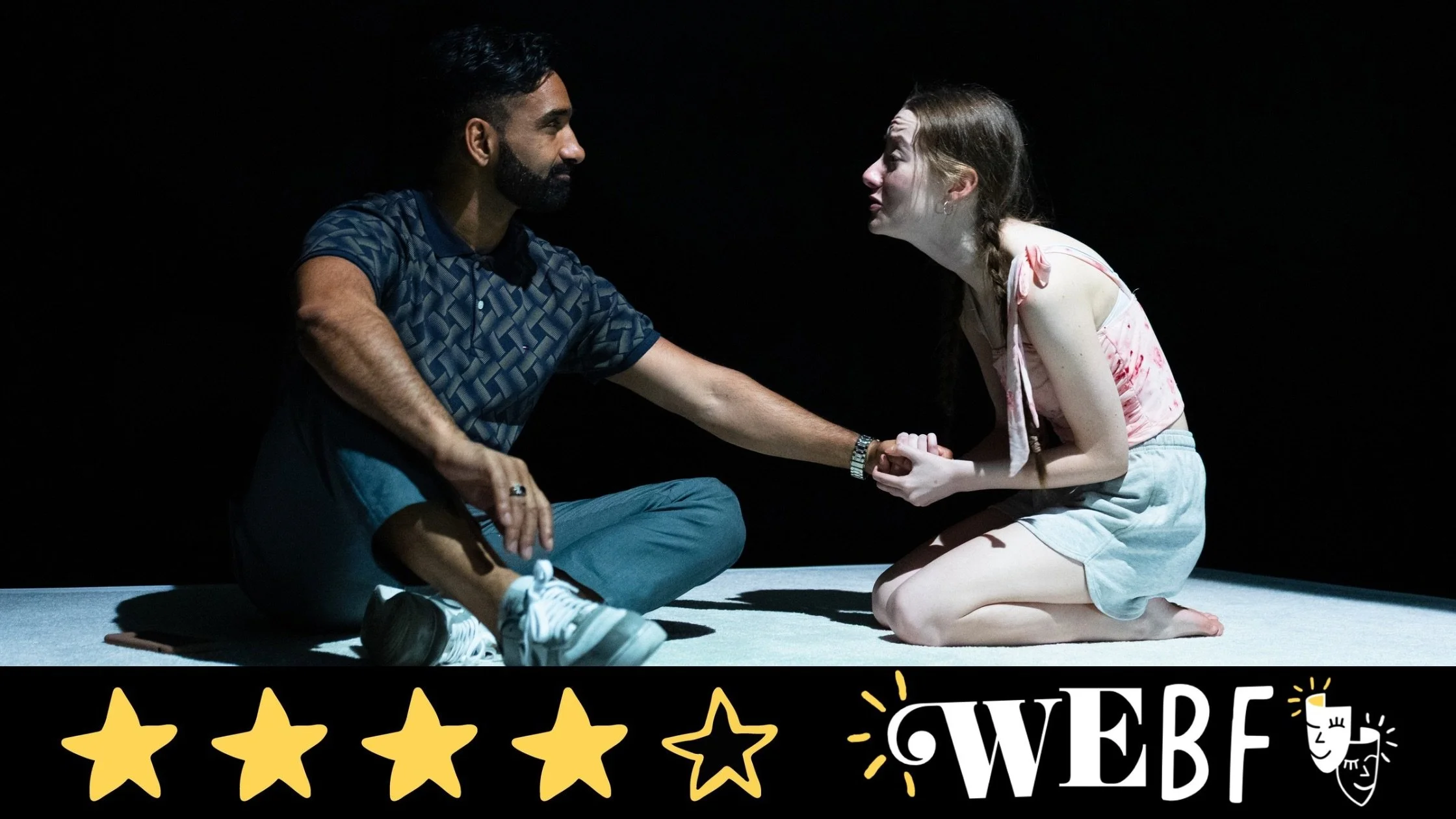
Photo credit: Toby Mather
Going into Firebird without knowing what it was about made for quite the shock, but as the play is about child trafficking, it was never going to be comfortable. The opening scene, of 14-year-old friends Tia and Katie swigging stolen champagne on top of a hill in Glasgow, appears innocent enough. A sense of dread builds as Tia dismisses Katie’s innocent game and wants to play a version of ‘Never Have I Ever’. Katie, like most 14-year-olds, hasn’t done much, and subsequently alternates between drinking vodka and champagne until the scene’s climax: Tia finds out she’s never had sex. This revelation causes Tia to go too far with the insulting jokes, implying Katie was the reason her dad left back in Manchester. Naturally, Katie leaves. But Tia is in a wheelchair, and can’t get down on her own. Like Katie, we as the audience aren’t convinced that falling down the stairs is how she ended up in one. The rest of the play is the story of how.
Firebird was written and debuted at Hampstead Theatre in 2015, and director Marlie Haco wanted to put on a 2026 revival at Southwark Playhouse Borough because the issue of systematic sexual abuse is as unresolved by the law as it was 11 years ago. Haco is interested in “making theatre that provokes us to look beyond first impressions” (according to the programme), and we certainly have to do that with Tia. Obnoxious, rude, lacking Katie’s humour or positive outlook, we think this is a teenage girl who’s sick of her home town and being unable to walk. There’s no way of predicting her backstory. The way that this production starts and ends in the same place, but jumps back in time for the majority of the 90 minutes, is incredibly clever in its tragic portrayal of Tia’s demise at the hand of sex traffickers.
Firebird was originally set in Rochdale, where writer Phil Davies is from, and where the scandal about 1,400 children involved in sexual exploitation was broken in 2014 by Dr Alexis Jay. They changed the location to Glasgow for this production because this type of crime isn’t specific to one area; it’s systemic. According to Davies, “this was never just a Rochdale story”. Tia first meets AJ while begging for chips in The Kebab Shop, cold in the rain without a coat. AJ, a friend of the shop owner Mushi, gets her some and tells her he would be concerned about any of his kids if they were out as late as she is on a school night - he claims he’s a social worker, despite his flashy attire. Like in the first scene, dread builds as they keep talking, with AJ calling Tia “pretty”, “sweet” - which she rightfully argues she isn’t - and suggesting she models for his friend’s agency. As Davies points out in the programme, grooming often begins with compliments, gifts, attention, promises. Later, while Tia is being held at Mushi’s flat, we learn that she had formed an emotional connection with AJ over months of long phone calls and talks of escaping Glasgow. The reality of their “relationship” is different.
One of the more devastating aspects of the piece is the police interrogation, and how the police are dismissive, sceptical and pushy with Tia - even after her confession of why she jumped out of Mushi’s flat window and ended up paralysed. Kelise Gordon-Harrison (Katie) and Taqi Naseer (AJ) double as social worker Deborah and policeman Bilal for this scene, though Kelise is heavily underused, with barely any lines. Towards the end of the play, once we’re back on the hill, and Katie has returned, we want to believe that Tia will be able to start over. But the piece makes the point that abuse victims often struggle to get away. The police have failed to protect Tia, mirroring a lack of action for victims in real life. Now the only people that can protect Tia and Katie are themselves.
Despite a technical difficulty, which was handled well by the crew, the staging of the piece was effective. It became increasingly claustrophobic for Tia throughout, the “ceiling” moving in and out to reflect the extent to which she’s emotionally and physically trapped. Overall, it was a tasteful, brave production with incredible performances from the cast, especially Mollie Milne as Tia. We wish we’d gotten to see it in 2015.
Phil Davies’ 10-year-old play about child sexual exploitation has been revived for a dark, but pressing, reason.
**** Four stars
Reviewed by: Ruby Skippings
Firebird plays at Southwark Playhouse Borough until 1 August, with further info here.
