
Review: DRACULA, Noel Coward Theatre
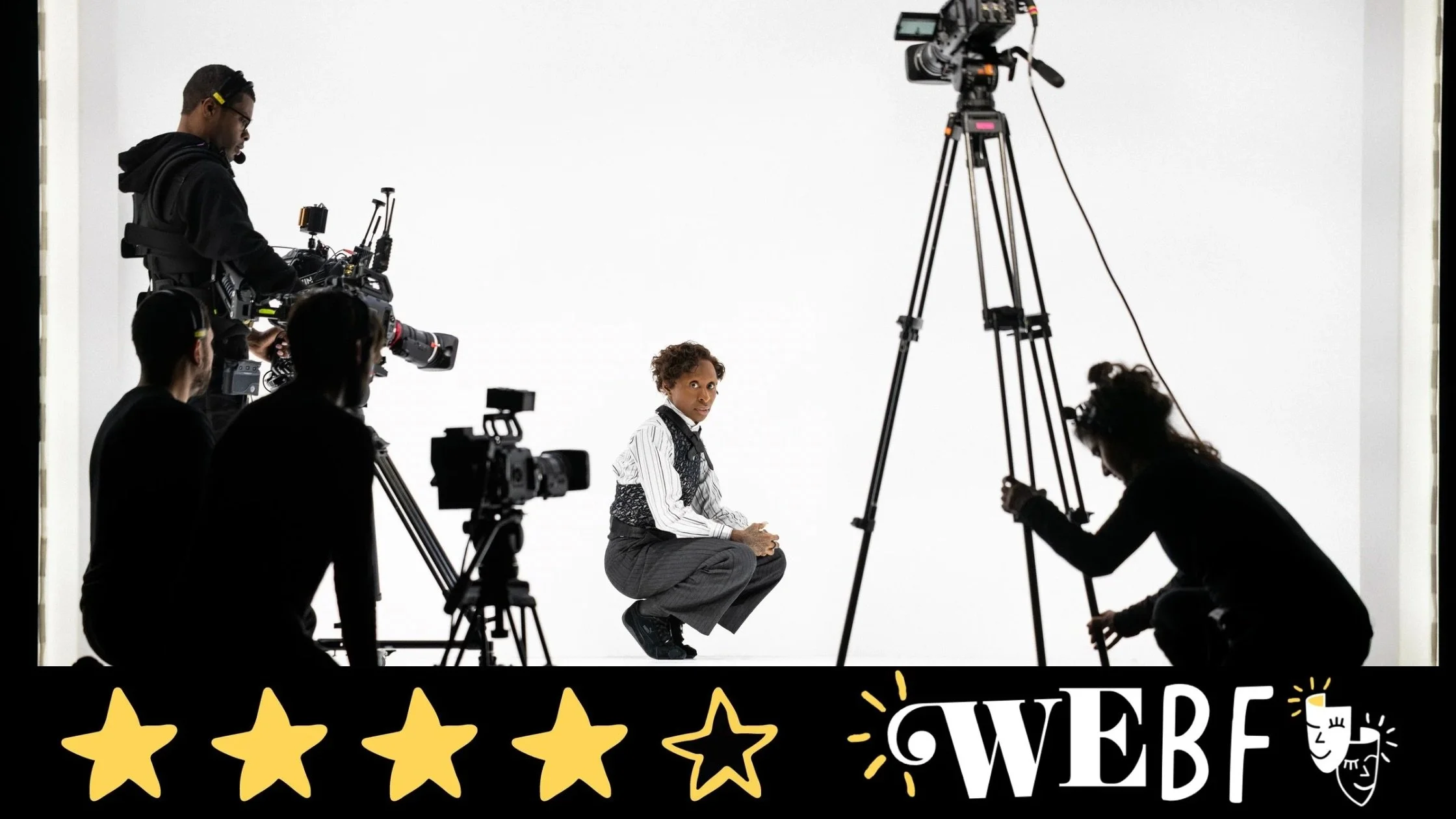
Photo credit: Daniel Boud
There is a fairly standard format to most West End productions. Given the scale, prestige, and attention that the West End commands, it is naturally drawn to proven concepts and big names. So, when Kip Williams brought Cynthia Erivo on to play Dracula, following her acclaimed run as Elphaba in Wicked and Wicked: For Good, it would be reasonable to expect the same grand, familiar format that has succeeded before to be replicated once again.
Instead, Cynthia Erivo walks onto a bare stage covered in camera marks and proceeds to perform all 23 characters across a relentless, near-continuous monologue, supported by some of the most intricate and ambitious camera work seen on a West End stage. The juxtaposition of multiple live cameras, layering her physical presence on stage with her other characters on screen, all portrayed by her, creates a constant dialogue between theatre and film.
An undertaking of this magnitude deserves immense praise. While the execution does not always fully land, and the reminder of live theatre is ever-present, particularly in moments where it feels as though she may briefly lose her place, Erivo commands the stage in a way that is unapologetic and fearless. Her look and versatility are visually striking throughout. Huge credit must also go to the camera operators and stage managers, who step onto the stage and perform elaborate choreography alongside her.
There are genuinely beautiful visual moments born from this collision of theatre and screen orchestrated by Craig Wilkinson’s video design. However, one could argue that the focus might have benefited from remaining more firmly on Erivo’s physical presence on stage rather than the screens, especially given the limited use of one of her greatest assets: her singing voice. The production is also lacking a true horror atmosphere which, at times, softens the dramatic tension the story promises.
Her performance, while flawed, must be respected. The rapid shifts between characters, costumes, accents, focal points, and physicalities, all while maintaining the momentum and precision of the monologue, is an extraordinary demand on any actor. The timing must be exact, particularly when she addresses herself as other characters and while it isn’t perfect, it’s that imperfection that reminds us this is theatre, not film.
This is a massive undertaking and a bold move by Kip Williams. While it may not completely pan out in its final form, it remains a noble and exciting proposition, one that wrestles with pacing issues yet offers undeniable artistic and technical richness. It contributes meaningfully to the ongoing conversation about how far technology can and should be integrated into live performance, and where West End theatre may be heading next.
**** Four stars
Reviewed by: Beatriz Ferreira
Dracula plays at London’s Noel Coward Theatre until 30 May, with further info here.
