
Review: BALLET ICONS GALA 2026, London Coliseum
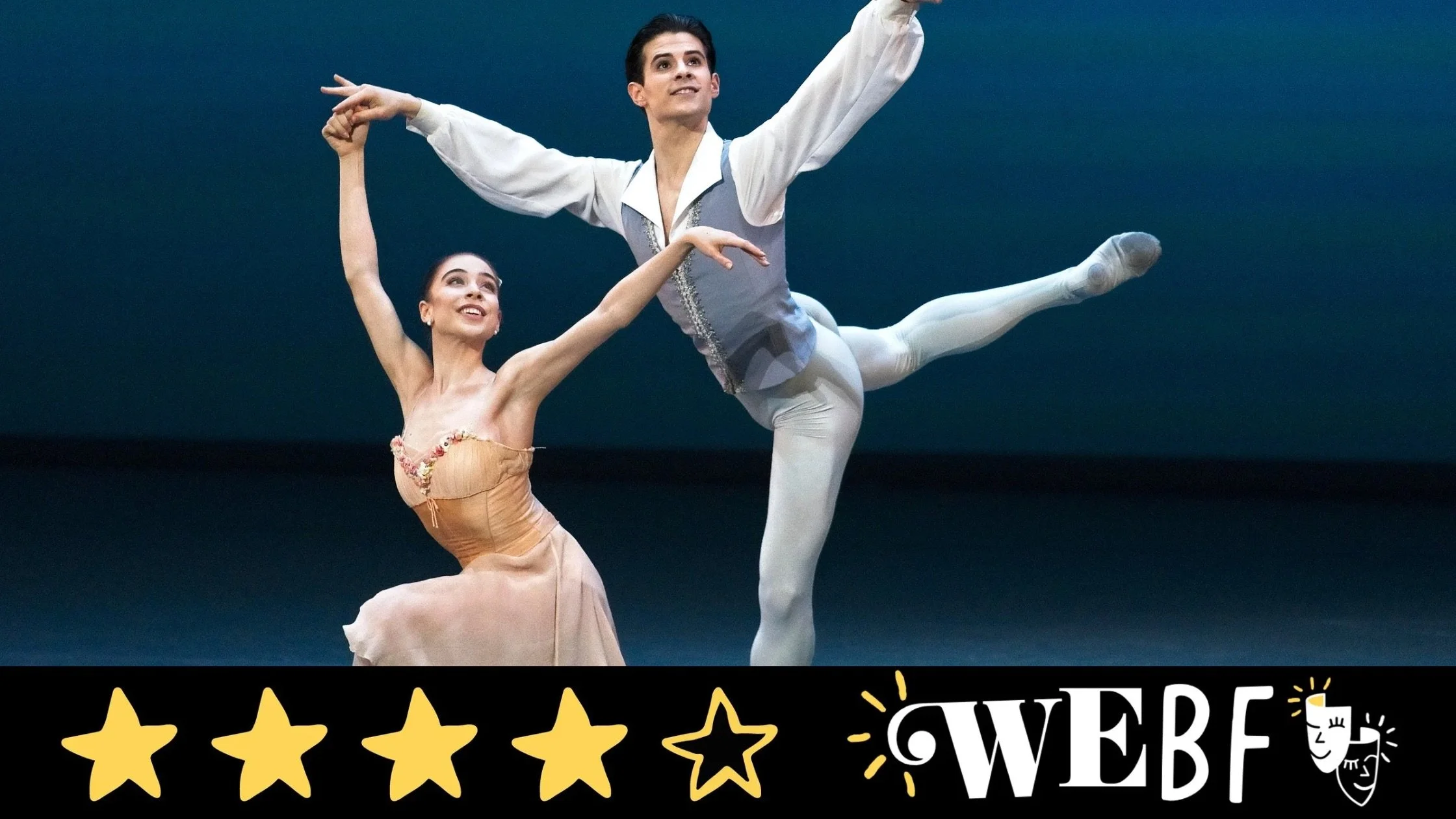
Photo credit: Malcolm Levinkind
Celebrating its 20th anniversary at the London Coliseum, Ballet Icons returned as a live showcase of ballet’s global reach. Presented at the English National Opera, the gala felt less like a traditional performance and more like a gathering based shared respect, history, and a love of the form.
Founded and curated by Olga Balakleets, Ballet Icons has built its reputation on bringing world-class dancers together across companies, countries, and styles. This ethos remains clear. The evening opened with a filmed montage introducing the organisers and the performers, sharing what Ballet Icons means to them. It was a simple but effective reminder that this gala is about the artistic community and its virtuosity.
The programme offered an impressive breadth of work, from classical to contemporary world premieres. Opening with a mixed-gender duet was a smart choice, setting a tone of balance and signalling the variety to come. With no physical set and only a screen with backdrops, the staging was stripped back. While this limitation is understandable for a gala of this scale, it placed the full focus on the dancers and their motion rather than any spectacle.
One of the earliest eye catching moments of the night came with Edward Watson, whose performance, choreographed by Antonio Franceschi, was commanding and startling. His presence held the space, and it was hence unsurprising that he later received the Outstanding Performance award. The piece felt like a pivot point in the evening, marking a shift from elegant introduction to deeper expressive and stylistic range.
Chemistry played a vital role between performers, which was felt between Lucía Lacarra and Matthew Golding in Finding Lightwas, and was quietly affecting. In Diana and Actaeon, Francesco Gabriele Frola made a thrilling entrance and later revealed a different side in a poised, introspective solo.
Different feelings were brought up throughout the evening. Uhutu, performed by Sarah Chun, created a striking, unsettling atmosphere through music and lighting, though the increased sensory experience may have risked pulling focus from the dance. This posed an interesting question that hovered over the evening: how much design is too much when the body and dance are meant to be the central point?
Contrast was key and stood out when it occurred. The Black Swan pas de deux stood out for its striking costumes and sculptural choreography, with Fumi Kaneko bringing fluid, swan-like precision to the role. Other sections, particularly in the second half, felt a bit muted in lighting and in pacing, and the evening may have benefited from a more engaging re-opening of the second act.
Contemporary works offered refreshing tonal shifts. The duet by James Left and Travis Clausen-Knight, accompanied by an onstage opera singer, added texture and intrigue, even if it left one wishing for further exploration of what two male leads can do together. Highlights continued with the charisma of Young Gyu Choi in Raymonda, and the stunning pairing of Nicoletta Manni with Timofej Andrijashenko in The Nutcracker, whose iconic score reflected instant emotions.
The closing moments, while refined, felt rather understated for such a landmark anniversary. A fuller finale, possibly bringing more of the artists together on stage, might have provided a stronger sense of collective celebration and unity. Additionally, clearer signposting throughout the evening of what the performances were, why certain pieces were chosen, or what their significance was, could have deepened audience engagement, especially for those not as familiar with the art form.
What lingered most was a sense of harmony between dancers, styles, and the past and present. With several world premieres being presented alongside established works, Ballet Icons at 20 reaffirmed its purpose, as a space where excellence has the space to evolve and experiment.
**** Four stars
Reviewed by: Alexandra Tullah