
Review: A SMALL AND QUIET LIGHT, Chichester Festival Theatre
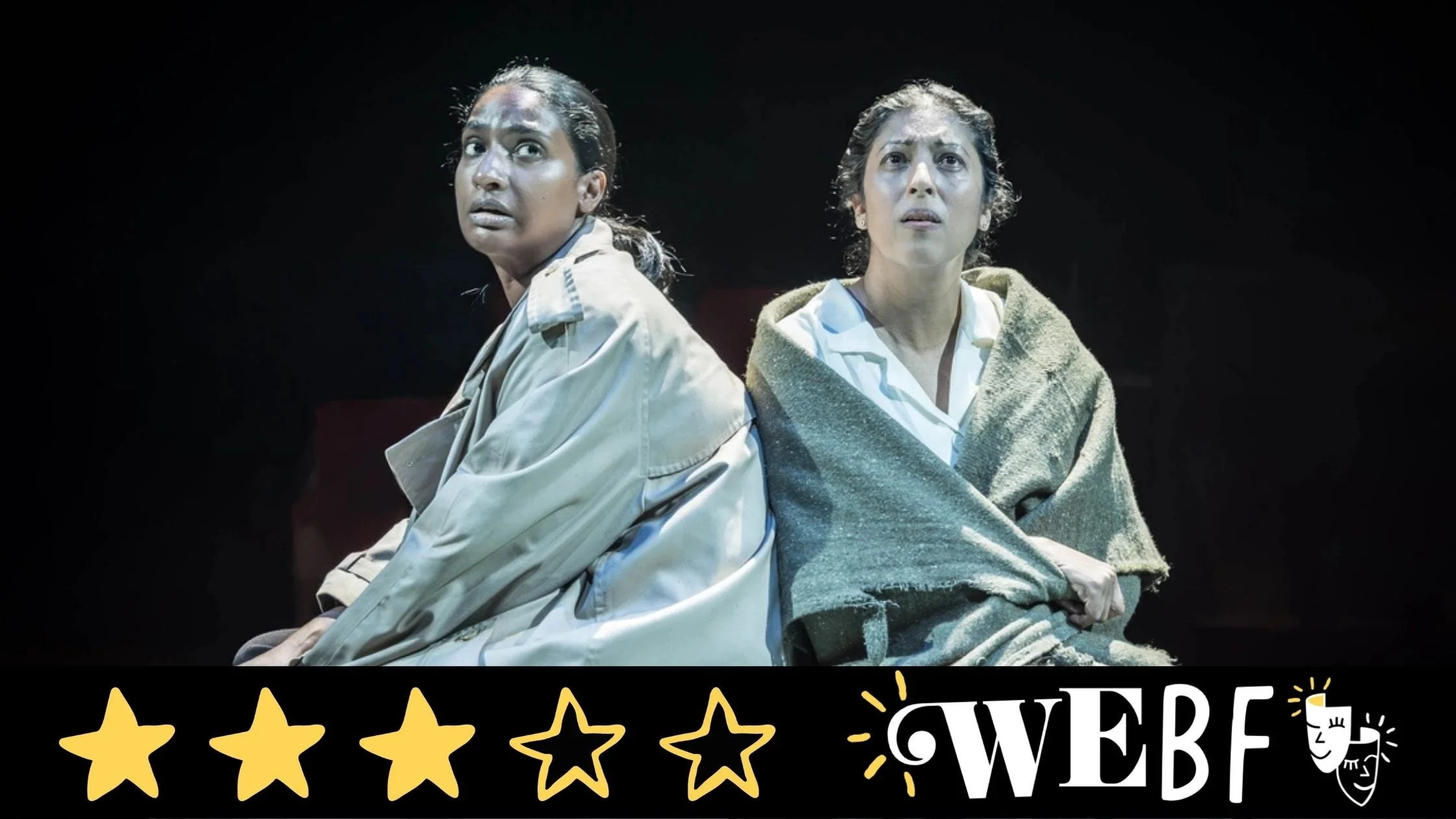
Photo credit: Marc Brenner
The heroic story of Noor-un-Nisa Inayat Khan, also known as Nora Baker, Madeleine, and Jeanne-Marie, who was dropped into Nazi occupied France in 1943 by the Special Operations Executive (SOE) to provide intelligence and reconnaissance information by radio back to her masters, is a fascinating and inspiring tale. She was the first female wireless operator to be deployed and with an expected average operation period of just six weeks behind enemy lines, her operations from 16 June - 13 October 1943 was remarkable. Born in Moscow of an Indian Muslim father and American mother in 1914 and brought up in London and Paris, her language skills and background appear to have allowed her to hide in plain sight of the Nazi’s until someone betrayed her. Stephanie Street’s play is based on archival documents and so factually tells the story, but we want to understand this complex ladies’ motivation for undertaking such a role, and her behaviour and skill that enabled her to survive for longer than most. But instead, we are left admiring her endeavour, and bravery without really understanding how she succeeded in the role or survived the 333 days in captivity until her execution in September 1944.
The challenge is the creative decisions taken to stage the play by director Elin Schofield and designer Anna Yates. Set in the round in the Minerva Theatre, with four plush piano stools as the only furniture and means of delivering props, means we rely on projected screen for location and the date of two parallel linear narratives of her life from 1926 to her death, and her interrogation by the Gestapo, Ernst Vogt from Day 1 to Day 333. They have chosen to present the multitude of roles with a cast of seven women and explain that this shapeshifting is a metaphor for how they had to act to survive in the extreme circumstances of front-line war, but it muddles the storytelling. We have to figure out quickly who each is now playing and sometimes whether they are meant to be a man or a woman. And curiously, the character we most want to see shape shifting to survive is played in the same blue trouser suit throughout. There appears to be scenes that are the fantasy of the writer like tea with Gestapo, piano playing in manacles or a jolly train journey to Dachau that may be meant to allude to those characteristics that enabled her to survive, but undermine the sense of threat and danger she faced from her arrival in France.
Priyanga Burford plays Noor-un-Nisa as our quiet, gentle, passive protagonist, only occasionally losing control as in biting her assailant or seducing her protector but mostly, we see her worrying about her family, chatting with a smile to her integrator and calmly meeting her fate. We get a sense that she was sent into the field with insufficient training and there appears to be an obvious interloper with her brown case containing the wireless set and her blue notebook. We wonder how she survived so long. Amanda Hadingue impresses as Vera Atkins, the Deputy Director of the F section of SOE who selected Noor-un-Nisa for the mission against the advice of the trainers, and probably underprepared, but it is unclear whether it was her failure to pull her out or Noor-un-Nisa’s wilful recklessness to remain that was her undoing. The role reminds us of Hilda Pierce, the SOE character in the wonderful Foyle’s War series. Caoilfhionn Dunne is Vogt, but it is hard not to see Herr Flick from ‘Allo ‘Allo in her portrayal and her non-violent approach to interrogation, offering tea and a bath in return for information, certainly goes against the usual portrayal of these men.
This is a story worth telling; a woman who was awarded the George Cross and the Croix de Guerre, a life to be honoured and celebrated, and we do get a glimpse of her and her family background. It prompts you to look for more information about her and the women who followed her into the occupied France. But as a theatrical event, it needs a couple of male actors, some more steely confrontations and more insight to how she operated for those four months at large in France to have a better sense of what a remarkable woman she was.
*** Three stars
Reviewed by: Nick Wayne