
Interview: Actor Joshua Riley on performing in THE MOUSETRAP in West End
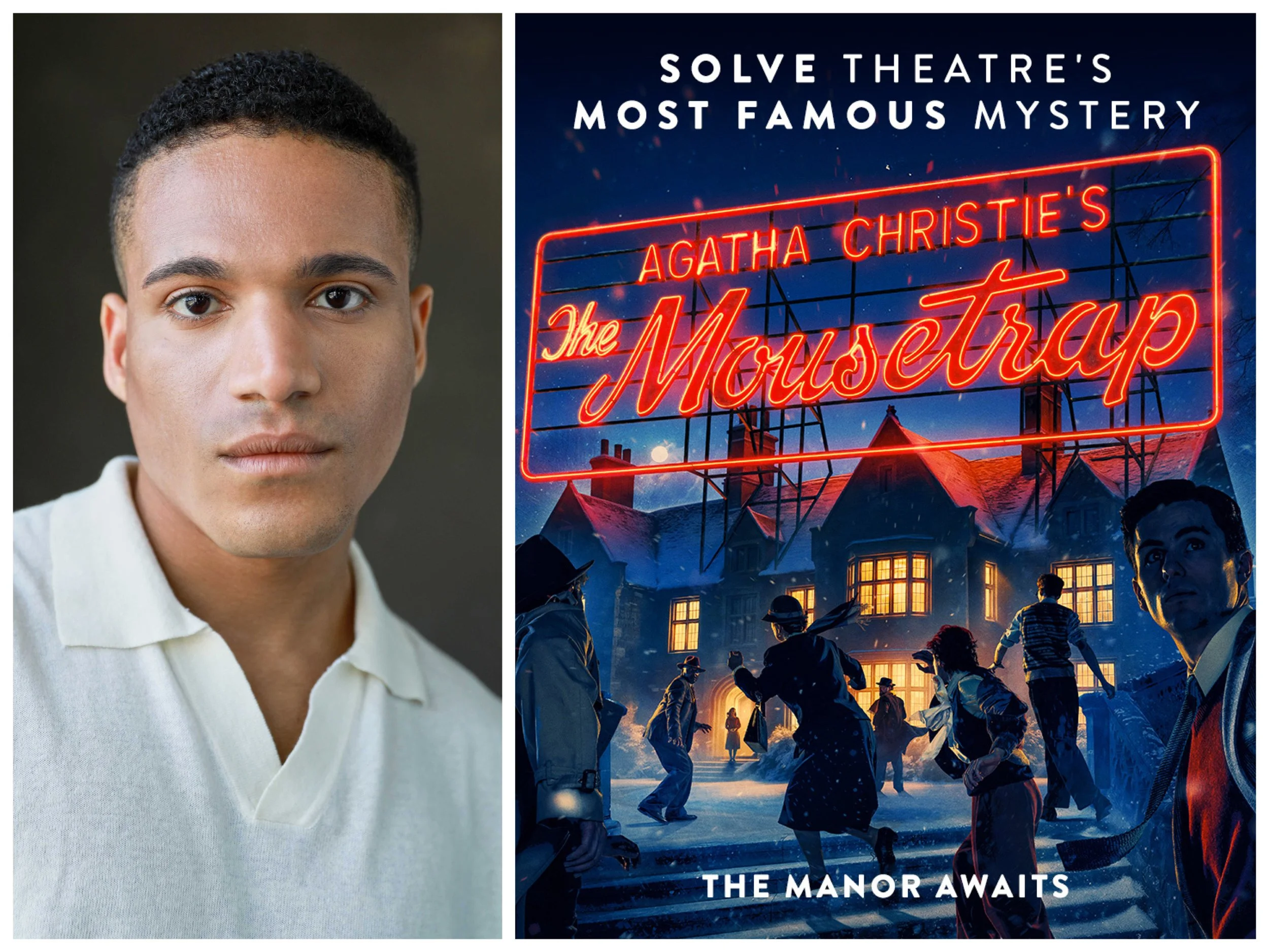
Agatha Christie's The Mousetrap has been captivating audiences since 1952, reaching an incredible 30,000 West End performances in 2025 and somehow still managing to keep its ending a secret. We spoke to current cast member Joshua Riley to find out what it's like to be part of one of the world's favourite whodunnits…
How did it feel to join the cast of the world's longest running play?
It felt like stepping into a living piece of theatre history. The Mousetrap has such a legacy attached to it, and you can feel that weight in the building. It’s a huge privilege to join something so iconic, and the company is incredibly supportive - that combination of tradition and playfulness makes it a brilliant place to grow as an actor.
What do you think it is about The Mousetrap that has kept enthralling audiences for so many years?
I think it’s the perfect balance of comfort and suspense. There’s something timeless about the world of the play - the setting, the atmosphere, the characters - and it invites audiences into a familiar kind of storytelling. But the engine is still so strong: the plot is tight, the tension builds, and people are constantly trying to solve it. You can feel the audience leaning in, watching the details, testing their theories.
Can you tell us a little about your character Christopher Wren? How have you made the role your own?
Christopher Wren is unpredictable, imaginative, and a complete joy to play. He arrives at Monkswell Manor with a lot of energy and mystery, and the audience never quite knows where they stand with him - which is exactly what makes him so fun to inhabit.
The fun of playing Wren is that he can be playful one second and unsettling the next. He’s deeply tragic at his core, and that tension is what I’m most drawn to. I’ve tried to make his energy feel like a defence mechanism, so the audience can laugh with him but still sense there’s something he’s hiding.
You've also starred in radio dramas and television shows like The Archers and Queen Charlotte: A Bridgerton Story. What do you love about those mediums, and what makes theatre work unique?
I’ve been really fortunate to work across theatre, radio and television, and each medium teaches you something different. Working on The Archers has been a masterclass in listening and specificity - everything lives in the voice, so you have to be emotionally precise and truthful without relying on anything visual. Being on Queen Charlotte: A Bridgerton Story reminded me how much the camera reads thought; even the smallest shift can carry weight, so subtlety becomes everything.
Theatre is unique because it’s alive. You get to do it night after night, in real time, with a room full of people sharing the story with you. That energy is completely unmatched. There’s something so unifying and moving about a shared moment like that before everyone goes back to their day to day lives.
What would you like to try next in the world of theatre?
I’d love to do more work that stretches me in a completely different direction - something contemporary, emotionally raw, and challenging. I’m also drawn to strong classical writing, and I’d love to return to Shakespeare at some point if the role really excites me.
At the same time, something new at the Royal Court would be a real ambition of mine - originating a role in new writing and being part of that process from the ground up.
The Mousetrap plays at St Martins Theatre, London, with tickets available here.