
Book Review: SEETHING LANE, Jack Jewers - Moonflower Books
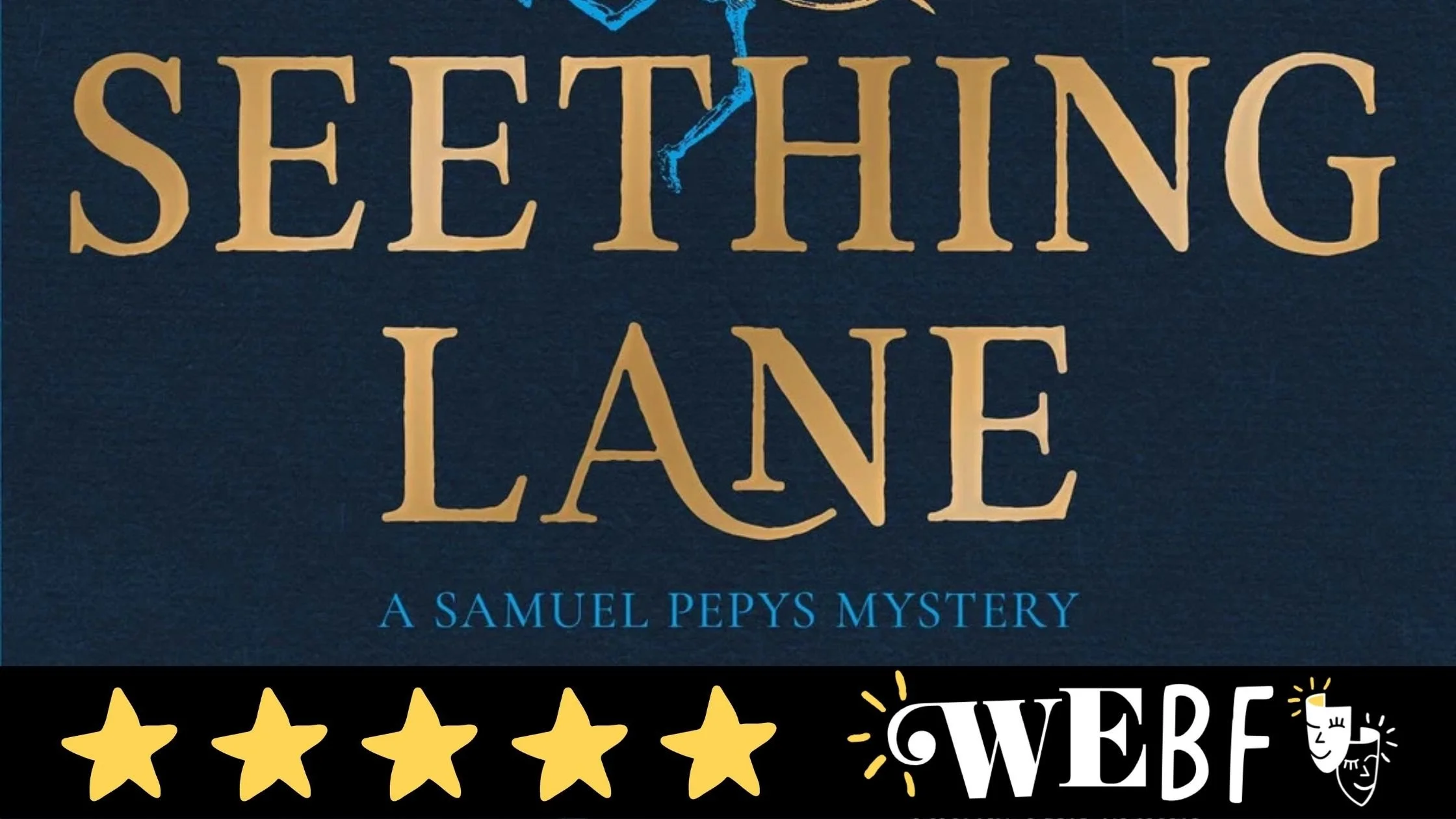
Seething Lane, published by Moonflower Publishing Ltd, is the second novel to be written by Jack Jewers following his debut book The Lost Diary of Samuel Pepys, alongside his work as a filmmaker.
Samuel Pepys was a renowned figure in English history, Serving in the Naval board, being a Tory politician and becoming a member of parliament but is most known for his written accounts of the time. Pepys kept a diary between 1660 - 1669 during the restoration period and lived through many times changing events such as the Great Plague, the Fire of London and the return of King Charles II after exile.
This book is structured into three main parts, concluding an epilogue. Each part is broken down into extensive diary entries that leap off of the page by Jewers’ descriptive work. Although the book is long and the sections are large, the structure works well, builds with key information and intertwining threads throughout that all come together in the end.
Although a story of fiction, through his writing, Jewers has depicted multiple real figures from history and taken some creative liberties to portray their personalities and represent their characters. Featured are the likes of King Charles II and many of his mistresses including Nell Gwyn, Barbara Palmer and Louise de Kérouaille, amongst others. Also featured are James Scott (Duke of Monmouth, illegitimate son of the King) Aphra Behn and, of course, that of Samuel Pepys himself and his wife Elizabeth (referred to throughout this book as Elisabeth.) Research has clearly been done on these people and they do feel authentically represented on the page.
Many of the male characters in the story are painted with a derogatory attitude in their treatment towards woman with much male chauvinism. This begins to curtail in the latter part of the book as woman’s rights and opportunities within a patriarchal society began to broaden, namely in theatre, permitting them to perform and eventually write for theatre.
The cast of characters, both those based on real and fictional people, is great in number but Jewers aids the readers’ ability to piece these together by providing a section at the beginning of the book detailing their names, key information about who they are and also in which setting they occur which, in a text of this size, is a great assist and develops a more informed and engaging attachment with them as they became part of the plot. Also at the front of the book are some maps of London, referenced from British History Online which gives a visual of Seething Lane, Drury Lane and the layout of White Hall Palace, the key labelling particular features of these settings that relate to events in the text.
This book is rich in historical scandal but also delves deeply into the culture of theatre throughout the restoration period and even if the reader is not historically knowledgeable provides an intriguing insight. Multiple references are made relating to authentic entries in Pepys’ diaries, and his writing contains all the nostalgia of the times from descriptions of moving through candlelight, wax seals, hooves striking cobblestones, and taps on carriage roofs to instigate departure.
Jewers’ writing embodies an authentically feeling voice and persona for Samuel Pepys as he uses first person narration to portray him as the central character. It feels as though Pepys is recounting his experiences directly as the reader engages with the text. Contained in this story are themes of radical change as modern Britain emerges through Pepys as a vehicle for delivery. Throughout section one, the plot follows Pepys as we hear about his work as Naval administrator, his home life, but also learn of his double life involvement with a secret order, exploring a few potential personal demons along the way. We also move through history through his story. From the days of Oliver Cromwell, the exile and return of the King, repression, and the movement towards restoration and greater freedom, particularly in terms of the world of theatre and women's participation. Jewers also bares mention to subjects of unrest in terms of hierarchy to the throne and the contrasting methods of execution afforded to nobility against that of a lower class citizen.
Amidst a severe winter in London, Samuel Pepys finds himself involved in investigating a heretic and before long, he is dealing with multiple murders! Multiple threads end up pointing towards some connection with the Theatre Royal Drury Lane, a place Pepys has visited with his wife for leisure in the early stages of this story. Pepys passes comment on the risqué nature and political satire in relation to the performance of The Mock Astrologer featuring the famously scandaled Nell Gywn. Ideas are depicted here in regards to theatre etiquette of the times, drunken heckling, theatre being in some sense a place for misfits and lost souls. Solo theatregoers and critics are also mentioned, alongside the exploration of seating structures, cheap seats to royal boxes, a concept which remains relevant if only in the pricing structure of many theatres to date. The plot thickens when Pepys is approached by an unknown mysterious person asking for help.
The story then begins to rapidly pick up the pace, as Pepys investigates the murders and discovers much deeper connotations in regards to how they have been killed. With multiple twists and turns, further murders, threats to lives and scandal, alongside a fire that almost destroys the Theatre Royal in its entirety. A reflection - of course - again here of factual history, it is soon easy for the reader to become deeply invested in the plot.
There are multiple theatre references throughout this book to engage a theatre loving audience, with Pepys later stating “this business is like characters from a play.” From the mere comedic mention of “belching the ballad of Barbara Allen”, a reference from Dark of the Moon, a play written in the 1940’s which, consequently at the time of reading this book, was playing, developed as a debut musical in London, to the regular references to the renowned works of Shakespeare. A Midsummer Night’s Dream, Titus Andronicus and As You Like It bare strong reflections in the story as do references to Greek mythology. Phaethon is mentioned alongside Astraea, the Greek goddess of justice, which turns out to be a key reference but a largely unsolved mystery in relation to the murders until the concluding parts.
Famous quotes from Shakespeare include, but are not limited to, the well known “All the world’s a stage. And all the men and women merely players…” and “Sans teeth, sans eyes… sans everything” from As You Like It. Alongside, “though she be but little, she is fierce” from A Midsummer Night's Dream, all cleverly woven into the story.
Further appealing to a theatre appreciating audience, Jewers provides wholesome reflections to the times in regard to theatres being reopened after the ban, the development of women being allowed to perform, and Henry Condell and his links with the King's company of performers and Shakespeare. He provides an interesting insight into how theatre was structured in the late 1600’s, as opposed to individuals being cast in different works, often long runs, as is commonly the case today, companies of actors remained as a company and were given different material to perform, sometimes each week or every few days, at very little notice. This insight is also enriched with the direct quotes from Shakespeare's material.
Jewers also provides a visual of how the backstage structure may have looked through his descriptive writing and instigates wonder within the reader as to how much this may or may not have changed in the modern day. He describes the backstage passageways in stark contrast to the public areas as having none of the demure of the theatre and being ‘the most efficient configuration’ likening it to a ‘disorientating warren.’ Also touching here on alternative ways out of the theatre, suggesting these were used to discreetly exit the upper classes should they require a discretionary exit. The description of the singular dressing room, its layout, features and smells paints an imaginable and believable picture of the scene.
There are also further mentions too on the possible trials and tribulations of being an actor in the suggestion that sometimes the material is weak and the performers have to do the best with what they are given. During restoration theatre actors were rarely given the whole script, just their own part which is another thing Jewers has identified and paid homage to. There are also some nice insights into scenery descriptions, technicalities and functionality of these to give the illusion of depth. All of this done without interrupting the flow of the story’s main plot. Pepys’ character at one stage describes the theatre as being a place of refuge to him, if only for a short time, and this is a feeling that we are sure many a theatregoer can identify with.
Section 3 is focussed on Astrea, learning who this refers to and piecing together the relevance of this name. The epilogue then serves to pull the story together, tie up any loose ends, provide the missing pieces and answer questions that the reader had been led to believe may even end unanswered.
Following this is an insightful collection of historical notes. These are in addition to the story but make for an interesting read and help to further place the events of the story in history making it all the more plausible a tale.
A cleverly constructed, superbly written murder mystery that will appeal to both theatre lovers and those fascinated by history. Whilst at the same time providing an insight into the social and theatrical world of restoration London.
This reviewer had not - to date - had the opportunity to read any of Jack Jewers’ previous work, but inspired by this book, I am certainly now very keen to do so.
***** Five stars
Reviewed by: Claire Baker
Seething Lane is released on 3 September by Moonflower Books, with further info here.